
Plants
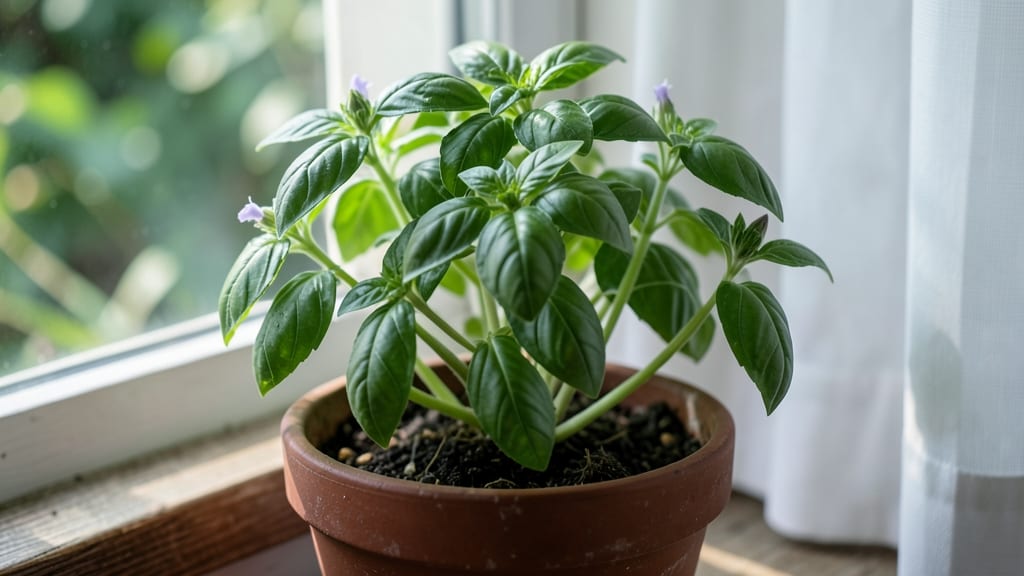
Basil plants are not perennial in most climates, dying back with frost but regrowing from roots in warmer zones (USDA 10-12) or surviving as annuals elsewhere. Sweet basil, Thai basil, and lemon basil typically require replanting yearly in cold regions.
Basil's tropical origins mean it can't survive freezing temperatures, which is why most gardeners treat it as an annual in cooler areas. 🌱 In zones 10-12, where winters rarely drop below 30°F, basil can persist year-round from its roots, but even there, it often needs protection.
I've found that varieties like Genovese basil handle cold better than delicate Thai basil, which bolts quickly when stressed. The key difference lies in their root systems—some varieties store enough energy to regrow, while others simply wither.
For gardeners in colder regions, the good news is that basil's fast growth cycle means you can often get multiple harvests before winter sets in. 🌿 Many people successfully overwinter basil by bringing potted plants indoors or harvesting seeds before the first frost.
Even in areas with harsh winters, this approach lets you enjoy fresh basil well into fall.
💡 In This Article
- Basil Cold Hardiness: Why Most Varieties Die in Winter
- Extending Basil’s Life: Overwintering and Year-Round Growth Hacks
Basil cold hardiness: why most varieties die in winter
Basil's tropical heritage explains its struggle with cold—it evolved in regions where temperatures rarely drop below 60°F, making it highly sensitive to frost.
When temperatures fall below 32°F, the plant's cell membranes rupture due to ice crystal formation, causing irreversible damage. 🌱 The roots of basil are particularly vulnerable because they lack the protective insulation of mulch or soil depth found in hardier perennials like lavender or rosemary.
Different basil varieties exhibit varying cold tolerance due to genetic adaptations. For example, Genovese basil can withstand slightly cooler conditions than Thai basil because its broader leaves and thicker stems store more energy reserves.
Purple basil, with its anthocyanin-rich foliage, shows slightly better cold resistance due to these pigments acting as natural sunscreen that may also protect against temperature stress. However, none of these varieties can survive prolonged exposure to freezing temperatures without protection.
The USDA zone system helps predict basil's survival potential. In zones 10-12, where winters rarely drop below 30°F, basil can persist as a semi-perennial, regrowing from its root crown each spring.
In zones 8-9, gardeners often see basil die back completely but regrow from roots if protected with mulch or row covers. By contrast, in zones 3-7, basil behaves strictly as an annual, requiring replanting each spring.
What most gardeners don't realize is that basil's growth cycle accelerates in response to shortening daylight hours. As temperatures drop below 50°F, the plant shifts from vegetative growth to flowering, which makes it even more susceptible to cold damage.
This physiological response explains why basil often bolts (produces flowers) before winter, further weakening its ability to survive frost.
Interestingly, the root system plays a crucial role in basil's potential for regrowth. Some varieties develop deeper, more robust root systems that can store enough carbohydrates to fuel regrowth in spring.
For instance, Sweet basil typically develops roots that reach 6-12 inches deep, while Thai basil has a shallower, more fibrous root structure that's less capable of storing energy for overwintering.
Consider these key factors when evaluating cold hardiness:
- Variety selection: Choose varieties with thicker stems and broader leaves for slightly better cold tolerance
- Root development: Well-established plants with deep roots have a better chance of regrowing
- Microclimate protection: South-facing locations with afternoon sun provide natural warmth
- Soil insulation: Organic-rich soil retains heat better than sandy soils
The bottom line is that while basil can't truly be considered perennial in most climates, understanding these botanical factors helps gardeners maximize its growing season and sometimes achieve limited overwintering success. 💫