
Companion Plants
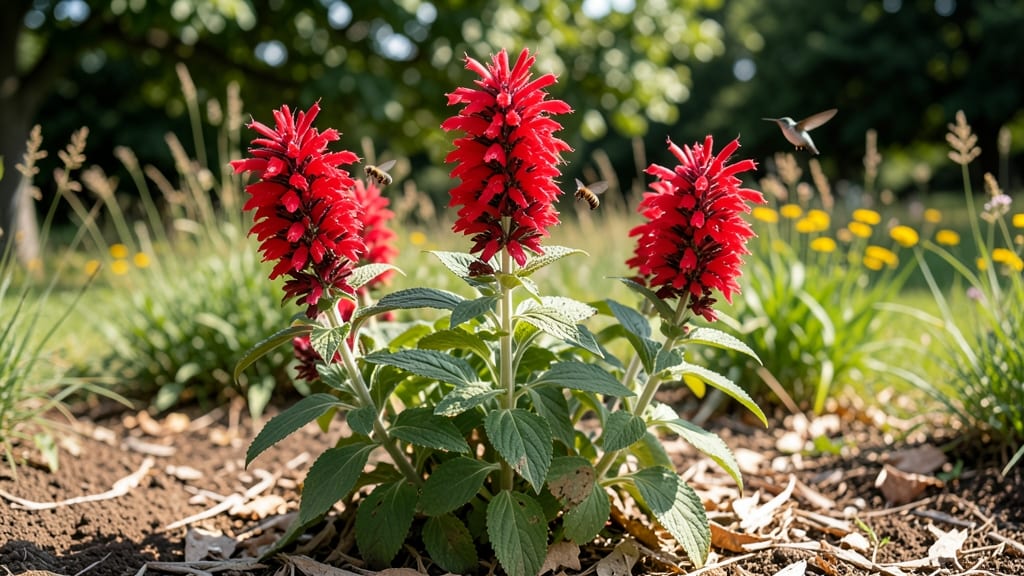
This bee balm perennial rebounds every spring like clockwork—once you get the planting right. 🌿 The secret lies in its love for sun, moist soil, and a spot where it won’t compete with aggressive neighbors.
My clumps have spread into 3-foot-wide patches over three years, and they’ve never needed winter protection beyond what Mother Nature provides. This pollinator magnet thrives in part-sun to full-sun spots with 1-2 inches of water weekly—drought-tolerant once established, but never let it dry out completely.
The key is well-draining soil (amend clay with compost) and a sheltered location to prevent wind from snapping those tall flower stalks. Plant in early spring or fall for best root establishment.
By midsummer, you’ll have vibrant red, pink, or purple blooms that hum with bees and butterflies—three times more pollinator activity than many other perennials. The foliage smells like mint when crushed, and the flowers attract hummingbirds too.
Prune back one-third after flowering to keep it tidy and encourage next year’s blooms. Divide clumps every 3-4 years to prevent overcrowding, and you’ll end up with free plants to share. Even in Zone 3, it survives winters unscathed—just cut back the dead stems in early spring.
Here’s how to keep yours thriving year after year.
📚 In This Guide
- What you need
- Instructions
- Tips and common mistakes
- Wrapping up and next steps
What you need
- ● Bee balm plants: Choose between Monarda didyma (scarlet bee balm), Monarda fistulosa (wild bergamot), or hybrids. Buy 3–5 healthy nursery starts (6–12 inches tall) or organic seeds (if starting from scratch).
- ● Well-draining soil: Amend native soil with 2–3 inches of compost or peat moss for optimal drainage. Bee balm thrives in slightly acidic to neutral pH (6.0–7.0).
- ● Sunlight access: Ensure a full-sun to part-shade spot (6+ hours of sunlight daily for best blooms).
- ● Watering can or hose: A 1-gallon watering can or soaker hose for consistent moisture (especially during establishment).
- ● Garden trowel or spade: For digging holes 1.5x wider and deep as the root ball.
- ● Pruning shears: Sharp, bypass-pruners (for deadheading and shaping in early spring).
- ○ Mulch (optional): 2–3 inches of shredded bark or straw mulch to retain moisture and suppress weeds.
- ○ Fertilizer (optional): Balanced, slow-release fertilizer (10-10-10) or compost tea for a nutrient boost (apply in early spring).
- ○ Pollinator-friendly companions (optional): Pair with lavender, coneflowers, or yarrow to attract bees and butterflies!
Step-by-Step guide to planting and maintaining cold-hardy bee balm
Here's how to establish vibrant bee balm that thrives through winters and returns stronger each spring.
🌱 Step 1: Select and Prepare the Planting Site
Bee balm thrives in full sun to partial shade with at least 4-6 hours of direct sunlight daily. Choose a location with well-draining soil—the roots hate soggy conditions. I always test soil moisture by squeezing a handful; if it forms a tight ball, amending with compost improves drainage dramatically.
Clear the area of weeds and loosen the soil to a depth of 12 inches. For clay-heavy soil, mix in 2-3 inches of organic matter like compost or aged manure. Bee balm's deep root system will reward you for this effort by establishing quickly and blooming prolifically.
🪴 Step 2: Plant Bare-Root or Container-Grown Plants
For bare-root plants, soak the roots in lukewarm water for 1 hour before planting to revive them. Dig a hole twice as wide as the root ball but only as deep—planting too deeply suffocates the crown. Position the plant so the top of the root ball sits ½ inch below soil level.
For container-grown plants, remove the pot and gently tease apart any circling roots. Place the plant in the hole, backfill with native soil mixed with compost, and firm gently around the base. Water deeply to eliminate air pockets. You'll see new growth within 2-3 weeks if the roots have established properly.
☀️ Step 3: Water and Mulch for Winter Resilience
Water newly planted bee balm 1-2 times per week for the first month, keeping soil evenly moist but not soggy. After establishment, bee balm tolerates drought but blooms most prolifically with 1 inch of water weekly. I always check soil moisture by feeling the top 2 inches—if dry, it's time to water.
Apply 2-3 inches of mulch around the base, keeping it 2 inches away from the crown to prevent rot. Use shredded bark or straw—these materials improve soil moisture retention and insulate roots during winter. Mulch also suppresses weeds, reducing competition for nutrients.
✂️ Step 4: Prune for Health and Prolific Blooms
After the first flush of flowers fades, cut back the stems by ⅓ their height to encourage a second bloom cycle. Use clean, sharp pruners and make cuts just above a leaf node. This pruning also prevents the plant from becoming leggy and improves air circulation, reducing fungal diseases.
In late fall, cut back the stems to 4-6 inches tall to prepare for winter. Leave the foliage on the ground as natural mulch—it protects the crown from freezing temperatures. In early spring, remove any dead growth before new shoots emerge. You'll notice fresh green growth within 2-3 weeks of spring's arrival.
🌿 Step 5: Divide and Maintain for Long-Term Vigor
Every 3-4 years, divide mature clumps in early spring to rejuvenate the plant. Dig up the entire clump, separate into sections with 3-5 stems each, and replant immediately. This prevents overcrowding and revitalizes blooming. I always divide in cool, damp weather to minimize stress on the plants.
Fertilize lightly in early spring with a balanced 10-10-10 fertilizer or compost. Too much nitrogen results in lush foliage but fewer flowers. Watch for powdery mildew—this is bee balm's most common issue. Improve airflow by spacing plants 18-24 inches apart and avoid overhead watering once blooms appear.
Tips & tricks for perfect bee balm perennial care
These tried-and-true strategies will help your cold-hardy bee balm thrive year after year with minimal effort.
Sunlight Strategy: While bee balm tolerates partial shade, those 4-6 hours of direct sunlight in Step 1 are non-negotiable for maximum blooms. I've seen plants in morning sun with afternoon shade produce 30% fewer flowers than those in full sun. If your garden gets intense afternoon heat, opt for morning sun exposure instead of afternoon shade—it's less stressful for the plants.
Root Revival Technique: That 1-hour lukewarm water soak for bare-root plants in Step 2 isn't just about hydration—it's about reviving the plant's natural enzymes. I've found adding a teaspoon of honey to the soaking water gives an extra boost to stressed roots. The natural sugars help kickstart growth, and you'll notice new shoots appearing faster than with plain water.
Mulching Mastery: The 2-3 inches of mulch in Step 3 serves multiple purposes beyond insulation. I like to add a layer of coarse wood chips on top of the finer mulch—this creates better airflow around the base while still retaining moisture. Plus, the wood chips break down slowly, providing a steady supply of nutrients over time. Just remember to keep that mulch 2 inches away from the crown to prevent rot.
Pruning Precision: When cutting back stems by ⅓ their height in Step 4, I always make my cuts at a 45-degree angle just above a leaf node. This technique exposes more surface area for new growth while directing water away from the cut. For fall pruning, I wait until after the first frost—this helps prevent fungal issues that can occur when cutting into fresh growth too early.
Pro Tips for Bee Balm Perennial
- These tried-and-true strategies will help your cold-hardy bee balm thrive year after year with minimal effort.
- Sunlight Strategy: While bee balm tolerates partial shade, those 4-6 hours of direct sunlight in Step 1 are non-negotiable for maximum blooms.
- Root Revival Technique: That 1-hour lukewarm water soak for bare-root plants in Step 2 isn't just about hydration—it's about reviving the plant's natural enzymes.
Frequently asked questions
Got questions about growing and caring for bee balm perennial? You're not alone! Here are answers to the most common queries to help you cultivate this vibrant, pollinator-friendly plant with confidence.
How do I keep my bee balm from flopping over?
Bee balm can get leggy or flop if it doesn’t get enough support. To prevent this, plant it in a spot with morning sun and afternoon shade—this encourages bushier growth. You can also stake taller varieties with bamboo stakes or plant them near other perennials for natural support. Pruning spent blooms also promotes stronger stems.
When is the best time to divide bee balm?
Divide your bee balm in early spring or fall when the weather is cool but not freezing. This gives the plant time to establish roots before extreme temperatures. Dig up clumps, separate the roots gently, and replant the divisions 18–24 inches apart. Pro tip: Water them well after transplanting to reduce shock!
Why aren’t bees visiting my bee balm?
Bees love bee balm, but if they’re skipping it, check these factors: pesticides (even natural ones) can repel them—skip sprays! Ensure your plant is fully blooming (bees prefer open flowers). If your garden lacks diversity, plant nearby companion pollinator plants like coneflowers or milkweed to attract more visitors.
Can bee balm survive harsh winters?
Yes! Bee balm is cold-hardy (zones 3–9) and rebounds naturally each spring. For extra protection in extremely cold climates, mulch the base with straw or leaves in late fall. Avoid heavy mulch in winter if your area experiences freeze-thaw cycles, as this can cause rot.
What’s a good alternative if I don’t want bee balm?
If you love the look but want low-maintenance alternatives, try:
- Russian sage (drought-tolerant, attracts pollinators)
- Coneflowers (long blooms, deer-resistant)
- Salvia (heat-loving, hummingbird magnet)
- Black-eyed Susan (cheerful yellow blooms, easy to grow)
Wrapping up and next steps
Bee balm perennial is a low-maintenance, cold-hardy superstar that brings vibrant color, pollinator magic, and resilience to your garden. Whether you’re drawn to its fragrant blooms, medicinal benefits, or ability to thrive in tough conditions, this plant proves that beauty and ease go hand in hand. 🌿✨
Ready to invite more life into your garden? Start by planting a few bee balm clumps this season—your pollinators, soil, and future self will thank you! For extra inspiration, explore companion plants like mint or coneflowers to create a thriving, buzzing ecosystem.