
Plants
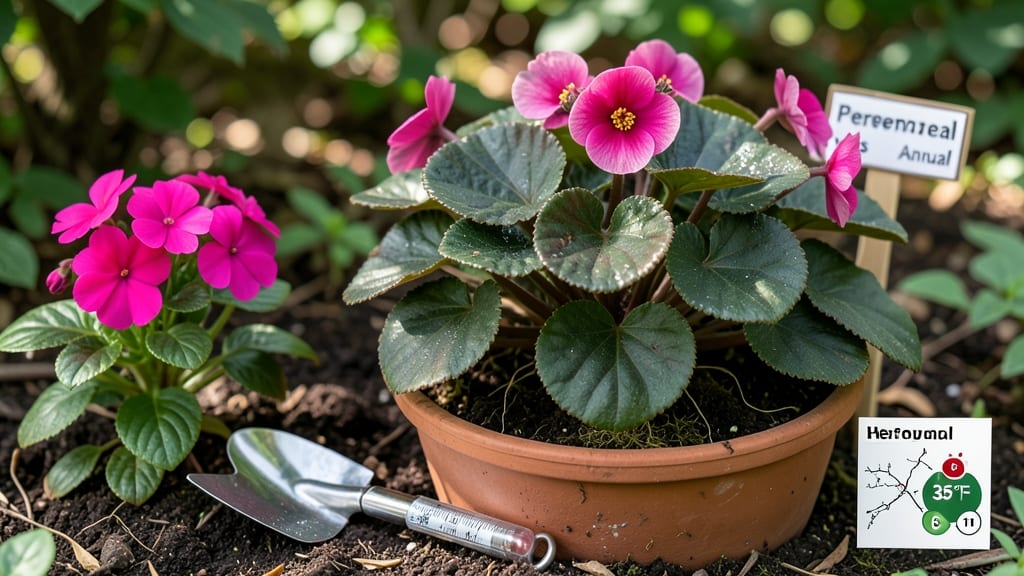
Are begonias perennials? They're not true perennials in most climates—they die back annually to the ground, but many varieties regrow from rhizomes or tubers each spring, making them perennial-like in temperate zones with proper care and winter protection.
Begonias act like perennials because they survive through seasonal changes, but their true nature depends on your climate. 🌱 In colder regions, they'll go dormant over winter, only to rebound when temperatures rise—if you protect their roots properly.
The key difference lies in their growth cycle: while perennials stay alive year-round, begonias rely on stored energy in their underground structures to restart each season.
This behavior explains why some gardeners treat them as annuals—if you don't provide the right conditions, they won't come back. The good news? With simple overwintering techniques like bringing them indoors or using mulch in mild climates, you can enjoy their vibrant foliage and flowers year after year without replanting.
💡 In This Article
- Why Begonias Die Back and How Climate Affects Their Lifespan
- Year-Round Begonia Care: Extending Their Lifespan Beyond One Season
Why begonias die back and how climate affects their lifespan
Begonias enter dormancy as a survival mechanism when temperatures drop below 50°F. This isn't true death—it's a strategic shutdown where the plant conserves energy in its rhizomes (fibrous roots) or tubers (starchy storage organs).
For example, tuberous begonias store carbohydrates in their thick, potato-like tubers, while fibrous varieties like Begonia rex rely on their woody rhizomes. These underground structures can remain viable for years if protected from freezing.
The key difference between true perennials and begonias lies in their cold tolerance. Most begonias thrive in USDA zones 10-12, where they grow continuously.
In cooler zones (7-9), they'll die back above ground but survive below if insulated. Tuberous begonias are particularly sensitive—their tubers rot at 32°F or below, while fibrous begonias like Begonia semperflorens can tolerate slightly cooler temperatures (40°F) in protected microclimates.
Climate plays a critical role in determining whether begonias act as perennials. In frost-free zones (like coastal California or Florida), they grow year-round with proper moisture.
In colder regions, gardeners must mimic their natural dormancy by either digging up tubers or providing thick mulch (4-6 inches of straw or leaves) to insulate roots. The trade-off? Without intervention, begonias treated as annuals won't return—yet with the right care, they can outlive many true perennials.
What most people overlook is the light requirement during dormancy. Even in winter, begonias need 6-8 hours of indirect light to prevent leggy regrowth. Without this, their energy reserves deplete faster.
For instance, a Begonia elatior kept in a dark basement may sprout weak shoots that collapse under their own weight—this is why indoor overwintering requires a sunny windowsill or grow lights.
Consider this comparison: A true perennial like hosta maintains active growth year-round, while begonias follow a monocarpic pattern—where they allocate all resources to either flowering or root storage each season.
This explains why some varieties (like Begonia boliviensis) produce stunning blooms one year but focus entirely on tuber development the next. 🌿 The plant's "decision" depends entirely on temperature cues it receives.
For gardeners in USDA zone 8, the sweet spot is using black plastic mulch in late fall to absorb heat during the day and radiate it back at night—raising soil temperatures by 5-10°F.
This simple technique can extend the growing season by 4-6 weeks on either end, making begonias behave more like perennials in marginal climates.