
Plants
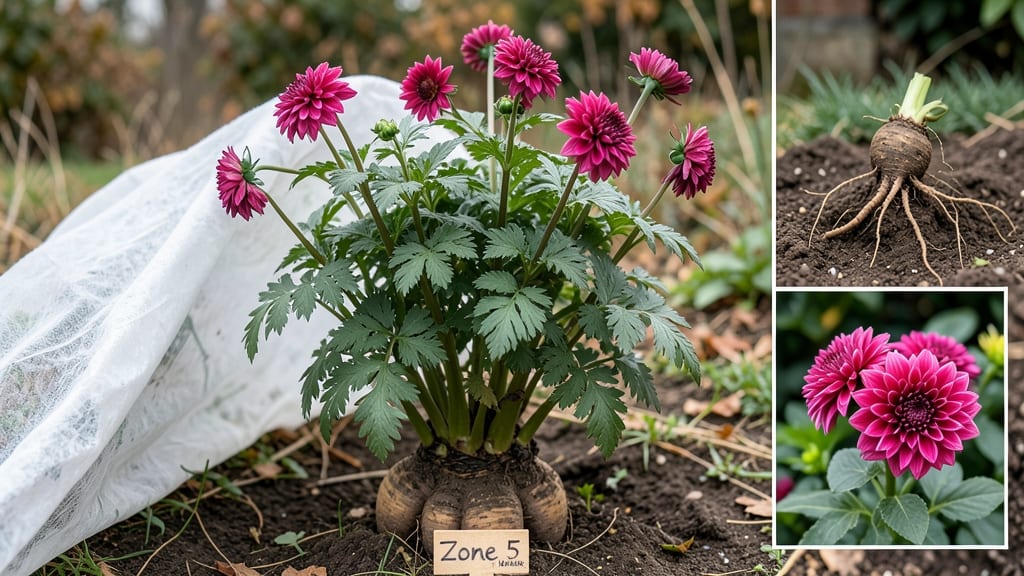
Dahlias aren't true perennials in Zone 5—they die back to the ground each winter but require careful overwintering to survive and regrow annually. Their tubers must be dug up, stored, and replanted each spring to thrive in cold climates like Zone 5.
This dieback cycle happens because dahlia tubers can't tolerate Zone 5's freezing temperatures, which often drop below 20°F. Unlike hardy perennials, their underground storage organs lack natural frost protection and need human intervention to persist. 🌱 The good news?
With proper storage—keeping tubers in a cool (35-45°F), dry place—they'll reliably regrow each spring.
Many gardeners mistakenly assume dahlias will return naturally, only to find bare spots where their plants once thrived. The key difference lies in their tropical origins: while they love warm summers, they lack the cold resistance of native Zone 5 plants like peonies.
This makes overwintering a crucial skill for maintaining your dahlia collection year after year.
💡 In This Article
- Why Dahlias Die Back in Zone 5 Winters
- Step-by-Step Guide to Overwintering Dahlias in Zone 5
Why dahlias die back in Zone 5 winters
The biological reason dahlias retreat underground each winter stems from their tropical heritage. These plants evolved in Mexico and Central America, where temperatures rarely drop below 25°F.
When transplanted to Zone 5—where winter lows often hit -10°F—their tubers lack the natural cold resistance of hardy perennials like peonies or coneflowers, which can survive -20°F or colder. 🌱 The tuber's outer skin contains minimal protective wax, making it vulnerable to freezing temperatures that cause cellular damage.
Here's what happens when temperatures plummet: Water inside the tuber cells expands as it freezes, rupturing cell walls and creating irreversible damage. Unlike hardy perennials that develop protective compounds during dormancy, dahlias rely entirely on their owners for winter survival.
The plant's above-ground foliage dies back naturally in fall, but the tuber's survival depends on avoiding ground frost. Even a light freeze (28°F) can reduce tuber viability by 30-50%, explaining why gardeners often lose plants when they're left in the ground.
The timing of this dieback is also biologically programmed. Dahlias enter dormancy when daylight shortens in late summer/early fall, but their survival mechanism differs from true perennials. While plants like hostas develop underground storage organs with protective layers, dahlia tubers remain delicate.
Their natural growth cycle includes a 6-8 week dormancy period—if you don't intervene, the tuber will simply rot in cold, wet soil. This explains why even established dahlias disappear each winter unless properly overwintered.
Consider this comparison: A peony tuber can survive 10 years underground with minimal care, while a dahlia tuber typically lasts 3-5 years even with perfect storage. The difference lies in their evolutionary adaptations—peonies developed in harsh climates with extreme temperature swings, while dahlias adapted to stable tropical conditions.
This fundamental biological difference is why Zone 5 gardeners must treat dahlias as seasonal perennials rather than true hardy plants.
The science of tuber storage reveals another critical factor: Respiration rates. Stored tubers continue breathing, consuming their own starch reserves. At 35°F, they lose only 2-3% moisture per month, but at 50°F, that jumps to 10-15%, accelerating rot.
This metabolic activity explains why proper storage conditions are non-negotiable for survival. Unlike seeds that remain dormant indefinitely, dahlia tubers have a limited shelf life even under ideal conditions.
What most gardeners don't realize is how quickly damage occurs. A tuber exposed to 20°F for just 24 hours can develop irreversible black spots where cells have died. The contrast with hardy perennials is striking: A coneflower's root system develops protective suberin layers that act like natural insulation.
Dahlias, however, offer no such protection—making their overwintering process an annual ritual rather than a passive survival strategy. 💫