
Flowers
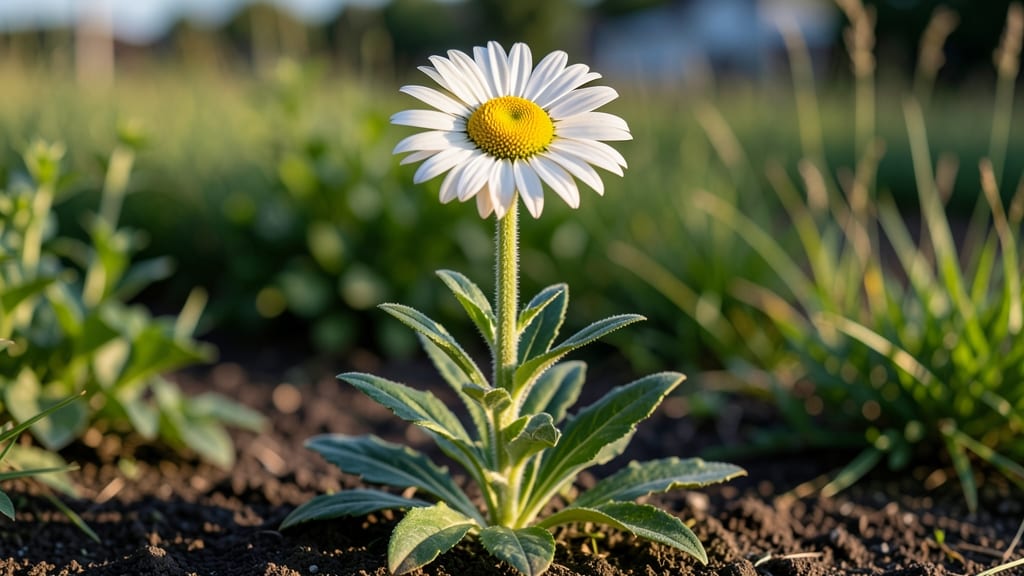
Daisies are perennials in most temperate climates but behave like annuals in colder regions, dying back to the ground each winter and regrowing from roots or crowns when conditions improve. Their longevity depends on hardiness zone, species, and care.
Most daisies thrive as perennials because they store energy in their root systems during dormancy, allowing them to rebound when spring arrives. 🌱 For example, Shasta daisies can survive winters in USDA zones 5-9, while gerbera daisies typically die back in colder climates unless protected.
The key difference lies in their root strength—some species develop deep taproots, while others rely on fibrous networks that regenerate quickly with proper care.
What many gardeners overlook is how soil health and winter prep directly impact whether daisies return. Mulching with straw or leaves and avoiding late-season cuts can make a dramatic difference in survival rates.
I’ve seen daisies that seemed dead in winter resurge with just a little extra protection—proof that even "annual" daisies can be coaxed into perennial behavior with the right conditions.
💡 In This Article
- How Daisy Life Cycles Differ by Species and Climate
- Tips to Extend Daisy Longevity in Your Garden
How daisy life cycles differ by species and climate
The perennial nature of daisies hinges on their root systems and how they adapt to seasonal changes. Most daisies, like the classic Shasta daisy, develop fibrous roots that spread horizontally, creating a dense network near the soil surface.
This system allows them to absorb moisture efficiently while storing carbohydrates in their crowns (the base where stems meet roots) during dormancy. When temperatures drop below 20°F, these roots enter a state of physiological dormancy, slowing metabolic processes to conserve energy until warmer conditions return in spring.
Climate plays a critical role in determining whether daisies behave as perennials or annuals. For instance, gerbera daisies thrive in USDA zones 8-11 but struggle in colder regions like zone 5 because their taproot system is less resilient to freezing.
The taproot, while deeper, lacks the protective carbohydrate reserves of fibrous roots, making gerberas more vulnerable to winter dieback. Meanwhile, oxeye daisies (Leucanthemum vulgare) can endure down to -30°F thanks to their hardy crowns, which regenerate quickly when soil temperatures rise above 40°F in spring.
Sunlight exposure also influences longevity. Daisies need 6-8 hours of direct sunlight daily to photosynthesize and build energy reserves. In shaded conditions, their growth weakens, reducing the carbohydrates stored in roots—critical for surviving winter.
For example, a Shasta daisy in full sun might store enough energy to regrow after a 3-month dormancy, while one in partial shade may fail to return.
This is why gardeners in colder zones often see daisies die back completely in their first winter but thrive in subsequent years once established.
Soil composition further affects perennial behavior. Well-draining soil with a pH of 6.0-7.0 prevents root rot, which can kill daisies during wet winters. Sandy loam soils, for instance, allow roots to breathe and dry out quickly, reducing stress.
In contrast, heavy clay soils can suffocate roots, leading to premature dieback. Adding organic matter like compost before winter improves soil structure, giving daisies the best chance to rebound. 🌿
Temperature thresholds vary by species: Shasta daisies tolerate down to -20°F, while gerberas rarely survive below 15°F. This explains why gerberas are often treated as annuals in northern gardens—they simply can’t endure the cold.
However, with mulching (adding 3-4 inches of straw or leaves) and winter protection, even gerberas can sometimes persist through mild winters, proving that care can transform an annual into a perennial.
One fascinating mechanism is vernalization, where daisies exposed to prolonged cold periods (like 4-6 weeks below 40°F**) trigger hormonal changes that signal spring regrowth. This is why daisies planted in fall often return stronger the following year—they’ve undergone this natural priming process.
Without it, even hardy species may struggle to regenerate. Understanding these biological cues helps gardeners time planting and protection strategies for maximum success.