
Plants
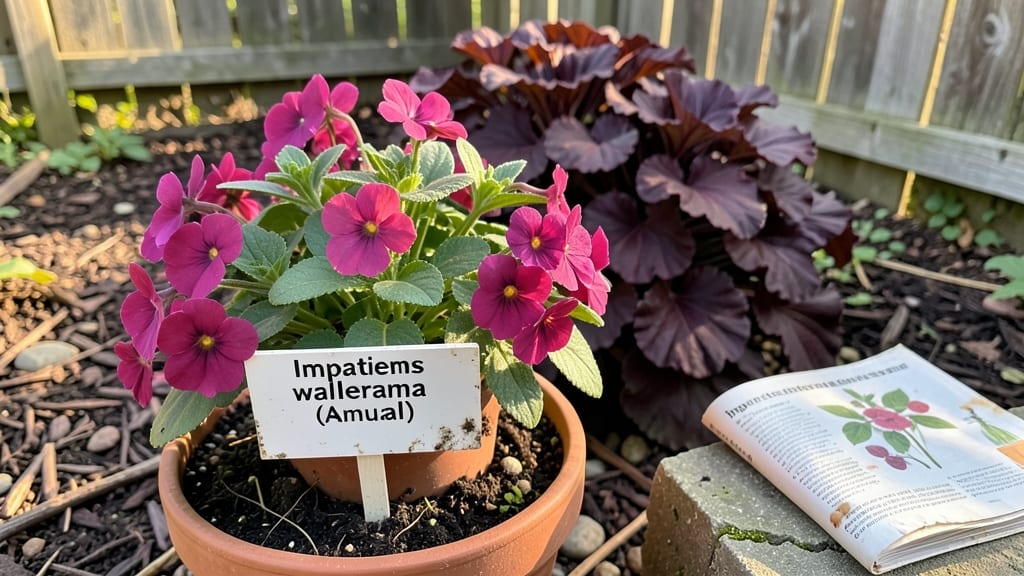
Impatiens are not true perennials in most climates, dying back to the ground each fall and regrowing from seed or tubers in warmer zones (USDA 9-11). In colder regions, they’re grown as annuals, requiring replanting yearly for continuous blooms.
Impatiens behave like perennials only in frost-free zones where they can survive winter underground. 🌱 In cooler climates, their above-ground growth dies when temperatures drop, but the roots or tubers often persist until spring.
This makes them act like annuals in most gardens—unless you take steps to protect them through winter. The key difference from true perennials (like hostas) is their sensitivity to cold, which forces gardeners to treat them as seasonal plants unless they're in zones 9-11.
What's fascinating is how their lifecycle adapts: in mild winters, they'll often resprout from dormant tubers, while in colder areas, they complete their entire growth cycle in just one season.
This explains why you'll see them sold as annuals at nurseries—it's a practical approach for gardeners outside their native tropical range.
💡 In This Article
- Why Impatiens Die Back Annually in Most Gardens
- How to Extend Impatiens’ Season Like a Perennial
Why impatiens die back annually in most gardens
Impatiens belong to the Balsaminaceae family and evolved in tropical regions where frost never occurs. Their natural lifecycle is tied to warm climates, which explains why they can't survive winter freezes. When temperatures drop below 32°F, their tender stems and leaves blacken and collapse—a process called cold-induced senescence.
This is different from true perennials like hostas, which have thick, insulated rhizomes that store energy to regrow after winter dormancy.
Their survival strategy in colder climates depends on underground structures. In frost-free zones (USDA 9-11), impatiens develop thickened tuberous roots that store starches and nutrients, allowing them to regrow from the same root system each spring.
These tubers can remain dormant for months, similar to how dahlias overwinter. However, in colder zones, even these tubers often perish without protection, forcing gardeners to treat impatiens as annuals. 🌱
What makes this lifecycle unique is their seed production. Many impatiens varieties self-seed prolifically, creating new plants from dropped seeds in spring—a survival tactic that compensates for their short-lived nature.
This explains why you might find volunteer plants popping up in garden beds year after year, even if you didn't intentionally plant them. The trade-off is that these seedlings often lack the vigor of nursery-grown plants, which are selected for specific traits.
Another key factor is their shallow root system. Unlike deep-rooted perennials, impatiens have fibrous roots that spread just 6-12 inches wide and 6-12 inches deep. This makes them vulnerable to both frost penetration and soil temperature fluctuations.
When winter arrives, the entire above-ground plant dies back because it can't generate enough heat to protect its leaves—unlike evergreens or woody perennials that have specialized tissues to resist cold damage.
Comparing impatiens to true perennials highlights their fundamental differences. A coneflower (Echinacea) can survive -20°F winters thanks to its deep taproot and woody stem base, while impatiens simply can't tolerate temperatures below 28°F for more than a few hours.
This biological limitation is why they thrive as annuals in most gardens, despite their ability to persist in mild climates through tuber dormancy.
Their tropical origins also explain why impatiens prefer partial shade in hot climates. In their native habitat, they grow under the canopy of larger trees where they receive dappled sunlight.
This shade tolerance makes them ideal for garden beds that get afternoon sun, but it's another adaptation that doesn't translate well to cold climates where they'd benefit from more sunlight to build energy reserves before winter.