
Plants
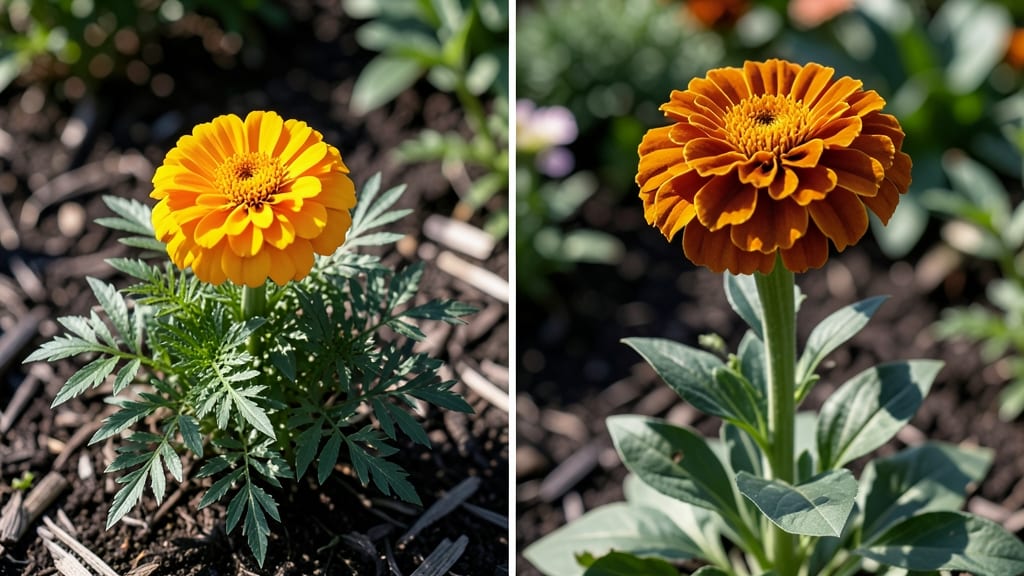
Marigolds aren't true perennials in most regions—they die back after frost and rarely survive winters below zone 8-10. However, certain varieties can regrow from their roots in milder winters with protective measures like mulching.
Marigolds behave like annuals in most climates because their tender foliage can't withstand freezing temperatures, even if the roots sometimes endure. 🌱 In zones 5-7, gardeners often treat them as seasonal plants, replanting each spring.
The key difference lies in root hardiness—some French marigold varieties, for example, have shown surprising resilience when properly insulated with thick mulch or overwintered in containers.
What makes this interesting is how regional microclimates play a role. A marigold might survive a 20°F dip in zone 8 but fail in zone 7 with the same conditions.
The secret to extending their life often comes down to timing—cutting back foliage before frost and adding 4-6 inches of organic mulch can make all the difference between total loss and next-season regrowth.
💡 In This Article
- Marigold Hardiness Zones and Cold Tolerance Limits
- Tips to Overwinter Marigolds in Cold Climates
Marigold hardiness zones and cold tolerance limits
Marigolds thrive as annuals in most regions because their foliage can't tolerate freezing temperatures—even a light frost at 32°F (0°C) will damage leaves, while sustained cold below 20°F (-6°C) kills the entire plant above ground.
The roots, however, sometimes survive these temperatures, especially in French marigold varieties like 'Bonanza' or 'Crackerjack,' which have slightly better cold tolerance than African marigolds.
The science behind this lies in marigold physiology: their shallow root systems (typically 12-18 inches deep) store minimal energy reserves compared to true perennials like peonies.
When temperatures drop below 28°F (-2°C), cellular damage occurs in the stems and leaves, but the roots may remain viable if protected by insulating soil or mulch. This is why you'll often see marigolds regrow from the base in mild winters.
In zones 5-7, where winters regularly drop below 20°F (-6°C), marigolds behave like annuals because the root systems rarely survive prolonged exposure. The key threshold is 15°F (-9°C)
This explains why gardeners in these zones replant marigolds each spring, while those in zones 8-10 might see some overwintering success with proper care. What's fascinating is how marigold varieties differ in hardiness. French marigolds (Tagetes patula) generally handle cooler temperatures better than African marigolds (Tagetes erecta), which are more tropical in origin. The difference comes down to their native habitats—French marigolds evolved in higher elevations of Mexico where cooler nights occur, while African marigolds prefer warmer lowland climates. For gardeners in marginal zones (7-8), the difference between annual and perennial behavior often comes down to microclimates**. A south-facing bed with afternoon sun may support overwintering, while a north-facing area will not. This is why some gardeners in zone 7 successfully overwinter marigolds while others in the same zone don't—location matters more than the zone number alone. Understanding these thresholds helps explain why marigolds are classified as "short-lived perennials" in botanical terms—they have the genetic potential to regrow but lack the cold resistance to reliably survive winters in most temperate climates. 🌱