
Plants
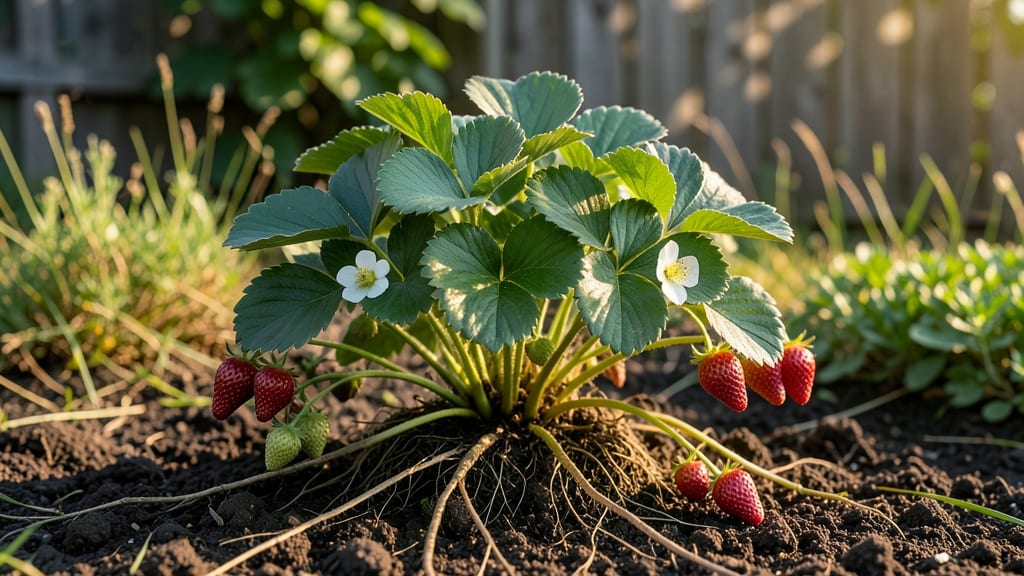
Strawberries are perennials, thriving for multiple years through a dieback cycle where foliage dies back annually but crowns and roots persist, producing new growth each spring. Proper care extends their lifespan beyond three seasons in ideal conditions.
Strawberries might seem like annuals because their above-ground parts fade after harvest, but their true nature reveals itself in winter. 🌱 The key to their perennial status lies in the crown—the thickened stem base that stays alive underground, even when leaves turn brown and die back.
This dormant phase isn't death; it's a survival strategy that lets them bounce back each spring with fresh foliage and fruit. What sets them apart from true perennials like asparagus is their shorter lifespan—most strawberry varieties decline after 3-5 years unless you renew them through runners or replanting.
This dieback cycle is why gardeners often mistake strawberries for annuals—they disappear above ground, only to surprise you with new shoots in spring. The secret to keeping them productive longer? Focus on root health and seasonal maintenance.
I've seen strawberry patches thrive for a decade with careful winter mulching and spring pruning, proving their perennial potential when given the right conditions.
💡 In This Article
- Strawberry Plant Life Cycle Explained
- Extending Strawberry Plant Longevity in Gardens
Strawberry plant life cycle explained
The perennial nature of strawberries becomes clear when you examine their dieback cycle, a survival mechanism that allows them to endure harsh seasons. During winter, the above-ground foliage and fruit-bearing stems (called "crowns") turn brown and appear dead, but the thickened crown base and fibrous roots remain alive underground.
This dormant phase isn't hibernation—it's a strategic shutdown where the plant conserves energy in its roots, which can store up to 20% starch by harvest time to fuel next year's growth. 🌱
The crown itself is the plant's secret weapon—this 2-3 inch thick woody base sits just below soil level and contains meristem cells capable of generating new shoots. Unlike true perennials like raspberries that produce new crowns annually, strawberries rely on their existing crowns to regenerate foliage each spring.
What makes them unique is their short-lived perennial status—most varieties decline after 3-5 years due to crown exhaustion unless you propagate new plants from runners (those long, trailing stems that root at nodes).
Runners play a crucial role in this cycle by creating genetic clones of the mother plant. Each runner node can develop into a new crown with its own root system, effectively renewing the strawberry patch.
This is why commercial growers often replace entire beds every few years—the original crowns become overcrowded and disease-prone, while their runner offspring produce fresher fruit.
The science here is fascinating: strawberry roots can extend 12-18 inches deep and 24 inches wide, creating an extensive network that taps into soil moisture and nutrients year-round.
What most gardeners miss is how temperature triggers this cycle. Strawberries enter dormancy when daytime temperatures drop below 50°F (10°C) for extended periods. The roots continue metabolizing slowly until spring, when soil temperatures reach 55°F (13°C)—this is when you'll see those first bright green shoots pushing through mulch.
The misconception that strawberries are annuals stems from their above-ground dieback, but their underground persistence proves they're true perennials with a different growth pattern than woody plants.
Consider this comparison: While asparagus crowns grow larger each year, strawberry crowns actually decline in vigor after 3-4 years. This is why gardeners often see fruit production drop—it's not the plant dying, but its original crown becoming less efficient.
The solution? Let runners establish new crowns annually, creating a self-renewing system that mimics how strawberries would grow in the wild. 🌿
Here's what happens seasonally that confirms their perennial status:
- Spring: New shoots emerge from dormant crowns, using stored starch for early growth
- Summer: Fruit production occurs while crowns build starch reserves in roots
- Fall: Leaf senescence begins as days shorten, but roots remain active
- Winter: Only above-ground parts die back while crowns and roots survive