
Companion Plants
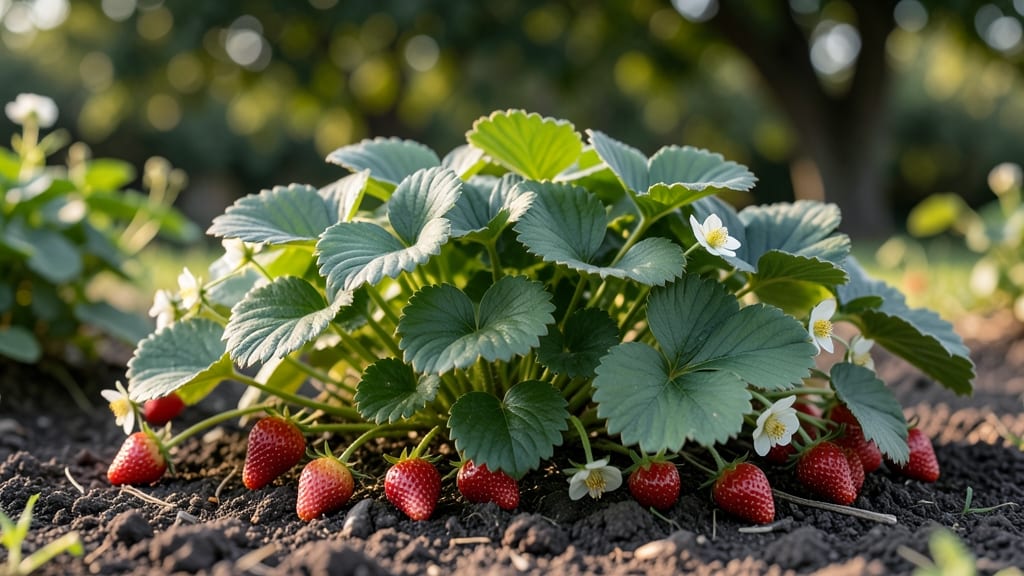
Strawberry plants are perennial powerhouses that surprise gardeners every spring—if you give them the right care. 🌱 I’ve watched mine return year after year, producing sweeter fruit with each harvest, and the secret lies in their cold-hardy crowns and strategic overwintering habits.
The key to long-term success? Understanding their lifecycle: runners spread new plants, crowns store energy for regrowth, and roots anchor them through frost. In Zones 5-9, most varieties survive winter with mulch protection, while tender types need winter covers or container moves. No replanting required—just renewal!
With proper spacing, seasonal pruning, and a little winter prep, your strawberries can thrive for 3-5 years or more. The first-year plants focus on roots, but by year two, you’ll get that bold, juicy harvest that makes the effort worth it. Few garden rewards compare!
Climate matters: Northern gardeners choose hardy June-bearing types, while Southern growers opt for everbearing varieties that fruit twice. The same care principles apply—just adjust timing for your zone. Let’s keep those berries coming!
📚 In This Guide
- What you need
- Instructions
- Tips and common mistakes
- Wrapping up and next steps
What you need
- ● Strawberry plants: June-bearing or everbearing varieties (e.g., Albion, Seascape, or Ozark Beauty for cold-hardy rebloomers). Quantity: 3–6 plants per person (or 1 plant per 12–18 inches of space).
- ● Well-draining soil: pH 5.5–6.8 (test with a soil kit or send a sample to a local extension office).
- ● Amendments: Compost (3–4 inches mixed into the top 12 inches of soil) + aged manure or balanced fertilizer (10-10-10, 1 lb per 100 sq ft).
- ● Sunlight: Full sun (6+ hours daily) or partial shade (4–6 hours) in hot climates.
- ● Watering supplies: Drip irrigation system or soaker hoses (to avoid wetting leaves).
- ● Watering can (for seedlings or small patches).
- ● Mulch: Straw (2–3 inches) or shredded leaves to retain moisture and suppress weeds.
- ● Gloves & pruners: Heavy-duty gardening gloves + bypass pruners (sterilized with rubbing alcohol).
- ● Cold protection: Row covers, frost blankets, or a mini greenhouse for early/late seasons.
- ● Containers: 12–18 inch pots with drainage holes (for urban gardens or renters). Use well-draining potting mix.
- ● Pest control: Neem oil, diatomaceous earth, or bird netting (strawberries are a bird buffet!).
- ● Soil test kit: To monitor nutrient levels (especially nitrogen and potassium).
- ● Trellis or stakes: For vertical growth (everbearing varieties benefit from elevation).
How to understand and care for perennial strawberry plants
Strawberries aren't just annuals—they're cold-hardy rebloomers that reward patience with years of fruit.
🌱 Step 1: Identify Your Strawberry Variety's Perennial Nature
Not all strawberries behave the same. June-bearing types produce one massive harvest in early summer, then go dormant. Everbearing varieties give smaller crops twice yearly, while day-neutral types fruit continuously. The key to perennial success is choosing cold-hardy types like 'Chandler' or 'Albion' that thrive in your zone's winters.
Look for plants labeled as "perennial" or "hardy" on seed packets. These varieties develop strong crowns that survive winter's chill. I always check the USDA zone range—strawberries need at least 10-14 weeks below 40°F annually to properly rest and rebloom vigorously next season.
☀️ Step 2: Plant for Long-Term Perennial Growth
Perennial strawberries need proper spacing to avoid disease. Plant crowns 12-18 inches apart in well-draining soil with full sun exposure (6+ hours daily). The deeper the roots establish before winter, the better they'll survive cold snaps. I like to add a 2-inch layer of mulch after planting to protect crowns from freeze-thaw cycles.
Use raised beds or slightly elevated rows if your soil drains poorly. Water deeply after planting to settle roots, then maintain 1-1.5 inches of water weekly during growing seasons. Perennial plants hate soggy roots—yellowing leaves signal overwatering, while crisp edges mean thirst.
✂️ Step 3: Winterize for Perennial Survival
In late fall, stop fertilizing and reduce watering. Let leaves die back naturally—they insulate crowns during winter. For zones colder than 5, add 4-6 inches of straw mulch after first hard freeze. This protects crowns from temperature swings that cause heaving.
I never cut back foliage until spring green appears. The old leaves act as natural insulation. In early spring, remove mulch and check for heaved crowns. Gently press any exposed crowns back into soil and cover with fresh mulch until nighttime temperatures stay above 40°F consistently.
🌿 Step 4: Spring Renewal for Continued Perennial Fruit
Prune away any dead foliage in early spring, but leave healthy leaves to photosynthesize. Perennial strawberries need 2-3 weeks of 50-60°F soil temperatures before new growth begins. I test soil temp with a thermometer—waiting ensures strong root establishment.
Apply balanced fertilizer (10-10-10) when first leaves appear. Perennial plants need consistent nutrition. Watch for runners—remove them unless you're intentionally propagating. The plant's energy should go to fruit production, not spreading, during the first two years.
⏰ Step 5: Annual Maintenance for Multi-Year Perennials
Renovate beds every 3-4 years by mowing down old leaves in late summer, then fertilizing and watering. This rejuvenates perennial plants. Divide crowded crowns in early spring by digging up clumps and separating into 3-5 crown sections with roots attached.
Perennial strawberries thrive with consistent care. You'll see strongest yields in years 2-5. After that, productivity declines—time to start fresh with new plants. The secret is patience: these aren't annuals to be replaced yearly, but long-term investments that reward loyal gardeners.
Tips & tricks for growing cold-hardy strawberry plants
Here's what nobody tells you about making these rebloomers thrive for years—not just months.
Variety Selection Matters: The 10-14 weeks below 40°F requirement in Step 1 isn't just about survival—it's about setting up next year's fruit production. June-bearing types need that full winter chill to trigger spring blooms, while everbearing varieties benefit from partial dormancy. I recommend 'Albion' for northern climates because it handles our 12-week winter chill like a champ, while 'Chandler' struggles in zones colder than 6.
Soil Temperature is the Hidden Factor: Those 50-60°F soil temperatures in Step 4 aren't arbitrary—they're the sweet spot for root regrowth. I use a soil thermometer to track temperatures because cool springs delay growth. If your soil stays below 50°F for more than 3 weeks, your plants will waste energy trying to grow rather than establishing strong roots for fruit production.
Mulching Strategy for Perennial Success: The 2-inch mulch in Step 2 isn't just about weed control—it's about moisture regulation and temperature moderation. In summer, it keeps roots cool; in winter, it insulates against freeze-thaw cycles. For zones colder than 5, that 4-6 inches of straw mulch creates a microclimate that can mean the difference between heaved crowns and healthy plants. I always use straw because it breaks down slowly and improves soil structure over time.
Renovation Timing is Critical: The 3-4 year renovation cycle in Step 5 prevents overcrowding that leads to disease and poor fruit quality. I mark my calendar to mow down old leaves in late summer because this gives roots time to recover before winter. The key is timing—do it too early and you remove leaves that could still photosynthesize; too late and you leave old foliage that may harbor pests over winter.
Pro Tips for Are Strawberry Plants Perennial
- Here's what nobody tells you about making these rebloomers thrive for years—not just months.
- Variety Selection Matters: The 10-14 weeks below 40°F requirement in Step 1 isn't just about survival—it's about setting up next year's fruit production.
- Soil Temperature is the Hidden Factor: Those 50-60°F soil temperatures in Step 4 aren't arbitrary—they're the sweet spot for root regrowth.
Frequently asked questions
Got questions about perennial strawberries? You’re in the right place!
Whether you’re a first-time gardener or a seasoned green thumb, these answers will help you keep your strawberry patch thriving year after year.
Do strawberry plants really survive winter in cold climates?
Yes—if they’re cold-hardy varieties (like 'Jewel' or 'Chandler') and given proper protection. Mulch heavily with straw or leaves (4–6 inches) to insulate roots. In extreme zones (below 0°F), use row covers or plant in containers for easy winter relocation. Pro tip: Avoid pruning until spring to preserve energy!
How long do strawberry plants live as perennials?
With care, strawberry plants can live 3–5 years (sometimes longer!). However, yields decline after year 2–3 due to crown rot or reduced vigor. Reblooming varieties (June-bearing vs. everbearing) may need renewal—replace every 3–4 years for peak production. Rotate beds to prevent soil depletion!
Can I grow strawberries in containers if they’re perennials?
Containers work great for perennials—just choose 5-gallon+ pots with drainage. Use well-draining soil and overwinter indoors (or in a garage) if temps drop below 10°F. Bonus: Container plants are easier to protect from pests and diseases!
Why did my perennial strawberries stop fruiting this year?
Common culprits: overcrowding (thin runners), nutrient deficiency (feed with compost/balanced fertilizer), or poor light. Check for pests (slugs, birds) or disease (gray mold). Fix: Prune old leaves in early spring and divide crowded crowns to revive growth!
Are there perennial strawberry alternatives for warmer climates?
Yes! Try Alpine strawberries (dwarf, cold-tolerant) or everbearing varieties like 'Seascape' (produces fruit twice/year). For tropical zones, opt for annual varieties or grow in shade cloth to extend the season. Pro tip: Succession plant in fall for winter harvests!
Wrapping up and next steps
So, are strawberry plants perennial? The answer is a resounding yes—especially for cold-hardy varieties like June-bearing and everbearing types! With the right care, these plants will reward you year after year with juicy, vibrant fruit.
Whether you’re a seasoned gardener or just starting out, embrace the cycle of planting, pruning, and protecting your strawberries—they’re worth the effort!
Ready to level up your garden? Start by selecting the perfect variety for your climate, then plan your planting schedule and mulch like a pro. Your future strawberry harvests will thank you!