
Watering
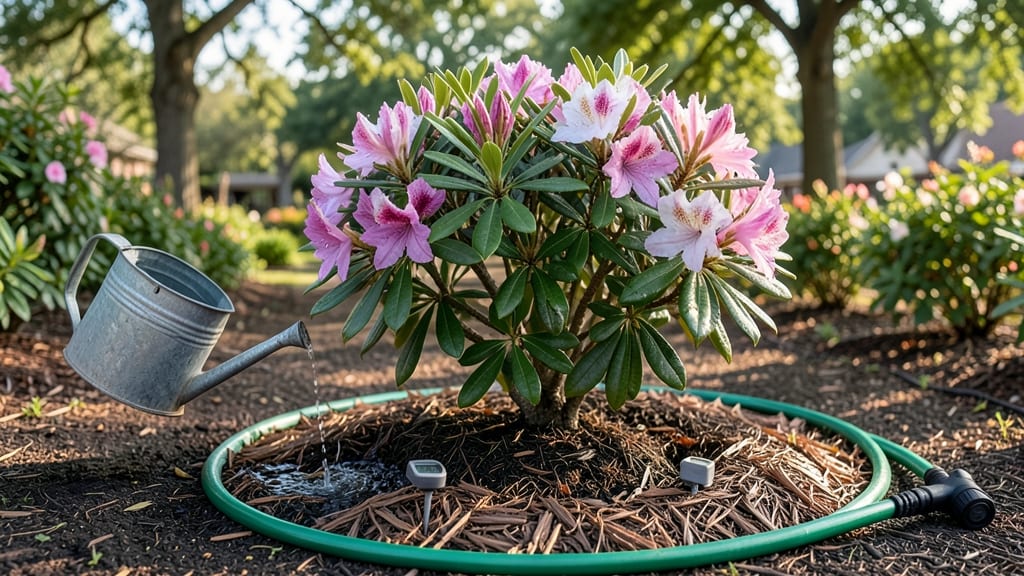
Mastering your azalea’s water requirements is the secret to those showstopping 🌸 blooms year after year — and getting it wrong can mean wilting or root rot before you even notice.
Picture this: You’ve just planted your azaleas in General (USDA Zone 6 default) soil, and you’re eager to see them thrive. But how do you know if you’re giving them too much or too little?
The answer isn’t one-size-fits-all — it changes with the season, the pot size, and even the weather.
In this guide, I’ll break down the exact watering schedule for every season, from deep soaks in summer to barely a sip in winter. You’ll learn how to read your azalea’s soil moisture like a pro, spot the early signs of stress, and adjust your routine without guessing.
By the end, you’ll have a foolproof system to keep your azaleas happy, blooming, and alive for years — no more brown leaves or soggy roots in sight.


How often to water azaleas by season: a monthly guide
Azaleas thrive when their watering needs match the season, but getting it right can feel tricky. Too much water causes root rot, while too little leads to wilting blooms. The key is understanding how environmental factors like humidity, rainfall, and temperature change their needs month by month.
For example, my evergreen azaleas in Zone 6 drink heavily in summer but barely need water in winter. Let’s break it down so you can keep your plants lush without guesswork.
Start by checking your soil moisture regularly—stick your finger 2 inches deep into the soil. If it feels dry, it’s time to water. In containers, azaleas dry out faster than in-ground plants, so monitor them daily during hot spells.
For in-ground shrubs, established roots help retain moisture, but young plants still need frequent attention. Remember, morning watering is best to reduce evaporation and fungal risks.
| Season | Watering Frequency | Key Factors | Soil Moisture Check |
|---|---|---|---|
| Spring (Mar-May) | 2-3 times per week | New growth, rising temps, occasional rain | Top 2" dry by finger test |
| Summer (Jun-Aug) | Daily (morning) or twice daily in heatwaves | High evaporation, low humidity, blooming season | Top 1-2" dry; check daily |
| Fall (Sep-Nov) | Weekly to bi-weekly | Cooler temps, reduced growth, autumn rains | Top 3" dry; reduce as temps drop |
| Winter (Dec-Feb) | Bi-weekly (only if no snow/rain) | Dormancy, frost protection, minimal evaporation | Check soil only if thawed; avoid soggy roots |
Spring is when azaleas wake up from dormancy, so increase watering gradually as new leaves emerge. Aim for 1-2 gallons per watering, focusing on the root zone to encourage deep growth.
If your area gets regular rainfall (over 1 inch per week), you can cut back slightly—but always check the soil. My Korean azaleas in containers need extra attention here, as they dry out 30% faster than in-ground plants.
Summer is the most critical time for consistent moisture. Azaleas bloom in late spring to early summer, and stress from drought causes buds to drop. Water deeply in the early morning to let foliage dry before evening.
If temperatures hit 90°F+, consider mulching with pine bark to retain moisture. I’ve seen azaleas wilt within 24 hours of missed watering in peak heat—don’t let that happen to yours!
Fall signals a shift to conservative watering as growth slows. Reduce frequency to once weekly unless your region stays dry. This is also the time to test soil pH (ideal: 4.5-5.5) and amend if needed—acidic soil helps roots absorb moisture efficiently.
My evergreen varieties hold onto water better than deciduous types, so adjust based on leaf density.
Winter care is minimal but vital. Azaleas in USDA Zone 6 enter dormancy, but overwatering can rot roots. Only water if the ground isn’t frozen or covered in snow. A 3-inch layer of mulch protects roots from temperature swings.
I’ve had azaleas survive winters with no supplemental water in snowy climates, but container plants may need occasional sips if pots dry out.
Don’t forget to adjust for humidity levels. In dry climates (like Arizona), azaleas need daily watering in summer, while humid regions (like the Southeast) may only require watering every 3-4 days.
Use a hygrometer to track humidity—aim for 40-60% for optimal growth. Pro tip: Group azaleas with hostas or ferns to create a microclimate with higher humidity.
Watch for environmental clues like yellowing leaves (often from overwatering) or crispy edges (underwatering). Container azaleas are especially prone to root rot if pots lack drainage holes. I once lost a $80 azalea because the nursery pot had no holes—always check before repotting!
For in-ground plants, improve drainage by amending soil with peat moss or pine fines.
Finally, fertilizer impacts water needs. Azaleas fed with acid-loving fertilizer (like 8-3-9) grow faster and may need 10-20% more water during bloom. Always water 1-2 days after fertilizing to prevent root burn. My June-blooming azaleas
Signs of overwatering vs. underwatering azaleas (with fixes)
Your azaleas might look lush and vibrant, but their water needs are often misunderstood. Overwatering and underwatering both cause stress, but the symptoms look different. Learning to read your azaleas' signals will help you adjust before damage sets in. The key is checking the soil moisture and leaf condition regularly.
For overwatered azaleas, look for yellowing leaves that feel mushy to the touch. The soil may smell sour or rotten, and you might see mold or fungus growing on the surface. Root rot is a common issue when azaleas sit in soggy soil for too long.
This condition can spread quickly, especially in containers where drainage is poor.
🌱 Key Takeaway: Azalea Water Requirements
Evenly moist (like a wrung-out sponge)
1-2 gallons every 2-3 days (adjust for season)
Yellow leaves
Mushy stems
Sour smell
Dry, crispy leaves
Wilting
Soil pulls away from pot
Stop watering
Improve drainage
Repot if needed
Water deeply
Mulch to retain moisture
Check soil pH
If your azaleas show signs of underwatering, the leaves will turn brown and crispy at the edges, often curling inward.
The soil may pull away from the sides of the pot, and the plant might wilt even after watering. Wilting is a clear distress signal, but it’s often reversible with proper care.
To fix overwatered azaleas, stop watering immediately and let the soil dry out. If the plant is in a container, check the drainage holes and repot if necessary using a well-draining acidic soil mix.
For underwatered azaleas, water deeply until it runs out the drainage holes, then mulch around the base to retain moisture.
Remember, azaleas prefer consistent moisture but hate soggy roots. Always water in the morning to reduce evaporation and fungal risks. Mulching with pine bark or wood chips helps maintain even moisture levels while keeping roots cool.
Regularly check the soil moisture by sticking your finger about an inch deep. If it feels dry, it’s time to water. If it’s still damp, wait another day. This simple check prevents both overwatering and underwatering, keeping your azaleas thriving all season long. 🌸