
Watering
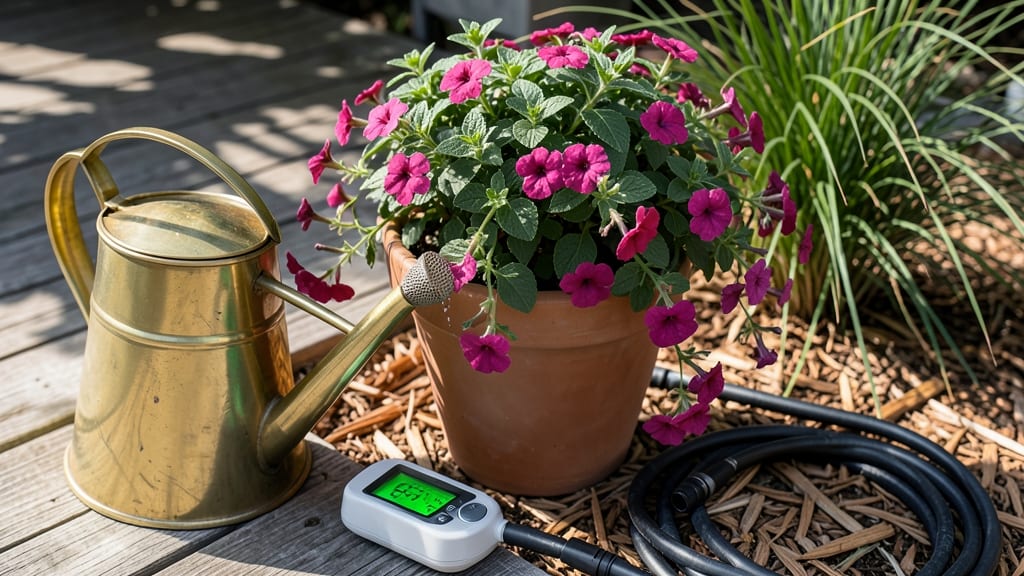
Mastering the calibrachoa water requirements is the secret to those nonstop blooms you’ve been dreaming of—because these thirsty little plants 🌸 won’t forgive inconsistent moisture.
Picture this: You water your calibrachoa every morning like clockwork, but by afternoon, the edges of the leaves are crisping. That’s not wilting—it’s a cry for help from roots that need steady, even hydration without drowning.
Here’s the game-changer: Drip irrigation keeps soil evenly moist, while soaker hoses can save you time (and your back) in larger beds. But get the frequency wrong, and you’ll end up with yellowing leaves or moldy stems—neither of which pairs well with those vibrant petals.
In this guide, I’ll break down the exact schedule for your climate, how to spot over- or underwatering, and why morning watering beats evening every time. Let’s turn those “almost there” plants into showstoppers.


Ideal watering schedule for calibrachoa based on climate and soil type
Mastering the watering schedule for your calibrachoa plants is key to those vibrant blooms you love. These plants thrive on consistent moisture but hate soggy roots—finding that balance is everything.
Your local climate and soil type play huge roles in determining how often and how much to water, so let’s break it down by region and soil conditions.
In hot, dry climates like the Southwest, calibrachoa may need daily watering during peak summer months, while cooler coastal areas might only require watering every 2-3 days. Even within the same region, soil composition changes everything—sandy soil drains fast, while clay holds moisture longer.
Let’s explore how to adjust your watering routine based on these factors.
Morning watering is always best for calibrachoa. Watering in the early morning hours (before 10 AM) gives foliage time to dry completely, reducing the risk of fungal diseases like powdery mildew. Avoid evening watering—wet leaves overnight create a breeding ground for pests and pathogens. Pro tip: Use a moisture meter to check soil moisture before watering; aim for the top 1-2 inches to feel slightly damp but not soaked.
| Climate Zone | Soil Type | Watering Frequency | Best Time to Water | Key Adjustments |
|---|---|---|---|---|
| Hot/Dry (Zones 7-10) | Sandy | Daily (morning) | 6-9 AM | Mulch heavily to retain moisture |
| Hot/Dry (Zones 7-10) | Clay | Every 2-3 days | Morning | Avoid overwatering; let topsoil dry slightly |
| Temperate (Zones 4-6) | Loamy | Every 2-3 days | Morning | Reduce in cooler months; monitor rainfall |
| Coastal/Mild (Zones 8-9) | Sandy | Every 2 days | Morning | Increase humidity with pebble trays |
| All Zones | Potted | Daily (small pots) | Morning | Use self-watering pots for consistency |
Seasonal shifts demand watering adjustments for calibrachoa. During spring and fall, when temperatures are moderate, you can water every 2-3 days. But in summer’s peak heat, even clay soil may dry out faster than expected—check soil moisture daily.
In winter, if you’re growing calibrachoa as a perennial in mild zones, cut back to bi-weekly watering or pause entirely if rainfall covers your needs.
One of the biggest watering mistakes I see is overwatering in clay soil. Clay holds moisture like a sponge, and calibrachoa roots can suffocate if they’re constantly soggy. Always test soil moisture before watering—stick your finger 1-2 inches deep.
If it feels damp, wait another day. On the flip side, underwatering in sandy soil leads to wilting and stunted growth. Sandy soil drains so quickly that calibrachoa may need watering twice daily in extreme heat.
For container-grown calibrachoa, watering needs are even more critical. Potted plants dry out 2-3x faster than in-ground plants because containers have limited soil volume. Use self-watering pots or place containers on pebble trays filled with water to increase humidity around roots.
Pro move: Add hydration crystals to potting mix—they absorb and release moisture as needed, keeping roots consistently hydrated without the risk of overwatering.
Watch for visual cues that your calibrachoa’s watering routine needs tweaking. Drooping leaves in
Drip irrigation vs. soaker hose: which method maximizes calibrachoa blooms?
When it comes to keeping your calibrachoa plants bursting with vibrant blooms, watering consistency is key. Both drip irrigation and soaker hoses deliver moisture efficiently, but they excel in different garden setups.
I’ve tested both methods in my own hanging baskets and container gardens, and the results reveal clear winners for specific scenarios.
Your calibrachoa thrives on consistent moisture—never soggy, never dry. Drip systems offer precise control, while soaker hoses provide gentle, even saturation. The choice depends on your garden layout, budget, and how much maintenance you’re willing to handle.
Let’s break down the pros and cons to help you decide which method will maximize those show-stopping flowers.
Drip Irrigation
- Precise water delivery to roots
- Reduces evaporation and fungal risk
- Works well for large garden beds
- Automatable with timers
- Higher upfront cost
- Requires more setup
- Clogging risk with debris
Soaker Hose
- Affordable and easy to install
- Gentle, even watering for containers
- No risk of overwatering with proper use
- Works well for small spaces
- Less precise for large areas
- Can waste water if left running
- Not ideal for automated systems
For hanging baskets and containers, I’ve found soaker hoses to be the best choice. They deliver water directly to the roots without disturbing the delicate calibrachoa stems, and their gentle flow prevents soil erosion. Plus, they’re a fraction of the cost of drip systems.
In my morning watering routine, I simply lay the hose along the edges of the baskets and let it do its work while I tend to other plants.
If you’re managing a large garden bed or raised planters, drip irrigation shines. The ability to customize watering zones ensures every plant gets exactly what it needs.
I installed a basic drip system in my raised beds last summer, and the difference in bloom consistency was noticeable—no more patchy growth from uneven watering. The initial investment paid off in lush, healthy calibrachoa all season long.
Cost is another factor to weigh. A soaker hose can be had for under $20, while a drip irrigation kit starts around $50 for basic setups. If you’re working with a tight budget or small space, the soaker hose is the clear winner.
But if you’re committed to long-term efficiency and larger-scale gardening, drip irrigation is worth the splurge.
Remember, calibrachoa hates soggy roots but craves moisture. Whether you choose drip or soaker, always water in the early morning to allow foliage to dry before nightfall—this prevents fungal diseases like powdery mildew.
Combine your chosen method with mulch to retain moisture, and you’ll be rewarded with non-stop blooms all season.