
Pests and Diseases
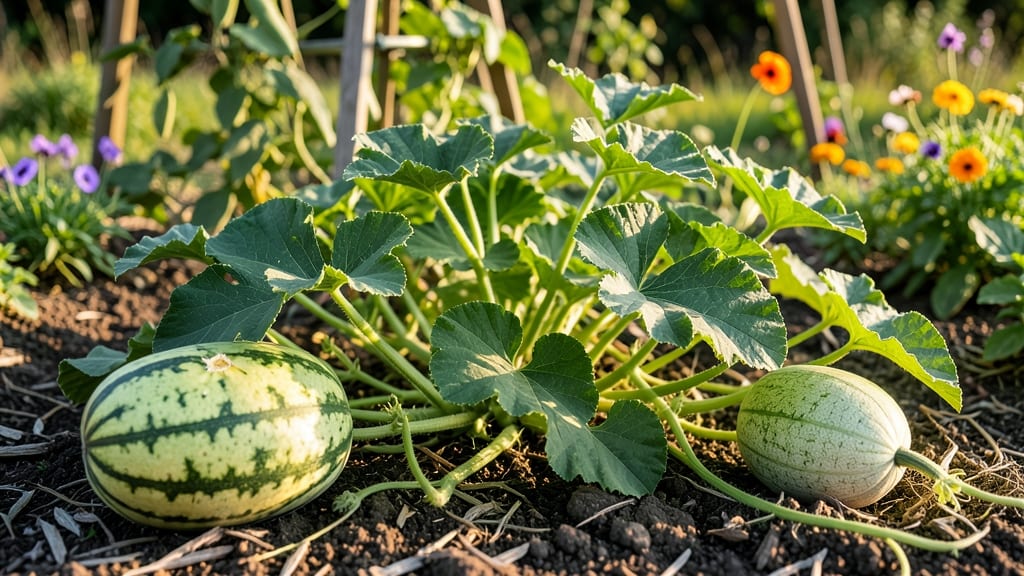
You can grow watermelon and cantaloupe together with proper planning: both thrive with similar pollination needs and space requirements, but maintaining 3–6 feet between plants prevents overcrowding, disease spread, and nutrient competition.
These melons actually make great garden companions because they share the same pollinators—bees love their bright flowers—and bloom within a similar timeframe. 🌱 The key is spacing: cantaloupes need slightly more room to sprawl than watermelons, so I recommend placing them on opposite sides of the garden bed or using trellises to separate their vines.
This setup also helps reduce soil-borne diseases that can spread when plants compete for nutrients.
For best results, I always add a thick layer of mulch around the base of each plant to retain moisture and suppress weeds.
Companion plants like marigolds or nasturtiums nearby can deter pests like squash bugs, while ensuring your soil is well-draining and rich in organic matter gives both melons the energy they need to produce fruit.
💡 In This Article
- Pollination and Space Requirements for Watermelon and Cantaloupe
- Trellising and Companion Planting Tips for Melons
Pollination and space requirements for watermelon and cantaloupe
Both watermelons and cantaloupes rely heavily on bees and other pollinators to transfer pollen between their bright yellow flowers.
The science here is fascinating: these melons produce male and female flowers on the same vine, but they need cross-pollination for fruit development. 🐝 When planted together, their flowers bloom within a similar window (typically 4-6 weeks after germination), creating a perfect feeding opportunity for bees.
This shared pollination cycle is why they thrive when grown side by side—unlike some plants that require different pollinators or bloom at different times.
The spacing requirement of 3-6 feet apart comes from their vine habits: cantaloupes spread 6-8 feet in diameter, while watermelons typically sprawl 4-6 feet.
When planted too closely (2 feet or less), their large leaves create dense canopies that trap moisture, creating ideal conditions for fungal diseases like powdery mildew.
The 6-foot separation also prevents competition for nutrients in the soil's root zone, where both plants draw heavily on nitrogen and potassium during fruiting.
Here's what happens when spacing is ignored: vines tangle, reducing airflow and increasing humidity at soil level. This moisture buildup accelerates the growth of pathogens like Fusarium wilt, which can devastate both crops.
I've seen gardens where cantaloupe yields dropped by 40% when planted too close to watermelons due to disease spread. The solution? Plant them in opposite corners of the garden bed or use raised beds with separate growing zones for each melon type.
Another critical factor is their root systems: both develop deep taproots that can compete aggressively for water and nutrients. Watermelons typically grow roots 3-4 feet deep, while cantaloupes reach 2-3 feet. When planted too close, their root zones overlap, leading to stunted growth and smaller fruit.
The 6-foot spacing gives each plant enough room to establish its own nutrient territory while still benefiting from shared pollinators.
For visual reference, imagine a garden bed that's 8 feet wide: you could place two cantaloupe plants on one side (6 feet apart) and two watermelon plants on the opposite side. This arrangement maintains airflow while keeping pollinators happy with a continuous supply of flowers.
The key is creating a balance where both plants feel like they have their own space but still benefit from each other's presence.
One advanced technique I've used is the "checkerboard" method: alternate rows of watermelon and cantaloupe with 3-foot spacing between plants and 4-foot spacing between rows. This creates a natural barrier that reduces disease transmission while maximizing pollination efficiency.
The visual effect is striking—rows of bright yellow flowers create a bee magnet that works all season long. 🌟