
Watering
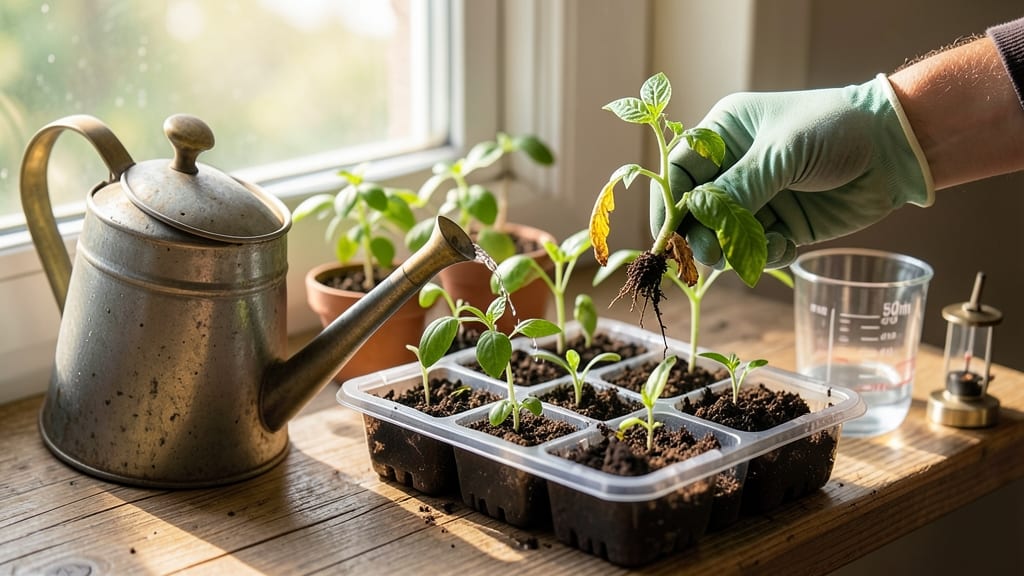
You can overwater seeds, and it will suffocate their roots, leading to rot or mold before they even sprout. Maintain evenly moist—not soggy—soil and ensure proper drainage to prevent seed failure.
Overwatering seeds creates a suffocating environment where roots can't access oxygen, halting germination entirely. 🌱 The excess moisture also encourages fungal growth, turning your seed-starting tray into a breeding ground for mold.
I've seen beginners drown seeds by keeping them in constantly wet soil, only to watch their carefully planted seeds turn to mush instead of sprouting. The key is balance—think of it like giving your seeds a gentle drink rather than a flood.
Most seed-starting mixes are designed to drain well, but even they can become waterlogged if you don't let excess moisture escape. A simple test is to press your finger about an inch deep into the soil—if it feels damp but not dripping, you're in the ideal range.
For containers without drainage holes, I recommend using a spray bottle to mist the soil lightly rather than pouring water directly, which helps distribute moisture evenly without creating puddles.
💡 In This Article
- How Overwatering Damages Seed Germination
- Proper Watering Techniques for Sprouting Seeds
How overwatering damages seed germination
When you overwater seeds, you're essentially creating a waterlogged environment where roots can't breathe. Seeds need oxygen to activate enzymes that break down stored nutrients—like starches and proteins—into energy for germination.
In waterlogged soil, oxygen levels drop dramatically (often below 5% of normal air content), suffocating the tiny root hairs that emerge first. This deprivation forces seeds into a state of dormancy or, worse, triggers anaerobic respiration, which produces toxic ethanol instead of energy.
The damage doesn't stop at oxygen deprivation. Excess moisture creates the perfect conditions for fungal pathogens like Pythium or Phytophthora, which thrive in stagnant water.
These fungi attack seed coats and young roots, causing them to rot before sprouting. 🌱 I've seen seed trays develop a fuzzy white or gray mold within 48 hours of constant saturation—a clear sign the environment has become hostile.
Even if the seedling eventually breaks through, its weakened root system makes it vulnerable to collapse.
Another critical factor is how water disrupts seed respiration. Most seeds require a specific moisture level—typically 30-50% soil moisture by volume—to trigger germination. Beyond that, the seed's protective outer layers soften too quickly, making them susceptible to mechanical damage from handling or even the weight of overlying soil.
This is why overwatered seeds often sprout erratically or produce weak, leggy seedlings that can't support themselves.
Consider this comparison: a properly hydrated seed absorbs water gradually, swelling evenly as enzymes activate. But in saturated soil, water pressure can force seeds to imbibe too rapidly, causing their cells to burst—a condition called imbibitional injury.
This is particularly risky for larger seeds like beans or peas, which have thick seed coats that need controlled hydration to avoid swelling cracks.
What most people don't realize is that even after the seedling emerges, overwatering continues to harm it. The delicate hypocotyl (the stem connecting the seed to the first true leaves) becomes waterlogged and prone to disease.
In extreme cases, the stem can rot at the soil line, leaving only the cotyledons (seed leaves) visible—a classic sign of overwatering. 💫
The science behind this involves understanding soil aeration. Well-draining seed mixes contain 30-50% pore space filled with air, which roots need to grow. When you overwater, these air pockets fill with water, creating a dense, anaerobic environment.
For perspective, a 1-cubic-foot block of saturated soil can lose up to 90% of its oxygen capacity—enough to suffocate an entire seed tray.