
Pests and Diseases
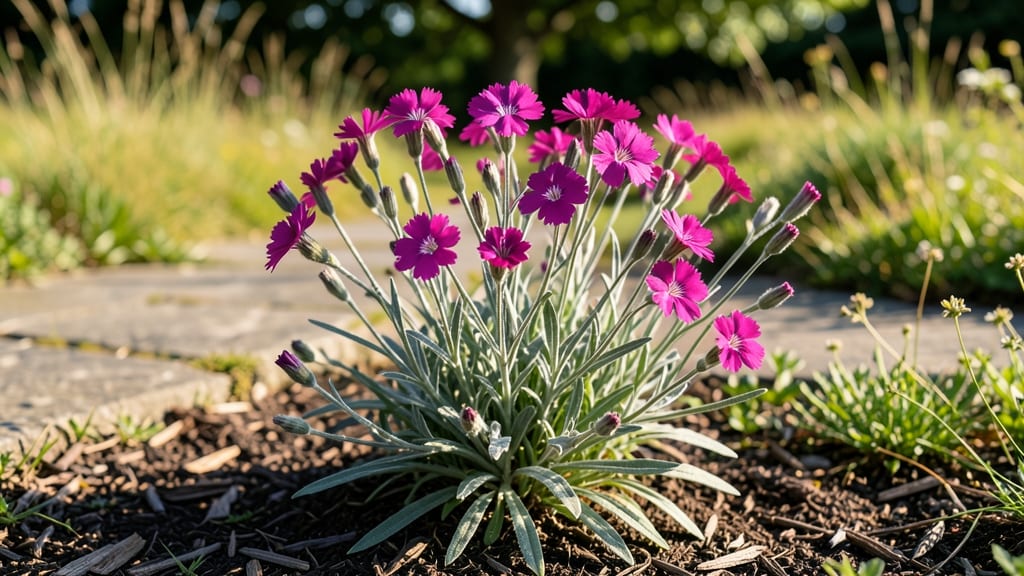
Dianthus grows as a perennial in most regions, adapting to different climates as either hardy annuals or true perennials, with cold-resistant varieties thriving in zones 3-9 when given proper winter protection.
Most gardeners think of dianthus as a reliable perennial, but its growth habit actually depends heavily on your local climate and specific variety. 🌱 For example, Dianthus barbatus (sweet william) often behaves as a biennial in cooler zones, while Dianthus gratianopolitanus (cheddar pink) stays evergreen through winter in zones 4-9.
The key difference lies in their root systems—some species store energy underground to regrow each spring, while others need annual replanting in harsh winters. I've found that adding a thick layer of straw mulch in late fall can push many varieties into true perennial behavior even in zone 5 gardens.
What surprises many growers is how quickly dianthus can bounce back after winter. Even varieties that die back to the ground in cold snaps often send up fresh growth by early spring, proving their resilience.
The secret lies in their ability to produce new shoots from the base, making them far hardier than they appear. For gardeners in marginal zones, I recommend choosing evergreen varieties like 'Firewitch' or 'Matrona'—they handle cold better and provide year-round color interest.
💡 In This Article
- Dianthus Perennial Types and Their Cold-Resistant Traits
- How to Overwinter Dianthus in Cold Climates
Dianthus perennial types and their cold-resistant traits
Dianthus species exhibit remarkable diversity in their cold tolerance, with some thriving as true perennials while others behave as hardy annuals. The key lies in their botanical classification: Dianthus gratianopolitanus (common pinks) often survives winters in zones 3-9, developing deep root systems that store energy for regrowth.
In contrast, Dianthus barbatus (sweet william) typically acts as a biennial, completing its life cycle in two years unless protected. This variation stems from their natural habitats—wild pinks grow in rocky alpine regions where they endure freezing temperatures, while sweet williams originated in meadows with milder winters.
The growth habit also differs dramatically between evergreen and deciduous varieties. Evergreen types like 'Firewitch' maintain their foliage year-round in zones 5-9, thanks to a waxy leaf coating that prevents ice crystal formation.
Deciduous varieties, however, shed leaves in winter but regrow from protected crowns. 🌿 What's fascinating is how some species develop a "dormancy mechanism" where metabolic activity slows to just 5% of summer levels during winter, allowing them to survive temperatures as low as -25°F when properly mulched.
This biological adaptation explains why gardeners often see dianthus emerge unscathed after harsh winters.
For gardeners choosing varieties, the hardiness zone becomes the critical factor. In zone 4, Dianthus chinensis (Chinese pinks) typically survives as a perennial, while in zone 3, even the hardiest types may need winter protection.
The secret to their resilience lies in their ability to produce new shoots from basal buds—these protected growth points remain insulated beneath the soil surface. This is why proper planting depth matters: crowns should sit just above soil level to prevent rot while staying protected from extreme cold.
Color also plays an unexpected role in cold tolerance. Darker foliaged varieties like 'Blackout' often handle winter better than light-colored types because their pigments absorb more solar radiation, creating a microclimate that prevents frost damage.
The leaf structure matters too—hairy-leaved varieties develop a natural insulating layer that traps heat. This is why 'Matrona' with its silvery foliage thrives in zone 5 gardens where other varieties might struggle.
What most gardeners overlook is how dianthus responds to temperature fluctuations. These plants can tolerate brief dips to 10°F without damage, but prolonged exposure below 20°F often causes winter dieback.
The key difference between annual and perennial behavior comes down to how quickly they regenerate: true perennials produce new shoots within 4-6 weeks of spring thaw, while annual types may take months or require replanting.
Consider these key traits when selecting varieties:
- Evergreen types: Best for zones 5-9, maintain foliage year-round (e.g., 'Firewitch', 'Matrona')
- Deciduous types: Die back in winter but regrow vigorously (e.g., 'Giant Cascade', 'Superb')
- Biennial types: Complete lifecycle in 2 years unless protected (e.g., Dianthus barbatus)
- Alpine species: Most cold-hardy, thrive in zones 3-7 (e.g., Dianthus alpinus)
Understanding these distinctions helps gardeners make informed choices. For example, in zone 4, planting Dianthus gratianopolitanus with its 2-3 inch deep root system gives it a significant advantage over shallow-rooted varieties. The deeper roots access moisture and nutrients even when surface soil freezes, ensuring survival through winter's harshest months.