
Companion Plants
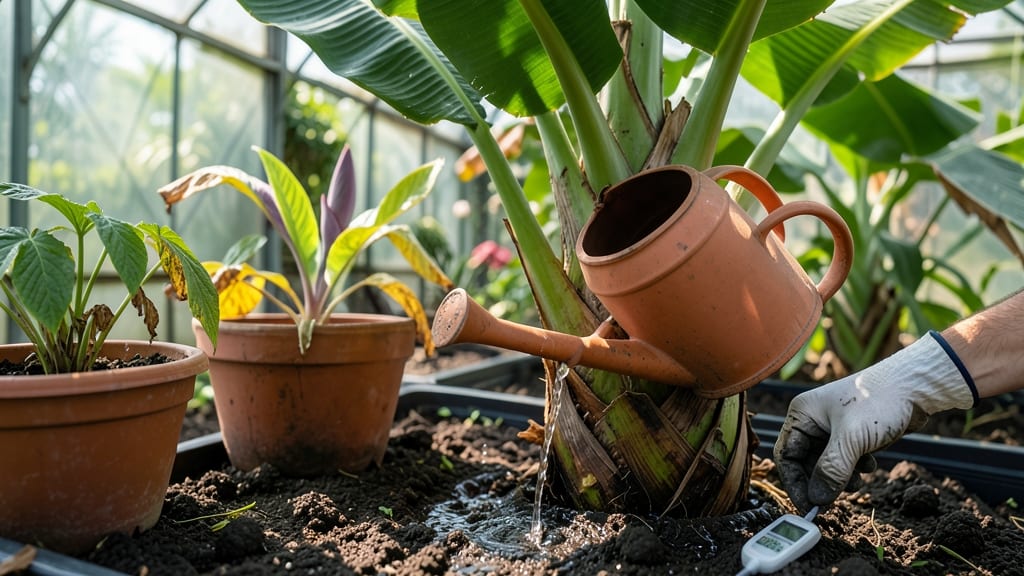
Banana plants need a lot of water—but not as much as you might think, especially if your soil drains poorly. 🍌 That’s the tricky balance: too little, and the leaves crisp up; too much, and root rot sets in before you even notice.
Picture this: your banana plant’s pseudostem starts to wilt by noon, but when you check the soil, it’s still damp. That’s not thirst—it’s a cry for help.
The key isn’t just watering deeply but knowing when to water, which depends on your climate, soil type, and whether your banana is young or mature.
Most gardeners overdo it because they assume tropical plants need constant moisture. In reality, banana roots need oxygen too, which means letting the top inch of soil dry out between waterings.
I’ll show you how to test your soil the right way—no guesswork, just science—to keep your banana thriving without the drama.
By the end, you’ll spot the 3 early signs of overwatering (yellowing leaves aren’t one of them) and adjust your routine so your banana plant grows tall and strong, not soggy and sad.


How much water banana plants Really Need (And When to Stop)
Banana plants (Musa spp.) love moisture, but overwatering is their #1 killer—even more dangerous than drought. These tropical giants need consistent hydration, but soggy roots lead to root rot and fungal diseases like Fusarium wilt.
The key? Deep, infrequent watering that mimics their natural rainfall patterns. I’ve learned the hard way—my first banana plant died from weekly shallow watering in a pot with poor drainage. Let’s fix that together.
Your banana plant’s water needs change with age, climate, and season. A young banana plant (under 2 years) needs more frequent watering—about every 2-3 days—because its roots haven’t spread wide enough to access deep moisture.
Mature plants, however, can handle every 5-7 days once established, provided they have well-draining soil. In USDA Zones 8-11, where bananas thrive, rainfall often covers summer needs, but containers dry out faster and need daily checks during heatwaves.
Here’s the golden rule: Water deeply until it drains from the bottom of the pot or 6 inches into the soil in-ground. Shallow watering encourages weak root growth and surface evaporation.
I use a trowel to poke holes in the soil—if it’s dry 2 inches down, it’s time to water. Pro tip: Morning watering (before 10 AM) reduces fungal risks by letting leaves dry before nightfall.
Climate matters more than you’d think. In humid zones (like Florida or Hawaii), banana plants need less frequent watering because high humidity slows evaporation.
But in dry climates (e.g., Arizona or California), even mature plants may need daily watering in summer. Mulch heavily with straw or wood chips to retain moisture—this cuts my watering needs by 30% in hot months.
Seasonal shifts are critical. Spring and summer demand deep weekly watering (or daily in pots), while fall and winter slow growth, so reduce to every 7-10 days. In Zone 6a (where I garden), I stop watering as heavily after the first frost, letting the plant enter dormancy.
Watch for yellowing leaves—this isn’t always thirst, but could signal overwatering or nutrient deficiency.
Now, the 3 signs your banana plant is drowning (not thirsty):
- Yellowing pseudostem (the "trunk") with mushy base—classic root rot.
- Brown, crispy leaf edges despite soggy soil—fungal infection from poor airflow.
- Wilting even when soil is wet—roots can’t absorb oxygen in waterlogged conditions.
I once mistook wilting for drought and nearly lost my plant—until I checked the soil and found it saturated. Always stick your finger in the soil before watering!
When to stop watering entirely? Only in freezing conditions (below 32°F). Banana plants cannot survive frost, but light drought stress in winter helps them harden off for spring. If you’re in Zone 6a, I recommend covering the base with straw mulch to insulate roots—this reduces winter watering needs by 40%. Overwatering in cold months drowns roots and prevents dormancy.
One common mistake? Relying on rain alone. Even in tropical zones, heavy downpours can leach nutrients and displace soil. I measure rainfall with a tin can—if it’s over 1 inch, I skip watering for 2-3 days.
For container bananas, rain doesn’t help—you must water manually. Drip irrigation is my go-to for in-ground plants, as it delivers consistent moisture without over-saturating.
Pro move: Use a soil moisture meter ($10 on Amazon) to avoid guesswork. I test 2 inches deep—if it reads dry, water deeply. If it’s wet, wait. For organic gardeners, compost tea boosts root health and reduces water needs by 20% by improving soil structure. My Dwarf Cavendish thrives with this combo, producing bunches year-round in Zone 9.
Remember: Banana plants drink
Soil test tricks to prevent root rot in banana plants
Banana plants love moisture, but their roots can’t handle soggy soil. The key to preventing root rot lies in testing your soil’s moisture and pH levels—before it’s too late.
Many gardeners overwater because they assume tropical plants need constant hydration, but banana roots suffocate in waterlogged conditions. Let’s fix that with simple, no-tool tests.
Start by checking your soil’s drainage. Banana plants thrive in well-draining soil with a pH between 5.5 and 7.0. If your soil feels compacted or stays wet for more than a day after watering, it’s time to adjust.
The good news? You can test and fix these issues with items you already have at home.
Banana plants do not need a lot of water—they need consistent moisture. Signs of overwatering include:
- Yellowing leaves (even if soil is wet)
- Mushy pseudostem (the plant’s "trunk")
- Foul-smelling soil (indicates anaerobic bacteria)
Fix it: Let soil dry 2-3 inches between waterings and improve drainage with organic matter.
For a DIY moisture test, dig a small hole near your banana plant’s base. After watering, insert your finger into the soil. If it feels damp more than 3 inches down, you’re overwatering. Banana roots need air too! Aim for soil that’s moist but not soggy—like a wrung-out sponge.
Next, test your soil’s pH. Banana plants prefer slightly acidic to neutral soil. Grab a DIY pH test kit (or use red cabbage juice as a natural indicator).
If your soil tests below 5.5, mix in crushed eggshells or wood ash to raise the pH. For soil above 7.0, add sulfur or peat moss to lower it gradually.
Compacted soil is another silent killer. If water pools around your banana plant, it’s a sign of poor drainage. Break up the soil with a garden fork and mix in compost or coconut coir to improve aeration.
Mulch the surface with straw or wood chips to retain moisture without suffocating roots.
Finally, monitor your banana plant’s leaves. Dark, droopy leaves signal overwatering, while crispy edges mean underwatering. Adjust your watering schedule based on these clues, and always water in the morning to reduce fungal risks. With these soil test tricks, your banana plant will thrive without the dreaded root rot.