
Flowers
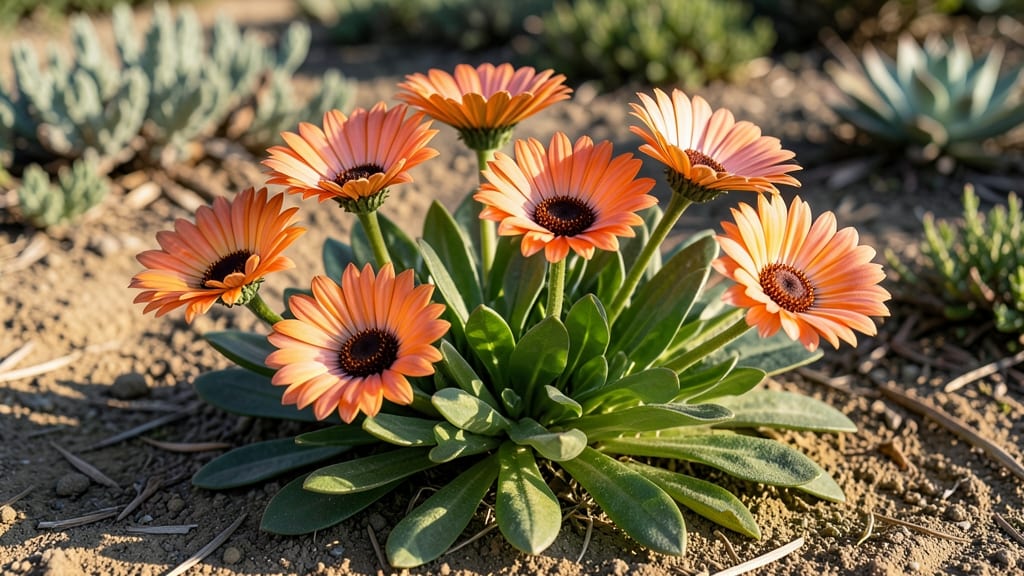
Whether gazania flowers are annuals or perennials depends entirely on your climate: they behave as annuals in cold regions but are true perennials in frost-free zones, where they regrow from their roots each spring after winter dormancy.
These vibrant blooms thrive in warm weather but struggle when temperatures drop below 30°F. 🌡️ In frost-free areas, gazanias naturally enter dormancy during winter, conserving energy in their root systems until spring warmth triggers regrowth.
The key difference lies in their resilience—while northern gardeners treat them as annuals (planting fresh each year), southern growers can enjoy the same plants returning season after season with proper care.
This dual behavior explains why gazanias are often called "weather-dependent perennials"—their life cycle adapts to local conditions rather than following rigid seasonal rules. Understanding this helps gardeners choose the right varieties and care strategies for their specific climate zones.
💡 In This Article
- How Climate Determines Gazania’s Annual vs Perennial Behavior
- Tips for Extending Gazania’s Lifespan in Cold Regions
How climate determines gazania’s annual vs perennial behavior
Gazania's life cycle hinges on a biological mechanism called thermoperiodism, where growth responds directly to temperature fluctuations. These sun-loving plants originate from South Africa's arid regions, where they evolved to thrive in USDA Zones 9-11 with consistent warmth.
Their root systems develop thick, fibrous storage tissues that can survive mild winter dormancy—a natural survival strategy when daytime highs drop below 60°F but rarely fall below freezing.
The critical threshold occurs at 30°F: sustained exposure to this temperature or lower triggers irreversible cell damage in gazania's above-ground growth. However, their roots—protected by 2-3 inches of soil insulation—can endure brief cold snaps down to 20°F in frost-free zones.
This explains why gazanias in Florida or Southern California regrow annually from the same rootstock, while northern gardeners must replant each spring when soil temperatures rise above 55°F.
What makes this adaptation fascinating is the plant's photoperiodic response. Gazanias detect shortening daylight hours in autumn and begin storing carbohydrates in their roots, effectively "banking" energy for spring regrowth.
In colder climates, this process fails because the plants can't complete dormancy before frost arrives—similar to how tropical plants struggle in sub-zero temperatures. 🌡️ The result is a clear geographical divide: gazanias behave as perennials where winter rarely drops below 32°F for more than 24 hours, but as annuals where frost is common.
This climate-dependent behavior extends to flower color retention. In warm zones, gazanias maintain their vibrant hues through winter dormancy, while northern plants lose their coloration entirely before regrowth.
The orange and red varieties tend to have slightly better cold tolerance than pastel types, which is why seed catalogs often specify "frost-tolerant" gazania strains for marginal climates.
Consider the example of Gazania rigens versus Gazania krebsii: the latter has a 10% larger root mass at maturity, giving it a survival advantage in colder microclimates.
This structural difference explains why G. krebsii is sometimes recommended for Zone 8 gardens with proper winter protection, while G. rigens remains strictly a warm-zone perennial.
The science behind this involves abscisic acid production, a plant hormone that increases during cold exposure. In gazanias, this hormone triggers both dormancy and root thickening—processes that take 6-8 weeks to complete in ideal conditions.
When winter arrives too abruptly (as in northern climates), these protective mechanisms can't fully activate, leading to plant death above ground while roots remain viable for future seasons.