
Orchid Care
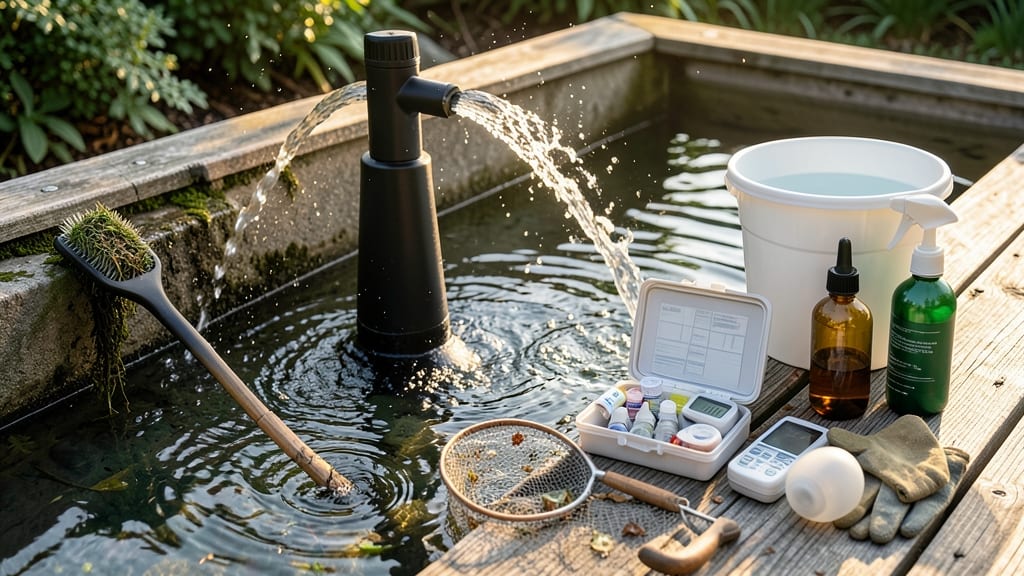
To keep fountain water clean, perform weekly maintenance by removing debris with a net, applying water clarifiers or hydrogen peroxide to prevent algae growth, and replacing 25% of the water monthly while incorporating aquatic plants or barley straw for natural filtration.
Clean fountain water isn't just about aesthetics—it's about creating a healthy ecosystem for your plants and preventing unsightly algae blooms. 💧 The key is consistency: debris like leaves and insects act as food for algae, so skimming them weekly cuts off their food source.
I've found that adding barley straw or water hyacinth releases natural compounds that inhibit algae growth without chemicals. For tougher situations, a clarifier or hydrogen peroxide treatment every few weeks works wonders, but always test water quality first to avoid over-treatment.
Seasonal changes also play a role—warmer months accelerate algae growth, so you might need to increase maintenance frequency. A fine-mesh net and a water pump are your best tools, but don't forget to check your fountain's filter system monthly.
The goal is balance: keep the water fresh enough to discourage algae but not so aggressive that it harms aquatic life.
💡 In This Article
- Natural Methods to Prevent Algae in Garden Fountains
- Weekly Fountain Maintenance Checklist for Long-Term Cleanliness
Natural methods to prevent algae in garden fountains
Algae thrives in fountain water due to three key factors: sunlight, nutrients from organic debris, and stagnant conditions. When leaves, pollen, or insect parts settle at the bottom, they decompose and release phosphorus and nitrogen—essential nutrients that fuel algae growth.
Sunlight then triggers photosynthesis, turning these nutrients into dense green mats within days. The warmer the water (above 70°F), the faster this process accelerates, which is why summer months demand extra vigilance.
Nature offers powerful solutions without chemicals. Barley straw releases a natural herbicide called hordenine when submerged, which inhibits algae growth by disrupting their cell division. Studies show just 1 pound of barley straw per 100 gallons can keep water clear for months.
Similarly, aquatic plants like water hyacinth or duckweed absorb excess nutrients while providing shade that blocks sunlight—a double defense. For fountains with recirculating systems, a UV clarifier (which emits UV-C light) can neutralize algae cells passing through the pump, reducing their numbers by up to 99%.
These methods work best when combined. For example, I've seen fountains using barley straw alongside a small water hyacinth pot maintain crystal-clear water for 6-8 weeks without additional treatments. The straw handles microscopic algae, while the plant controls nutrient levels.
However, if your fountain is heavily shaded or receives minimal sunlight, algae may still struggle to grow—so monitor water quality closely in such cases.
One common misconception is that all natural methods are equal. While barley straw is effective, it takes 2-4 weeks to start working, so it's not a quick fix. Duckweed, on the other hand, grows rapidly but must be harvested regularly to prevent it from becoming another maintenance burden.
Always balance these solutions with your fountain's specific conditions—like water flow rate and sunlight exposure—to maximize their effectiveness.
For a sensory check, clean water should have a slight mineral taste (from dissolved calcium and magnesium) but no fishy or musty odors. If you notice a greenish tint or slimy film, it's time to reinforce your natural defenses. 💧