
Planting
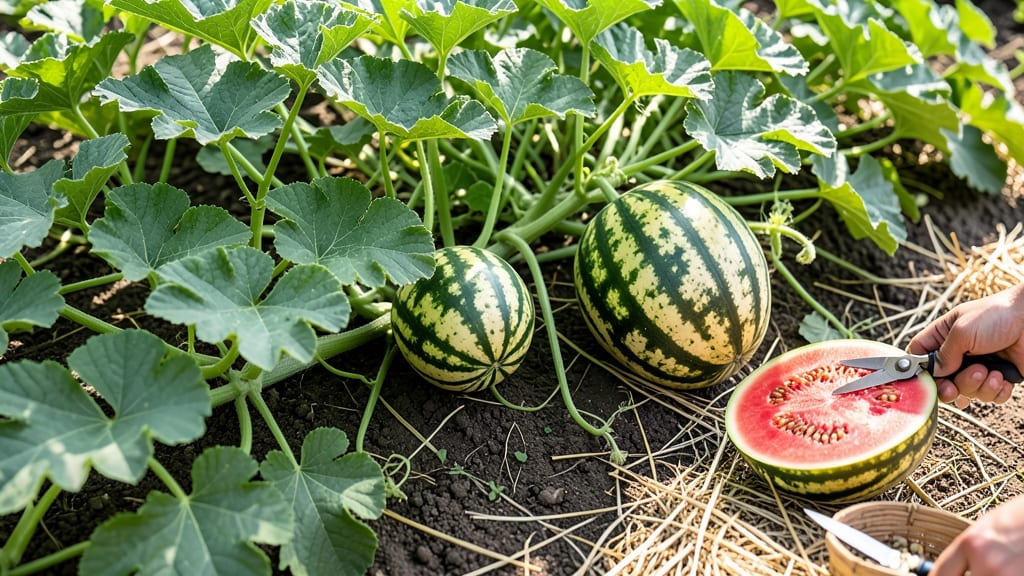
How many watermelons per plant you can expect depends on the variety, growing conditions, and care—typically one to four mature fruits, with vining types like Sugar Baby producing fewer while hybrid varieties may yield up to six under ideal sunlight and soil fertility.
A watermelon plant's productivity hinges on its genetics and growing environment. 🌱 For example, compact varieties like 'Sugar Baby' focus energy on fewer, smaller fruits, while sprawling hybrids like 'Crimson Sweet' can produce multiple larger melons.
Proper spacing (6-10 feet between plants) and consistent moisture during flowering help maximize yield—drought stress or overcrowding can reduce fruit count dramatically. I've seen some gardeners achieve up to eight melons per plant by providing trellis support and rich compost, but this requires diligent care.
What many growers overlook is the importance of pruning—removing excess vines after the first few fruits form directs energy to fewer, larger melons. The key is balance: too much pruning reduces yield, but too little leads to smaller, less flavorful fruits.
If you're growing in containers, expect even lower yields (1-2 melons per plant) due to limited root space, but container plants often produce sweeter, more concentrated fruits.
💡 In This Article
- Watermelon Varieties and Their Yield Differences
- Maximizing Watermelon Yield with Growing Tips
Watermelon varieties and their yield differences
The number of watermelons a single plant produces is fundamentally tied to its genetic makeup. Seedless varieties like 'Seedless Black Diamond' typically yield fewer fruits—around one to two—because their energy goes into fewer, larger melons with higher sugar content.
These varieties are triploid, meaning they require pollination from diploid plants (like 'Crimson Sweet'), which can slightly reduce their overall yield potential compared to open-pollinated types.
Vine length plays a critical role too. Short-vining varieties such as 'Sugar Baby' (which grows 3-4 feet) produce just one mature melon per plant, while sprawling hybrids like 'Charleston Gray' (vines up to 20 feet) can yield four to six fruits.
The extra vine length allows for more flowering nodes, increasing fruit count—but only if the plant has sufficient nutrients and space. 🌿 What's fascinating is how some heirloom varieties, like 'Moon and Stars,' balance vine length with fruit size: they produce two to three medium-sized melons (weighing 15-20 pounds) rather than one giant specimen.
Hybrid vigor explains why some modern varieties outperform heirlooms. Crossbreeding often combines disease resistance with higher yield potential. For example, 'Crimson Sweet' hybrids can produce five to six fruits per plant under ideal conditions, whereas its open-pollinated ancestor might yield only three to four.
The trade-off? Hybrid seeds cost more, and saved seeds may not reproduce true to type. If you're growing for seed, heirlooms like 'Yellow Doll' (which yields one to two small, sweet melons) are better choices.
Fruit size also factors into yield expectations. Large-fruited varieties like 'Crimson Sweet' (melons weighing 20-30 pounds) produce fewer fruits than small-fruited types like 'Sugar Baby' (melons weighing 4-6 pounds).
The plant's energy is divided differently: large varieties prioritize fewer, bigger melons, while small varieties can produce multiple smaller fruits. This is why a 'Sugar Baby' plant might yield three to four melons in a season, while a 'Crimson Sweet' plant yields just one to two but much larger ones.
Color and texture traits also influence yield. Dark-green rind varieties often have thicker vines and more robust root systems, supporting higher fruit counts.
For instance, 'Jubilee' (a dark-green heirloom) can produce three to four melons per plant, whereas lighter-rinded types like 'Moon and Stars' may yield slightly fewer due to less vigorous growth.
The science behind this lies in the plant's photosynthetic efficiency: darker rinds absorb more sunlight, fueling greater vine and fruit production.
What most gardeners don't realize is how pollination affects yield. Watermelons are monoecious, meaning each plant produces both male and female flowers. If pollination fails (due to poor weather or lack of bees), the plant may abort early fruit development, reducing yield.
This is why planting three to four watermelon plants together increases cross-pollination success and can boost overall fruit count by 20-30% compared to solitary plants.