
Watering
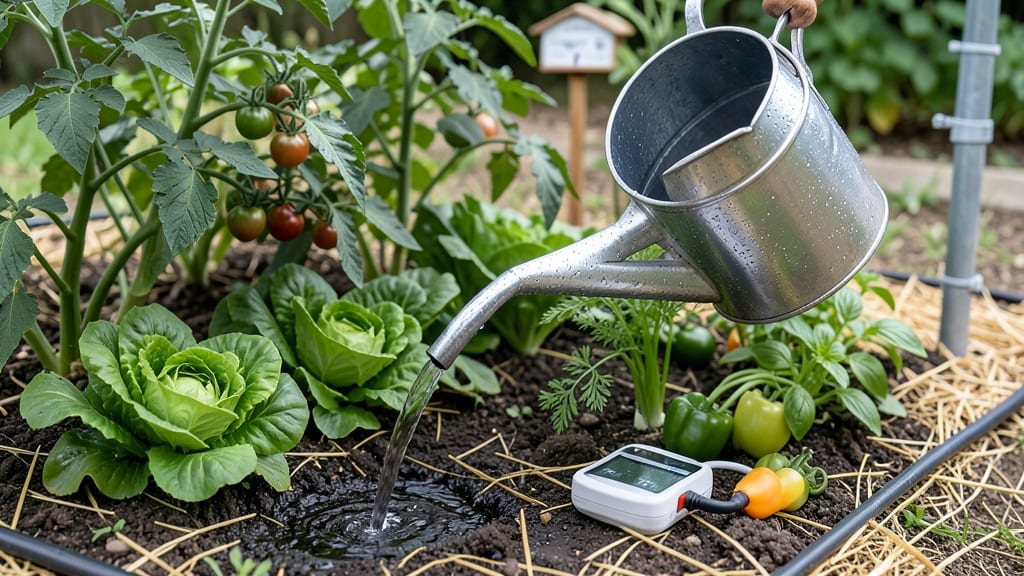
Watering a vegetable garden the right amount means knowing how much to give—too little and your plants wilt, too much and you drown the roots.
Overwatering or underwatering your vegetable garden can mean the difference between a thriving harvest and wasted seeds—yet most gardeners guess rather than measure. Discover the science-backed soil moisture test tricks that will help you water with precision, not guesswork.
Soil type, plant species, and weather all play a role in how much water your garden truly needs. Sandy soil drains fast, while clay holds moisture for days, and a sudden heatwave can dry out roots in hours. The key is checking moisture levels at the right depth.
In this guide, I’ll walk you through simple, no-tool methods to test soil moisture, adjust watering for different vegetables, and spot the early signs of over- or under-watering. No more guesswork—just perfect, consistent growth every time.


The perfect soil moisture levels for vegetable gardens by plant type
Not all vegetables crave the same amount of water—some like it damp, while others prefer a quick drink. Leafy greens and fruiting plants have wildly different needs, and getting it wrong can mean limp lettuce or bitter tomatoes.
The key is understanding your soil type and matching it to your plants' thirst levels. Sandy soil drains fast, while clay soil holds moisture like a sponge, and each affects how often you should water.
Start by checking your soil type: grab a handful and squeeze it. If it crumbles easily, you’ve got sandy soil that needs frequent, shallow watering. If it sticks together like clay, you’ll water less but deeper.
Most vegetables thrive when the top 1-2 inches of soil stay consistently moist—not soggy, not bone-dry. Root crops like carrots and potatoes need even moisture to grow straight, while drought-tolerant plants like zucchini can handle a bit of dryness.
📊 Here’s how to water each plant type correctly:
Adjust your watering based on the weather—hot days mean more frequent watering, while cool, cloudy days let you hold off. Morning watering is ideal because it reduces evaporation and fungal risks.
If your plants start wilting by midday, they’re thirsty; if they look sad and heavy, you’re overdoing it. Mulch with straw or shredded leaves to lock in moisture and keep roots cool.
For sandy soil, water lightly but often to prevent runoff, while clay soil benefits from deep, infrequent watering to encourage root growth.
Use a soil moisture meter or your finger (stick it 1-2" deep—if it’s dry, water!) to avoid guesswork. Drip irrigation or soaker hoses deliver water right to the roots, minimizing waste and disease.
Watch your plants for signs of stress: wilting leaves that perk up after watering mean thirst, while yellowing leaves or mushy stems signal overwatering. Root crops like beets and turnips need steady moisture to stay tender, while peppers and eggplants prefer slightly drier conditions to prevent cracking.
Tailor your approach to each plant’s needs, and your garden will reward you with bountiful harvests.
Don’t forget that seasonal changes affect water needs too. Summer heat demands more frequent watering, while spring and fall let you ease up. Container gardens dry out faster than in-ground beds, so check them daily.
With these moisture guidelines, you’ll master the art of watering and grow vegetables that thrive—not just survive.
Pro tip: Keep a gardening journal to track which plants need how much water. Note soil type, weather patterns, and plant responses. Over time, you’ll develop a watering schedule that’s perfect for your garden’s unique conditions. Happy growing! 🌱
5 Soil moisture test methods to water like a pro (no expensive tools needed)
Watering your vegetable garden effectively starts with understanding soil moisture levels. Without a fancy moisture meter, you can still determine the perfect watering schedule using simple, no-cost methods that work just as well.
These techniques help you avoid both overwatering and underwatering, which are the two biggest threats to your plants' health.
Most gardeners rely on a routine watering schedule, but soil conditions change daily with temperature, wind, and rainfall. That's why checking soil moisture before watering is a game-changer.
Whether you're growing leafy greens, root vegetables, or tomatoes, these methods will give you the confidence to water like a seasoned pro.
Stick your index finger 1-2 inches into the soil. If it feels dry, water thoroughly. If damp, wait another day.
Dig a small hole (6 inches deep) and examine the soil. Clumps that hold shape need water; crumbly soil is fine.
Grab a handful of soil and squeeze. If it forms a ball that doesn't crumble, it's too wet. If it falls apart, water now.
Push a wooden stick (pencil or chopstick) into the soil. If it comes out clean, water. If dirt clings, wait.
Watch for wilting leaves (underwatered) or yellowing (overwatered). Adjust based on plant type.
My favorite method is the finger test because it's quick and gives instant feedback. For larger gardens, the shovel check helps you assess moisture at deeper levels where roots thrive. The squeeze test is perfect for clay soils, which hold moisture longer than sandy soils.
Pro tip: Always water in the morning to reduce evaporation and fungal risks. Avoid watering at night, as damp leaves can attract pests. If you're growing drought-tolerant veggies like zucchini or peppers, let the soil dry slightly between waterings.
For container gardens, check moisture daily since pots dry out faster. If the soil feels bone-dry at the surface, water until it runs out the drainage holes. Over time, you'll develop a feel for how often each plant needs water based on your local climate.
Remember, consistency is key. Stick to one method to track changes in your garden's moisture levels accurately. With practice, you'll be able to tell just by touching the soil whether your plants are thirsty or well-hydrated—no guesswork required!