
Watering
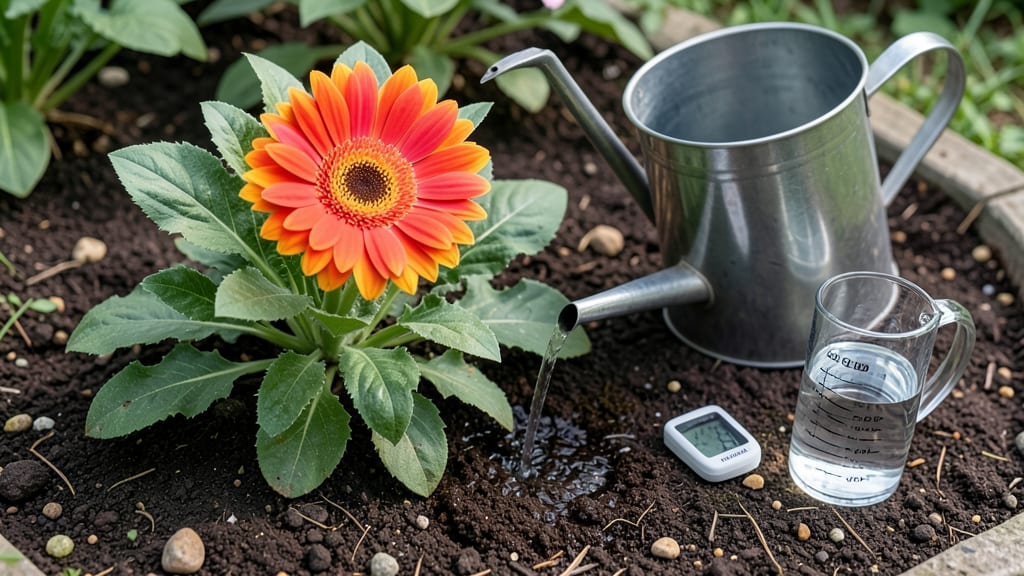
Gerbera daisies need about 1 to 2 inches of water per week to keep their roots happy and their blooms popping with color 🌼 — but getting that right is trickier than it sounds.
Struggling to keep your gerbera daisies blooming as vibrantly as the day you planted them? The secret often lies in their watering routine—too much or too little can turn those lush petals into wilted disappointment.
Most gardeners overthink it by staring at the calendar, but the real trick is checking the soil. Stick your finger an inch deep after watering — if it feels dry, it’s time to hydrate. Containers dry out faster than garden beds, so adjust accordingly.
In this guide, I’ll break down the weekly rule, seasonal tweaks, and how to spot when you’re overdoing (or underdoing) it. By the end, your gerbera daisies will thank you with blooms that last all summer.


The 1-2 inch weekly watering rule for gerbera daisies
Gerbera daisies thrive on a simple but critical watering routine: maintaining 1-2 inches of moisture in the topsoil each week. This weekly watering rule ensures roots stay hydrated without drowning, which is key to those vibrant blooms you love.
Unlike drought-tolerant succulents, gerbera daisies need consistent moisture—but not soggy soil. Think of it like giving them a refreshing drink every few days, not a swampy bath.
The 1-2 inch rule applies to the soil's surface, not the amount you pour. Stick your finger about 1 inch deep—if it feels dry, it's time to water.
For container-grown gerbera daisies, this rule translates to watering every 2-3 days in summer, while in-ground plants may only need watering every 5-7 days. The difference? Containers dry out faster due to limited soil volume.
| Condition | Gerbera Daisy Water Needs | Actionable Tip |
|---|---|---|
| Soil Depth Check | 1-2 inches dry | Water until moisture reaches 6 inches deep |
| Container Plants | Every 2-3 days | Use saucers to catch excess water |
| In-Ground Plants | Every 5-7 days | Mulch to retain moisture |
| Summer Heat | Daily or every 2 days | Water early morning to reduce evaporation |
| Winter Dormancy | Bi-weekly | Reduce watering by 50% |
To measure soil moisture like a pro, use the finger test. Push your index finger 1 inch deep into the soil near the plant's base. If it feels dry, water thoroughly until moisture seeps 6 inches down.
For container plants, lift the pot—if it feels light, it's time to water. Pro tip: Use a moisture meter for precision, especially in clay pots where visual cues can be misleading.
Seasonal shifts demand adjustments to your watering schedule. In summer's peak heat, gerbera daisies may need daily watering if temperatures exceed 90°F (32°C). Conversely, in fall and winter, reduce frequency to every 10-14 days unless you're in a humid climate.
Always water at soil level, not over the leaves, to prevent fungal diseases like powdery mildew, which loves damp foliage.
Mulching is your secret weapon for maintaining that 1-2 inch moisture zone. Apply a 2-3 inch layer of organic mulch (like straw or shredded bark) around the base of your gerbera daisies. This keeps soil cool, reduces evaporation, and suppresses weeds.
Just remember to keep mulch 2 inches away from the plant stem to prevent rot. For container gardens, use mulch-free pots with drainage holes to avoid soggy roots.
Overwatering is the #1 killer of gerbera daisies, leading to yellow leaves and root rot. If you notice wilting despite moist soil, it’s often a sign of overwatered roots suffocating from lack of oxygen.
To fix this, let the soil dry out completely for a week before resuming your 1-2 inch rule. Underwatering, on the other hand, causes crispy leaf edges and drooping blooms. Adjust by watering more frequently and using a drip irrigation system for consistency.
Climate plays a huge role in how often you water. In arid regions, gerbera daisies may need daily watering in summer, while in humid climates, you might only water every 4-5 days.
Pay attention to local weather forecasts: after a heavy rain, skip watering for 3-4 days to avoid soggy soil. For urban gardeners, watering in the early morning (6-9 AM) minimizes evaporation and fungal risks, giving your plants a head start to absorb moisture.
Gerbera daisies in hanging baskets or window boxes dry out faster than in-ground plants. Here, the 1-2 inch rule means checking soil moisture daily in summer. Use a spray bottle to mist the soil lightly between deep waterings, but avoid wetting the leaves.
For terracotta pots, which dry out quickly, water every 2 days and consider moving pots to a shaded spot during peak afternoon heat to reduce moisture loss.
Remember, the goal is consistency, not excess. Gerbera daisies reward you with bold, long-lasting blooms when their roots stay in that sweet spot between dry and soggy.
Start with the 1-2 inch weekly rule, adjust for your climate, and soon you’ll have gerbera daisies that bloom like they’re on a tropical vacation—without the travel hassle. Happy gardening! 🌼
Signs of overwatering vs. underwatering in gerbera daisies
Gerbera daisies are stunning additions to any garden, but their delicate roots make them particularly sensitive to watering mistakes. Overwatering and underwatering both cause visible stress—yellowing leaves, wilting stems, or crispy edges—but the fixes couldn't be more different.
Let’s decode the clues your plants are giving you so you can save your blooms before they fade.
When your gerbera daisies show yellowing leaves that feel mushy to the touch, it’s a red flag for root rot from overwatering. The soil may smell sour or look waterlogged, and stems might appear limp even when the soil is damp.
Don’t wait—this is an emergency! Underwatering, on the other hand, causes leaves to curl inward with crispy, brown edges, and the soil will pull away from the pot or feel bone-dry just an inch below the surface.
Gerbera Daisy Watering Balance
- Yellow, mushy leaves
- Sour-smelling soil
- Limp stems
- Crispy, brown leaf edges
- Dry, pulling soil
- Wilted but firm stems
If your gerbera daisies are drooping but the soil is wet, you’re likely dealing with overwatering. The roots suffocate without air, leading to root rot and preventing nutrient uptake.
To fix this, remove the plant from its pot, trim any black or mushy roots with sterilized scissors, and repot it in well-draining soil mixed with perlite or sand.
For underwatered plants, water deeply until it flows from the drainage holes, then reduce frequency to every 2-3 days in containers or 5-7 days in garden beds.
Pay attention to the soil texture—it’s your best indicator. Stick your finger 1-2 inches deep; if it’s damp but not soggy, you’re golden.
If it’s dry at this depth, it’s time to water. Mulching with organic matter like straw or shredded bark helps retain moisture and signals when it’s time to hydrate again. Pro tip: Water in the morning to let excess moisture evaporate during the day, reducing fungal risks.
Seasonal shifts also play a role. In summer heat, gerbera daisies may need daily watering, while winter dormancy often requires bi-weekly checks. Container plants dry out faster than in-ground varieties, so monitor them closely.
If you notice stunted growth or fewer blooms, it’s a sign your watering routine needs adjustment—either too much or too little!
Remember, gerbera daisies thrive on consistency. Whether you’re dealing with mushy leaves or crispy edges, act quickly to restore balance. With the right care, your daisies will reward you with bold, vibrant blooms all season long. 🌼