
Watering
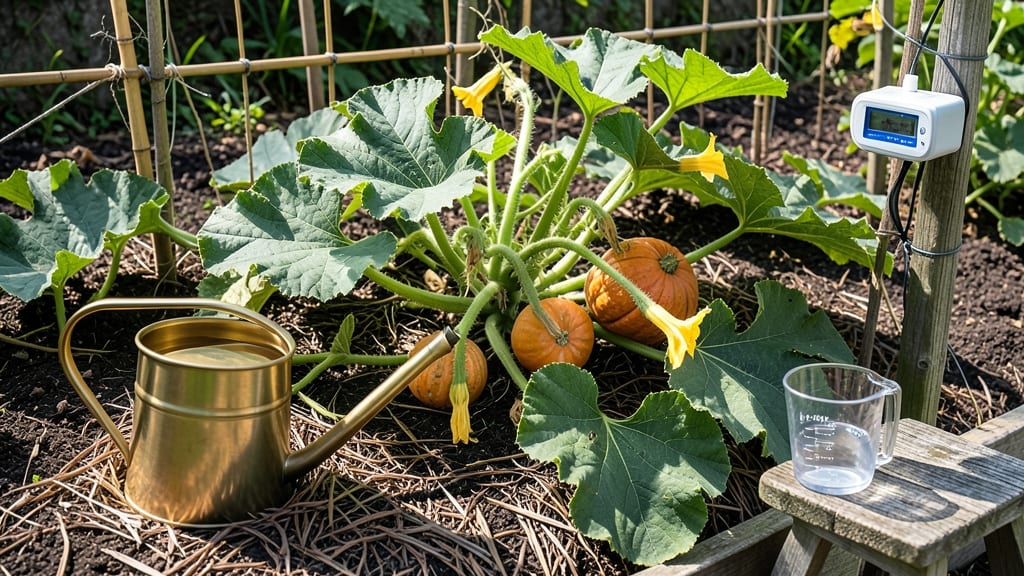
Watering a pumpkin just right—about 1 to 2 inches per week—is the secret to avoiding cracked fruit, wilted vines, and wasted effort.
Did you know pumpkins need just the right amount of water to grow from a tiny seed into a 50-pound harvest? Overwatering or underwatering can ruin your crop—so how do you strike the perfect balance?
Too little water stresses the plant, leading to stunted growth or blossom-end rot, while too much drowns roots and invites disease. The key is deep, consistent moisture—especially when those 🎃 vines start sprawling and flowers appear.
In this guide, I’ll break down the exact watering schedule by growth stage, how to spot over- or under-watering, and the best methods (drip irrigation vs. hand watering) to keep your pumpkins thriving from seed to harvest.


Pumpkin water requirements by growth stage: seedling to ripe fruit
Growing pumpkins from seed to harvest requires precise watering—too much or too little can stunt growth or trigger diseases like blossom-end rot. As a gardener who’s struggled with wilting vines and cracked fruits, I’ve learned that consistent moisture is key, but timing and technique matter just as much.
Pumpkins need 1-2 inches of water per week, but this changes dramatically from seedling to fruiting stages. Let’s break it down by growth phase so you can water like a pro.
First, let’s tackle the confusion: how much water in a pumpkin isn’t about the fruit’s internal moisture (though that’s ~90% water!)—it’s about the soil hydration your plant needs to thrive.
Overwatering drowns roots, while underwatering stresses vines, especially during flowering and fruiting. The solution? A tailored watering schedule that adapts to your pumpkin’s age, weather, and soil type.
During the seedling stage (0-2 weeks), your pumpkin’s roots are delicate, so I recommend watering every 2-3 days with just enough to keep the top 1 inch of soil damp.
Use a spray bottle to mimic gentle rain—this prevents seedling rot while encouraging root growth. If your soil drains poorly (like clay), reduce frequency to every 3 days to avoid waterlogging.
As vines spread (3-6 weeks), increase water to 1-1.5 inches per week, delivered every 3-4 days. This is when pumpkins start competing for resources, and consistent moisture prevents blossom-end rot.
I’ve found that watering at the base of the plant (not overhead) reduces fungal diseases like powdery mildew, which thrives in damp foliage.
The flowering stage (6-8 weeks) is the most critical for watering—this is when your pumpkin’s future harvest is determined. Aim for 1.5-2 inches of water weekly, split into 2-3 waterings.
Morning watering is ideal because it gives leaves time to dry, preventing bacterial infections. Pro tip: If your soil feels dry 2 inches down, it’s time to water again.
Once fruits form (8-12 weeks), maintain 2 inches of water per week, but adjust based on weather. During hot, dry spells, I water every 2 days to keep soil moist; during humid periods, every 5 days suffices.
Overwatering now can cause fruits to split—so always check soil moisture with your finger before watering.
In the final 2 weeks before harvest, reduce watering to 1 inch per week to toughen the rind. This step is crucial for storage life—pumpkins with excess moisture rot faster.
If your soil is sandy, you may need to water more frequently, while clay soils can hold moisture longer, requiring less frequent watering.
Environmental factors like heat, humidity, and soil type dramatically affect water needs. In USDA Zone 6a (where I garden), summer temperatures above 85°F can double evaporation rates, so I monitor soil moisture daily.
If you’re in a hotter climate, consider mulching with straw to retain moisture and reduce watering frequency by 30%.
Remember, pump
Signs of overwatering vs. underwatering pumpkins (and how to fix it)
Pumpkins are thirsty plants, but giving them too much—or too little—water can spell disaster for your harvest. Yellowing leaves, mushy fruit, or stunted vines often signal hydration issues. The key is learning to read your plants' cues and adjusting your watering routine before problems escalate.
Start by checking the soil. Stick your finger 1-2 inches deep—if it feels damp, hold off on watering. If it's bone-dry, it's time to hydrate. Pumpkin roots need consistent moisture, but they also need air to breathe.
Overwatering suffocates roots, while underwatering stresses the entire plant, leading to poor fruit development.
Overwatering vs. Underwatering Pumpkins
Symptoms:
- Yellowing leaves (especially lower leaves)
- Wilting despite wet soil
- Mushy, rotting fruit
- Fungal growth (mold, mildew)
- Slow growth or stunted vines
Symptoms:
- Crispy, brown leaf edges
- Wilting in dry soil
- Blossom-end rot (black, sunken spots)
- Small, hard fruit
- Dry, brittle stems
Fix:
- Let soil dry slightly between waterings
- Improve drainage (raise beds, add sand)
- Water deeply but less frequently
- Remove affected fruit/moldy leaves
Fix:
- Water deeply (1-2 inches)
- Mulch to retain moisture
- Water early morning (avoid evening)
- Adjust frequency (every 2-3 days in heat)
Root Check:
- Black, mushy roots
- Foul smell from soil
Root Check:
- Dry, brittle roots
- Pulls easily from soil
If your pumpkin leaves turn yellow and feel soggy, you're likely overwatering. Blossom-end rot, a common issue, often stems from inconsistent moisture—either too much or too little. To fix it, adjust your watering schedule and consider adding calcium-rich compost to the soil.
For underwatered plants, focus on deep watering sessions in the morning to mimic natural rainfall patterns.
Monitor your pumpkins daily during hot weather. Wilting leaves can mean either overwatering (roots can't absorb oxygen) or underwatering (roots are dry). The difference? Overwatered plants stay limp even when soil is wet, while underwatered plants perk up after a good drink.
Use a moisture meter if you're unsure—it takes the guesswork out of hydration.
Pro tip: Mulch heavily around pumpkin vines to lock in moisture and regulate soil temperature. Organic mulch like straw or shredded leaves also improves soil structure over time, helping roots access the perfect balance of water and air.
Avoid watering at night to prevent fungal diseases like powdery mildew, which thrives in damp conditions.
Remember, pumpkins are heavy drinkers but hate soggy feet. Aim for 1-2 inches of water per week, adjusting for rain and temperature. When in doubt, check the soil—your pumpkins will thank you with vibrant vines and plump fruit by harvest time. 🎃