
How To
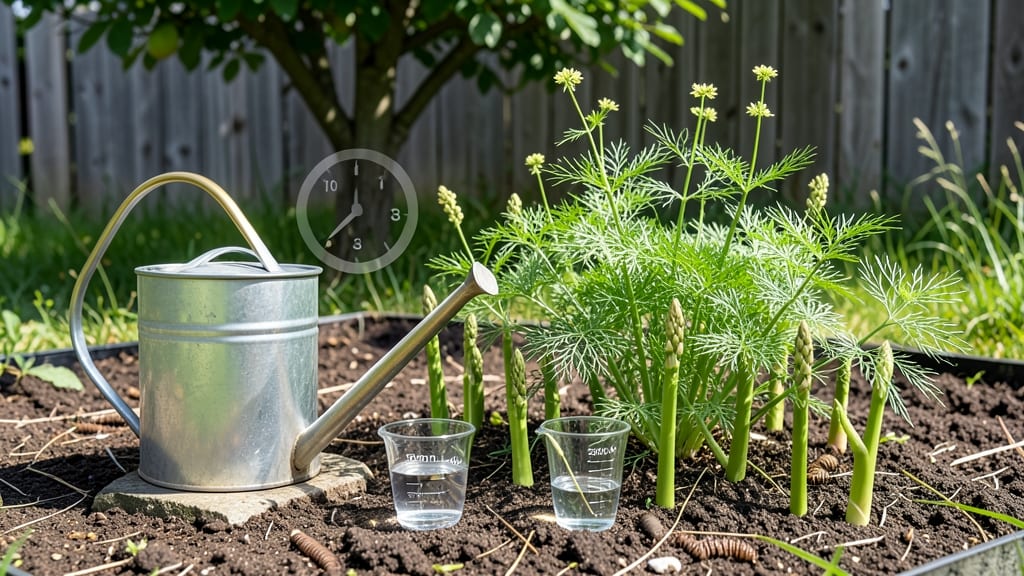
To water asparagus properly, aim for deep soaks every 7–14 days—too little or too much can turn your 🌱 harvest into a flop.
Picture this: You’ve waited two years for those first spears, only to watch them wilt under a soggy patch or dry out into brittle stalks. The key? Checking soil moisture at the roots—not just the surface.
Asparagus thrives on consistency: drought-tolerant once established, but it hates soggy feet or bone-dry soil. I’ll show you how to test moisture like a pro, adjust for your climate, and spot the warning signs before they ruin your crop.
By the end, you’ll know exactly when to reach for the hose (or skip it entirely) to keep your asparagus happy, healthy, and spearing season after season.
Asparagus watering schedule by season: how often to water for peak growth
Asparagus plants need consistent moisture to produce those prized spears, but overwatering can rot roots while underwatering stunts growth. The key is understanding seasonal needs and soil types. In spring, when new shoots emerge, deep watering weekly is critical.
Summer demands adjust based on rainfall, while fall and winter require minimal watering. Let’s break it down by season and soil type to keep your asparagus thriving.
Your soil type dramatically impacts watering frequency. Sandy soil drains quickly, requiring more frequent watering, while clay soil holds moisture longer. Even rainfall plays a role—adjust your schedule if your area gets heavy downpours.
For example, in Zone 6a, where asparagus thrives, summer storms might mean skipping a watering day. Always check soil moisture before watering.
Here’s a quick reference for adjusting watering based on your soil and season:
In spring, focus on deep watering to encourage root growth. Aim for 1-1.5 inches of water per week, delivered in the morning to reduce evaporation.
Use a trowel to check soil moisture 2-3 inches deep—if it’s dry, water thoroughly. Mulch with straw or wood chips to retain moisture and suppress weeds, which compete for water.
Summer is when asparagus plants demand the most attention. Heat waves dry out soil quickly, so monitor moisture closely. If your area experiences drought conditions, increase watering to every 5-6 days for sandy soil or every 7-10 days for loamy soil.
Avoid wetting the foliage to prevent fungal diseases like rust, which thrive in damp conditions. Drip irrigation is ideal for consistent moisture without overhead spray.
As fall approaches, reduce watering frequency but maintain light moisture. The goal is to keep the soil from drying out completely, which can stress the plant before winter. In Zone 6a, where frost arrives by October, taper off watering by late fall.
Only water if the ground is bone-dry, and avoid soggy soil, which can lead to rot during cold months. A thin layer of mulch (2-3 inches) helps insulate roots.
Winter watering is minimal, but don’t let the soil become completely parched. In drought-prone areas, a light watering every 4-6 weeks keeps roots hydrated without encouraging rot.
If your region gets consistent snowfall, nature handles most of the watering—just ensure the snow melts evenly around the plants. Evergreen mulch (like pine straw) works well to protect roots during freezing temperatures.
Pro tip: Use a moisture meter for precise readings, especially in sandy soil, which can fool you into thinking it’s wetter than it is. For clay soil, rely more on visual cues—clay stays damp longer but can also become waterlogged.
Adjust your schedule based on these observations, and your asparagus will reward you with healthier spears and stronger fronds.
Remember, consistency is key. Asparagus roots are deep, so water deeply each time rather than frequent shallow watering. This encourages roots to grow downward, making your plants more resilient.
With this seasonal schedule, you’ll avoid the pitfalls of overwatering or underwatering and enjoy a bountiful harvest for years to come. Happy gardening! 🌱
The 3-Step soil dry test to avoid overwatering asparagus (with visual cues)
Asparagus plants are surprisingly resilient, but their roots hate soggy soil. Too much water can rot crowns, while too little stunts spear growth. The key? Testing soil moisture at the right depth—where roots actively absorb water.
I’ve perfected a simple 3-step method that takes less than 30 seconds and works for any climate zone, from dry deserts to humid coasts.
Most gardeners water based on guesswork—like checking the surface after a quick rain. But asparagus roots grow 12-18 inches deep, so surface moisture tells you nothing. Instead, dig your finger into the soil where the lateral roots spread (about 4-6 inches down).
This is where you’ll spot the telltale signs of whether your plants need hydration or a break.
🌱 Step-by-Step Soil Test for Asparagus
- Step 1: Dig 4-6 inches deep – Use a trowel or your finger to check moisture at root level. Avoid surface soil, which dries faster.
- Step 2: Check texture – Crumbly = water now. Clumpy = wait 2-3 days. Sticky = overwatered—stop immediately.
- Step 3: Observe color – Dark brown/black = moist. Tan/gray = dry. Greenish = too wet (fungus risk).
Climate matters! In arid zones (Zones 8-10), asparagus roots may need water every 5-7 days during spear production (spring), but in humid zones (Zones 3-5), you might only need to water every 10-14 days once established.
Always water deeply in the morning to mimic natural rainfall cycles and reduce fungal risks.
One mistake I see often? Watering when the soil is already moist because the surface feels dry. Asparagus is drought-tolerant once mature, so focus on deep, infrequent watering rather than light daily sprinkles. Think of it like charging a battery—slow and steady wins over quick top-ups.
If you’re unsure, grab a soil moisture meter ($10 at garden centers) for foolproof readings. These tools measure moisture at the exact depth your asparagus roots need, taking the guesswork out of the equation.
For organic gardeners, a simple wooden skewer test works too—push one in and check for resistance.
Remember: Yellowing fronds or mushy crowns are red flags. By mastering this 3-step test, you’ll avoid both overwatering and underwatering—giving your asparagus the perfect moisture balance for bigger, healthier spears every season. 🌱