
Watering
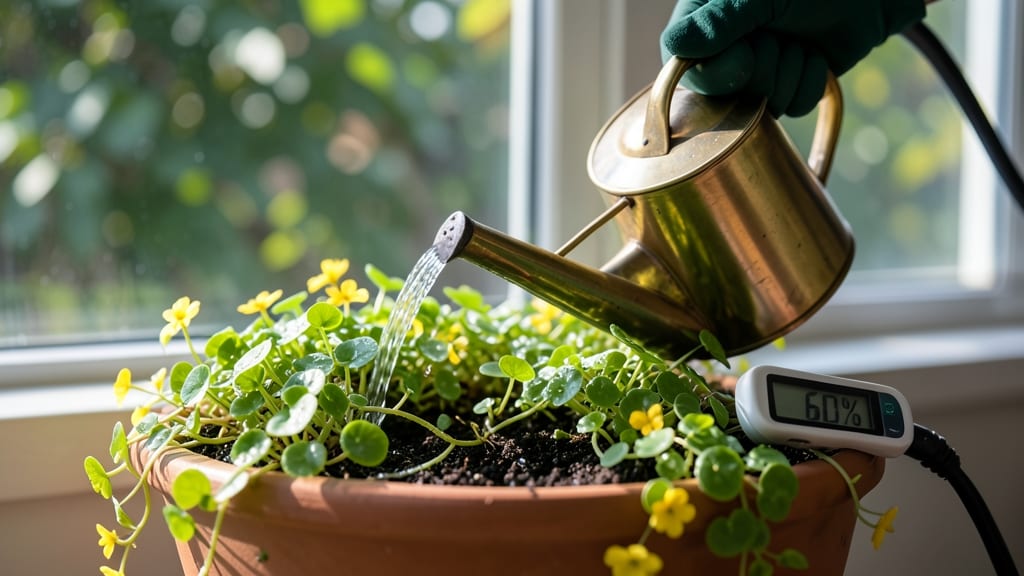
Watering Creeping Jenny 🌿 about once a week keeps its golden-green leaves happy and prevents soggy soil that invites root rot.
Struggling to keep your Creeping Jenny thriving without turning your garden into a soggy mess? Mastering the watering schedule for this fast-spreading ground cover is the key to vibrant growth—without inviting root rot or wilting.
This hardy plant loves moisture but hates sitting in wet soil, which means checking the top inch before watering is more important than sticking to a rigid schedule. In summer’s heat, it may need a drink every 5-7 days, while winter slows things down to once a month.
Below, I’ll break down the seasonal shifts, how to spot overwatering vs. underwatering, and the one trick that saves time while keeping your Creeping Jenny lush year-round.
Creeping jenny watering schedule by season: expert tips for perfect moisture balance
Creeping Jenny (Lysimachia nummularia) thrives on consistency, but its water needs shift dramatically with the seasons. Too much moisture invites root rot, while too little causes crispy, yellowing leaves.
The key is balancing soil moisture—keeping it evenly damp but never soggy. I’ve learned this through trial and error, especially in my own partial-shade garden where humidity plays tricks on watering frequency.
Seasonal adjustments are everything. In spring, creeping jenny wakes up hungry after dormancy, while summer’s heat demands more frequent hydration. Fall slows growth, and winter often means minimal watering. Let’s break down the perfect schedule to keep your creeping jenny lush without overdoing it.
Spring is all about revving up growth. After winter dormancy, creeping jenny needs regular water to establish new roots. I start by checking the top 1 inch of soil—if it’s dry, it’s time to water.
Use a soaker hose or drip irrigation to deliver moisture directly to the roots without wetting the leaves, which can encourage fungal issues.
Summer demands the most attention. High temperatures and low humidity mean creeping jenny loses moisture faster. I water every 3-5 days, but I adjust based on leaf color. If the edges turn yellow or crispy, it’s a sign of underwatering.
Conversely, mushy stems or a foul smell mean you’re overwatering. Morning watering is critical—it gives foliage time to dry before evening humidity sets in.
Fall marks a gradual slowdown. As temperatures drop, creeping jenny enters a resting phase, and its water needs decrease. I stretch the interval to every 10-14 days, focusing on deep watering to encourage root development for winter.
Mulch helps retain moisture and insulate the soil, reducing the need for frequent watering.
Winter is the easiest season for creeping jenny. In most climates, it enters dormancy, and watering becomes minimal. I only water if the soil is completely dry down to 3 inches deep, which is rare.
Overwatering in winter can lead to root suffocation in cold, waterlogged soil. If you’re in a mild winter zone, reduce watering to every 3-4 weeks.
Environmental factors like humidity and wind exposure also play a role. In humid climates, creeping jenny may need less frequent watering because the air retains moisture longer.
Conversely, windy areas dry out faster, so I increase watering slightly. Always monitor the soil moisture—your creeping jenny will thank you with vibrant, lush growth.
Pro tip: Use a moisture meter for accuracy, especially in containers where soil dries out faster. For in-ground creeping jenny, stick your finger into the soil—if it feels dry at 1 inch deep, it’s time to water.
Consistency is key, but flexibility based on your local climate ensures your creeping jenny stays healthy year-round.
Remember, creeping jenny is a drought-tolerant plant once established, but young plants need more frequent watering. Adjust your schedule based on these seasonal cues, and you’ll avoid the pitfalls of root rot or wilting.
With the right balance, your creeping jenny will spread beautifully, creating a stunning ground cover that’s low-maintenance and resilient.
Signs your creeping jenny is overwatered or underwatered: how to fix common mistakes
Creeping Jenny (Lysimachia nummularia) thrives on consistency, but too much or too little water can send it into distress. The key is recognizing the visual cues your plant uses to communicate its needs.
Overwatering often shows up as mushy stems and yellowing leaves, while underwatering causes crispy leaf edges and wilting foliage. Let’s decode these signs so you can restore balance to your ground cover.
First, check the soil moisture by sticking your finger about 1 inch deep. If it feels soggy, you’re likely overwatering. If it’s bone-dry, your Creeping Jenny needs a drink.
The goal is consistently moist (not soggy) soil—this plant loves humidity but hates waterlogged roots. Adjust your schedule based on these simple checks to avoid common mistakes.
✅ Overwatering Fixes
- ✔️ Stop watering immediately and let soil dry
- ✔️ Improve drainage with perlite or sand
- ✔️ Repot if in containers
- ✔️ Use well-draining soil mix
❌ Underwatering Fixes
- ✖️ Avoid shallow watering—soak deeply
- ✖️ Water at soil level, not leaves
- ✖️ Use mulch to retain moisture
- ✖️ Water early morning to prevent evaporation
Overwatered Creeping Jenny often develops yellow leaves with brown spots, especially near the base. The leaves may also feel slimy or mushy to the touch—a clear sign of root rot. If you notice a foul odor from the soil, your plant is drowning.
To fix this, reduce watering frequency and ensure pots have drainage holes. For in-ground plants, amend the soil with compost to improve aeration.
Underwatered Creeping Jenny reveals its struggles through crispy leaf edges and leathery foliage. The plant may also appear stunted or wilted, with growth slowing dramatically. If you see these signs, water deeply until moisture reaches 6 inches down.
Then, let the top inch of soil dry out before watering again. Mulching with straw or bark helps retain moisture and prevents rapid drying.
For a quick visual guide, compare healthy Creeping Jenny leaves—bright green, plump, and glossy—to distressed ones. Overwatered leaves look dull and saggy, while underwatered leaves appear dry and brittle.
Use a moisture meter for accuracy, especially in containers where soil dries faster. Adjust your watering schedule based on these observations to keep your Creeping Jenny lush and vibrant.
Remember, Creeping Jenny’s root system is shallow, so it relies on consistent moisture. Aim for 1-2 inches of water per week during active growth (spring and summer), but reduce in fall and winter.
By tuning into your plant’s signals, you’ll avoid both root rot and drought stress, ensuring your ground cover stays healthy year-round. 🌿