
Watering
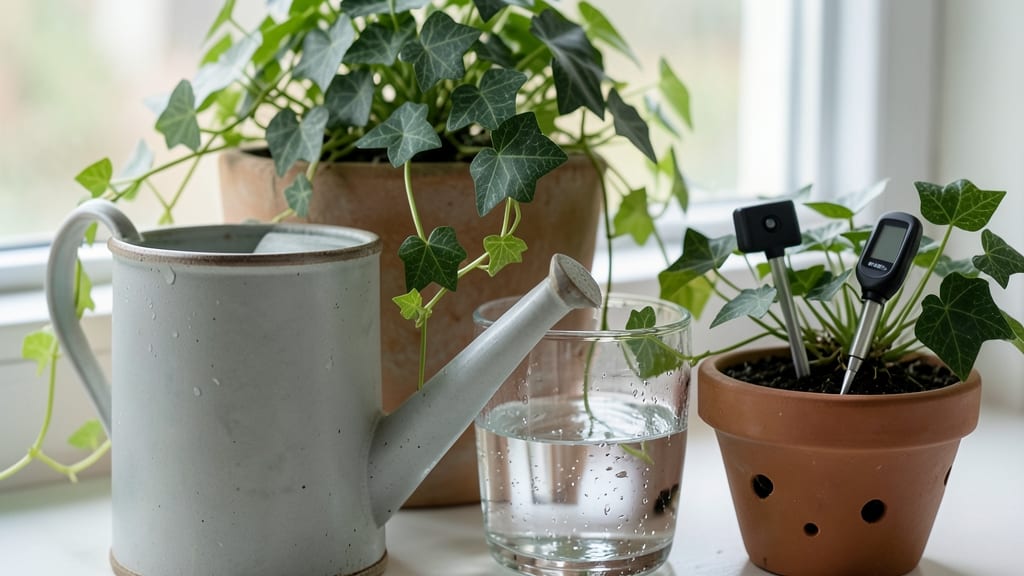
Watering indoor ivy the right way keeps those lush, trailing vines thriving year-round—without turning your 🌿 into a sad, brown mess.
Here’s the truth: most people either drown their ivy or let it dry out completely, both of which send it into a downward spiral. The key isn’t guessing—it’s checking the soil moisture the smart way so you never over- or underdo it.
Indoor ivy loves consistent moisture, but its needs shift with seasons, humidity, and even where you place it in your home. A 1-finger test (yes, really) tells you exactly when to water, cutting the guesswork and saving your plant from common watering disasters.
In this guide, I’ll walk you through the foolproof method, seasonal adjustments, and how to spot the warning signs before they become problems. No more crispy leaves or root rot—just happy, healthy ivy that grows exactly how you want it to.
The 1-Finger test: the perfect method to check ivy moisture levels
Keeping your indoor ivy thriving starts with understanding its soil moisture needs. Unlike outdoor plants, indoor ivy relies on you to gauge when it's thirsty—yet overwatering is the #1 killer of houseplants.
The 1-finger test is my foolproof method to avoid soggy roots or parched leaves, and it only takes 10 seconds!
Here’s the secret: ivy prefers its topsoil to feel slightly moist but never soggy. Stick your finger 1 inch deep into the soil—this is the golden zone for ivy. If it feels dry at this depth, it’s time to water.
If it’s damp, wait another 2-3 days before checking again. This simple test prevents root rot while keeping those lush green leaves happy.
Why this depth? Ivy roots thrive in the top 1-2 inches of soil. Checking deeper risks overwatering, while shallow checks might miss moisture in the root zone. Pro tip: Use your index finger—it’s the most sensitive for detecting subtle moisture differences.
How Often to Water Indoor Ivy: The 1-Finger Test Guide
- Step 1: Wait until the top 1 inch of soil feels dry to the touch (use your index finger).
- Step 2: Insert your finger 1 inch deep—if it’s damp, delay watering 2-3 more days.
- Step 3: Water thoroughly until water drains from the bottom holes of the pot.
- Step 4: Empty the saucer 15 minutes later to prevent root rot from sitting water.
- Step 5: Repeat the test every 7-14 days, adjusting for season and humidity.
🌿 Summer Tip: Ivy may need watering every 5-7 days in hot, dry air.
❄️ Winter Tip: Reduce to every 3-4 weeks as growth slows.
Visual cues matter! If your ivy’s leaves start yellowing or feel soft to the touch, you’ve likely overwatered. Conversely, crispy brown edges signal underwatering. The 1-finger test helps you spot these issues before they damage your plant.
Pot size plays a role too. A small 6-inch pot may dry out faster than a large 12-inch container. For bigger pots, check moisture at 1.5 inches deep instead. Always water until liquid flows from the drainage holes—this ensures roots get a proper drink without drowning.
Timing is everything. Water your ivy in the morning so excess moisture evaporates during the day. Avoid evening waterings, which can lead to fungal growth in cooler indoor air. Stick to this routine, and your ivy will reward you with vibrant, trailing growth all year round.
Pro move: Keep a watering journal for your ivy. Note when you water, how much, and how the plant responds. Over time, you’ll recognize its unique moisture patterns—whether it’s a fast-drying variety or one that holds moisture longer.
Remember, ivy is resilient, but it’s not a drought-tolerant succulent. The 1-finger test keeps it in that sweet spot between thirsty and soggy. Master this, and you’ll have lush, healthy ivy that thrives indoors for years.
🌱 Bonus: If your ivy’s soil is heavily compacted, mix in perlite or orchid bark to improve drainage and make the 1-finger test even more accurate.
Indoor ivy watering schedule by season: adjusting for humidity and light
Indoor ivy thrives on consistency, but its watering needs shift dramatically with the seasons. In spring and summer, your ivy craves more frequent hydration due to increased light and humidity fluctuations, while fall and winter demand a gentler touch.
The key? Adjusting the 1-finger test based on your home's specific conditions—like a bathroom's high humidity versus a living room's dry air.
Bathrooms with humidity levels above 50% can stretch watering intervals by nearly 30% compared to dry living rooms. Meanwhile, south-facing windows may dry out soil faster, requiring daily checks during peak summer months.
Let's break down how to fine-tune your approach for each season while keeping your ivy's roots happy and healthy.
During spring, your ivy signals thirst with drooping leaves or soil pulling away from the pot edges. This is when you'll notice the biggest difference between a sunny living room (water every 5 days) and a shady corner (extend to 7 days).
Always water in the morning to prevent fungal growth, especially when humidity spikes after showers.
Summer demands the most attention—your ivy's roots can dry out in just 24 hours under direct afternoon light. Here, the 1-finger test becomes your best friend: if your finger feels dry at 1.5 inches deep, it's time to water.
For bathroom ivies, you might only need to water every 7-10 days due to the naturally moist air, while living room ivies may need daily top-ups during heatwaves.
As fall arrives, reduce watering by 40% compared to summer. The slower growth means your ivy stores moisture more efficiently. Watch for yellowing leaves—this often signals overwatering rather than underwatering during these cooler months.
Place your ivy near east-facing windows to maintain gentle light exposure without the drying effects of harsh afternoon sun.
Winter care is all about minimal intervention. Most ivies enter a dormant phase, and overwatering is the #1 killer during this time. Only water when the top 0.5-1 inch of soil feels completely dry.
If your home has forced-air heating, increase humidity with a pebble tray or group plants together to create a microclimate.
Remember: adjust, don't guess. Your ivy's response—vibrant new growth or wilted leaves—is the best teacher. With these seasonal tweaks, your indoor ivy will stay lush year-round, proving that less water often means more life. 🌿