Watering
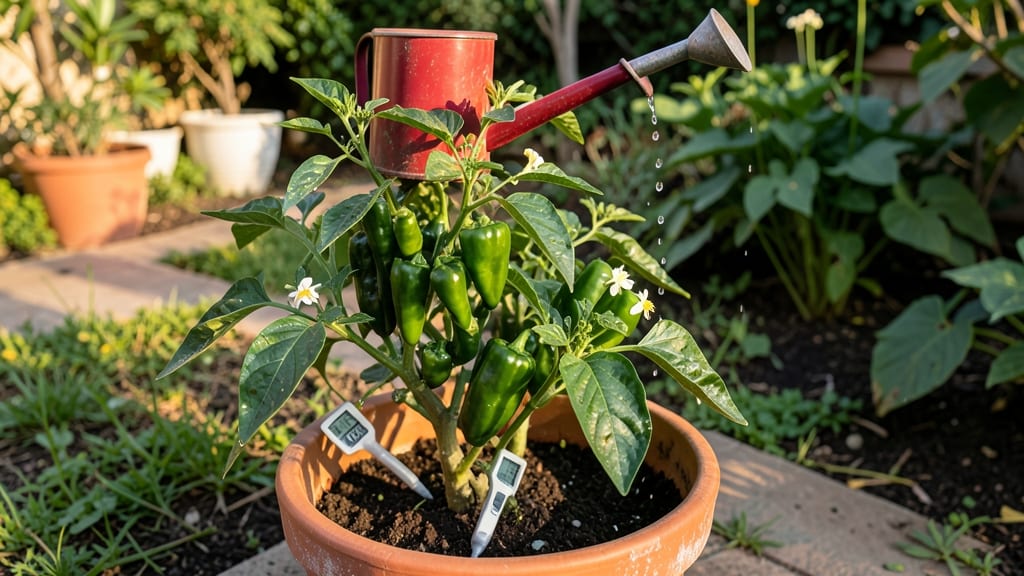
Watering your jalapeño plants in pots the right way is the difference between a bountiful harvest of fiery 🌶️ peppers and a sad, wilted disappointment.
Picture this: You’ve just planted your seedlings, full of excitement, only to watch them turn mushy or crispy within weeks. The problem isn’t just when you water—it’s how.
Overwatering drowns roots, while letting them dry out too long stresses the plant, especially in pots where soil dries faster than in the ground.
Here’s the secret: the drip-dry method—watering deeply until it runs out the drainage holes, then waiting until the top inch of soil feels dry to the touch. This keeps your jalapenos thriving in their containers, whether you’re in a hot summer or a chilly spring.
In this guide, I’ll break down the exact watering schedule, how to adjust for pot size, climate, and season, and the telltale signs your jalapenos are thirsty—or drowning. Let’s get those peppers growing strong!
The drip-dry watering schedule for jalapeno plants in pots: days, signs, and soil secrets
Jalapeño plants in pots demand a precise watering routine—too much water drowns their roots, while too little stunts growth. The drip-dry method balances moisture perfectly, letting soil dry slightly between waterings to prevent root rot while keeping plants hydrated enough for heat tolerance.
This schedule adapts to seasonal shifts, ensuring your peppers thrive year-round in containers.
Container-grown jalapenos dry out 30% faster than in-ground plants because pots lack moisture retention. The drip-dry approach mimics natural rainfall cycles: water deeply until it drains from the bottom, then wait until the top 1-2 inches of soil feel dry to the touch.
This method also prevents nutrient leaching, keeping your plants healthy and productive.
| Season | Watering Frequency | Soil Check Depth | Key Signs |
|---|---|---|---|
| Spring (April-May) | Every 3-4 days | Top 1 inch | Leaves slightly wilted by late afternoon |
| Summer (June-August) | Every 2-3 days | Top 1-2 inches | Soil feels bone-dry at surface |
| Fall (September-October) | Every 4-5 days | Top 1.5 inches | Growth slows; yellowing leaves appear if overwatered |
| Winter (November-March) | Every 7-10 days | Top 2 inches | Dormant; no wilting if soil is dry |
Note: Adjust for small pots (1-3 gallons) by watering 1 day more frequently.
To check soil moisture like a pro, stick your finger 1-2 inches deep into the soil. If it feels dry but crumbly (not powdery), it’s time to water. For 5-gallon pots or larger, extend your finger to 2-3 inches—larger containers hold moisture longer.
Pro tip: Use a moisture meter for accuracy, especially during summer heatwaves when evaporation speeds up.
Overwatering is the #1 killer of potted jalapenos, causing root suffocation and fungal diseases like Phytophthora. Signs include yellowing leaves, mushy stems, or water pooling at the pot’s base. If you notice these, stop watering immediately and let the soil dry out completely before resuming.
For heat tolerance, always water in the early morning to reduce evaporation and prevent leaf burn.
Pot size matters—smaller pots dry faster. A 1-gallon pot may need watering every 2 days in summer, while a 10-gallon pot can stretch to 4-5 days.
Mix cactus/succulent mix with potting soil (50/50 ratio) to improve drainage. Add a 2-inch layer of perlite at the bottom to prevent compaction and encourage root aeration.
Mulch your potted jalapenos with straw or shredded leaves to lock in moisture and regulate soil temperature. This reduces watering frequency by 20-30% during summer. Avoid organic mulches like wood chips, which can attract pests.
Place pots on elevated trays with pebbles to improve airflow and prevent root rot from sitting water.
Watch for wilting leaves by midday—a clear sign your jalapeno needs water. However, don’t confuse heat stress (leaves drooping but turgid) with thirst. Gently squeeze a leaf: if it springs back, it’s heat stress; if it stays limp, it’s underwatered.
For container-grown plants, morning wilting is normal due to transpiration, but evening wilting signals dehydration.
In high-humidity climates, reduce watering by 25% to avoid fungal issues. Conversely, in arid regions, increase frequency but water more deeply to encourage root growth.
Always use room-temperature water—cold water shocks roots. For self-watering pots, fill the reservoir every 5-7 days in summer, checking the soil moisture gauge before refilling.
Your jalapeno’s root system thrives on consistency. Stick to the drip-dry schedule, and you’ll see bigger peppers and health
5 Common mistakes that kill jalapeno plants in pots (and how to fix them)
Growing jalapeño plants in pots is rewarding, but even experienced gardeners fall prey to silent killers that turn vibrant green plants into wilted, yellowing ghosts.
The most common culprits? Overwatering, poor drainage, and ignoring environmental stress. These mistakes strangle your peppers before they even reach harvest size.
I’ve watched jalapeños thrive in my own containers—until I ignored the warning signs. One summer, my prized Early Jalapeño plants turned mushy overnight because I assumed bigger pots meant less watering.
Wrong! The confined roots couldn’t escape the soggy soil, and within days, I lost two plants. Don’t let this happen to you.
⚠️ How Often to Water Jalapeno Plants in Pots?
Summer (70°F+): Every 3-5 days—check soil 1 inch deep. Morning watering prevents fungal diseases. Winter (below 60°F): Every 7-10 days; reduce by half. Signs of overwatering: Yellow leaves, mushy stems, or soil that smells like rot. Signs of underwatering: Dry, crispy soil and wilting despite moist topsoil.
Let’s tackle the top 5 mistakes head-on. First up: overwatering. Many gardeners assume potted plants need more water because they dry out faster. But jalapeños hate soggy roots. Their native soil in Mexico drains quickly, and replicating that in containers is key.
If your pot lacks drainage holes, drill them immediately—or upgrade to a self-watering container with a moisture meter.
Next, underwatering sneaks up when we rely on memory instead of soil checks. I learned this the hard way when my jalapeños developed blossom-end rot—a classic calcium deficiency triggered by inconsistent moisture.
The fix? Stick your finger 1-2 inches deep into the soil. If it’s dry, water until it drains from the bottom. If it’s still damp, wait 2 more days before checking again.
Poor drainage is another silent killer. Without proper airflow at the roots, fungal diseases like Phytophthora take over. I once used a decorative pot without holes for my jalapeños, and within weeks, the roots suffocated.
Always pair your pot with a cactus/succulent mix (60% inorganic matter) or add perlite to improve aeration. A 2-inch layer of gravel at the bottom also helps.
Environmental stress—like sudden temperature swings or low humidity—can stall growth or invite pests. My jalapeños in a sunroom struggled until I added a pebble tray under the pot to boost humidity.
For outdoor pots, move them to partial shade during heatwaves (above 90°F) to prevent leaf scorch. A lightweight shade cloth (30-50%) works wonders.
Lastly, neglecting repotting turns your container into a jail for roots. Jalapeños need 1-2 gallons of space per plant—any less, and they’ll outgrow their home by midsummer. Upgrade to a 5-gallon pot when you see roots circling the drainage holes.
Use a well-draining potting mix (never garden soil) and refresh it every 2 years to prevent nutrient depletion.