
How To
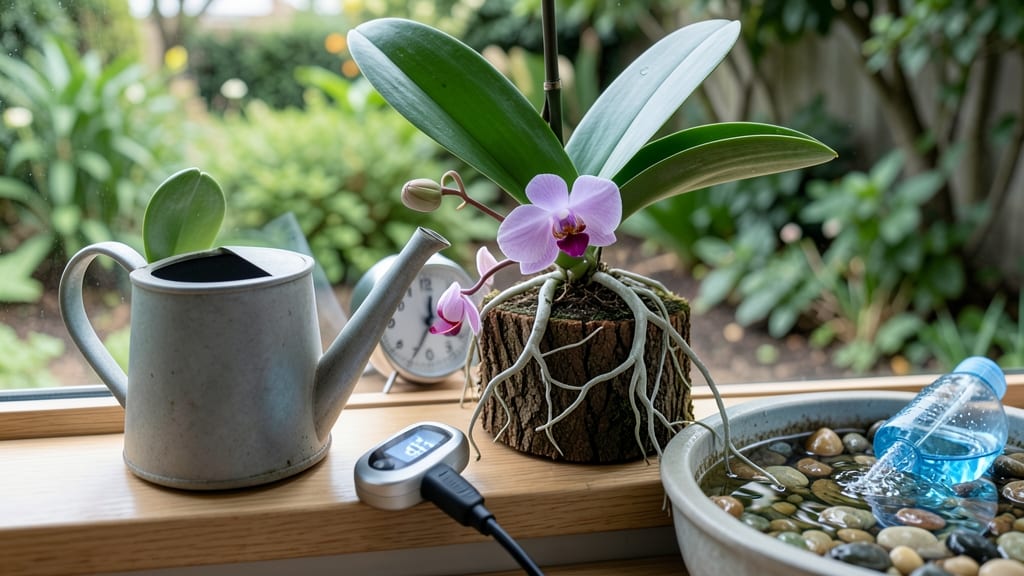
Watering mounted orchids every 5 to 7 days keeps their delicate roots thriving without drowning them 🌸 — but timing is everything.
Here’s the catch: these orchids don’t rely on soil to hold moisture, so their hydration needs are far more sensitive than potted varieties. Too much water, and you’ll smother the roots; too little, and they’ll shrivel.
The key is learning their subtle signals—like when the roots turn silver or the bark feels light.
In this guide, I’ll break down the 5-7 day rule and how to adjust it for humidity, season, and even your orchid’s species. You’ll also discover how to spot overwatering before it’s too late (yes, even mounted orchids can drown).
By the end, you’ll water with confidence—no more guesswork, just lush, blooming orchids that stay healthy year-round.
The 5-7 day watering rule: why this schedule works for mounted orchids
Mounted orchids rely on their unique velamen roots—thick, spongy layers that store water and nutrients. Unlike potted orchids, they lack soil to retain moisture, making their watering schedule critical.
The 5-7 day rule aligns with how these roots naturally absorb and release hydration, preventing both dehydration and root rot. This schedule works because it mimics their epiphytic (air-rooted) habits in tropical forests, where they experience periodic rainfall followed by drying periods.
Humidity plays a pivotal role in this timeline. In low-humidity environments (below 50%), orchids dry out faster, so you may need to water every 5-6 days. Conversely, in high-humidity conditions (above 60%), like a greenhouse or coastal climate, stretch the interval to 7 days to avoid soggy roots.
The key is balancing evaporation rates with the orchid’s natural water storage capacity.
| Orchid Type | Watering Interval | Humidity Needs | Seasonal Adjustments |
|---|---|---|---|
| Phalaenopsis | Every 5-7 days | 50-70% | Reduce in winter |
| Cattleya | Every 7-10 days | 40-60% | Increase in summer |
| Dendrobium | Every 6-8 days | 55-75% | Dormant phase: skip |
| Vanda | Every 4-6 days | 60-80% | Year-round consistency |
The 5-7 day rule also accounts for seasonal shifts. During summer months, higher temperatures and sunlight increase evaporation, so check roots every 5 days. In winter, when growth slows, extend the interval to 7-10 days unless your home has forced-air heating, which dries out the air.
For example, my Phalaenopsis blooms more reliably when I adjust watering from 5 days in July to 8 days in January.
Different orchid species have distinct hydration needs due to their native climates. Phalaenopsis, native to Southeast Asia’s humid rainforests, thrives on the shorter end of the spectrum (5-6 days). In contrast, Cattleya, from Brazil’s drier highlands, can handle 7-10 days between waterings.
Even within species, younger plants with smaller root systems may need water every 4-5 days, while mature specimens with thick velamen can stretch to 10 days in ideal conditions.
To implement this rule effectively, I use the "finger test" after the recommended interval. Gently press a root—if it feels light and shriveled, it’s time to water. If it’s still firm and green, wait one more day.
This tactile check is more reliable than a calendar alone, as factors like mounting material (cork bark vs. tree fern) and airflow can alter drying rates. For instance, orchids mounted on tree fern retain moisture longer than those on cork bark, so adjust accordingly.
Seasonal adjustments are non-negotiable. In rainy seasons, reduce watering to every 7-10 days to prevent fungal growth from prolonged moisture. Conversely, during dry spells or when using dehumidifiers indoors, increase frequency to every 4-5 days.
I once lost a Dendrobium to overwatering during a humid August—since then, I’ve made it a habit to monitor both the calendar and weather forecast before scheduling waterings.
Another critical factor is light exposure. Orchids in bright indirect light (like an east-facing window) dry out faster than those in lower light conditions. If you notice silver roots (a sign of dehydration), move the orchid to a sunnier spot and water immediately.
Conversely, if roots stay dark green and mushy, reduce light and space out waterings. My Vanda orchid, which loves high light, now gets water every 4 days in its south-facing position, while my Paphiopedilum in a north window stretches to 10 days.
Pro tip: Pair this watering schedule with morning waterings to allow excess moisture to evaporate by evening. Avoid watering at night, as cooler temperatures slow evaporation, increasing the risk of root rot.
I’ve also found that a light misting between scheduled waterings (especially in dry climates) helps maintain humidity without disrupting the root’s natural drying cycle. This approach mimics the short, frequent rain showers orchids experience in their native habitats.
Finally, observe your orchid’s growth patterns to fine-tune the schedule. Active growth (new leaves or blooms) signals it needs more frequent watering, while dormant phases (like winter for Cymbidium) mean you can extend the interval. Over time, you’ll develop an intuitive sense of when to adjust—my
How to tell when your mounted orchid needs water (without guessing)
Mounted orchids don’t play by the rules of potted plants—no soil means no traditional watering cues like dry topsoil. Instead, you’ll need to rely on visual and tactile clues from their roots and environment.
Start by examining the root color and texture, which are the most reliable indicators of hydration status. Healthy roots should appear green or silvery-green, while thirsty roots turn silver or matte gray. This color shift happens because the roots shrivel and lose moisture, triggering a protective response.
Next, pick up your orchid gently—weight loss is another clear sign it’s time to water. A well-hydrated mounted orchid feels noticeably heavier due to plump roots storing water. If it feels light as a feather, your orchid is begging for hydration.
This tactile check is especially useful for Phalaenopsis orchids, which store water in their thick roots. For Dendrobium varieties, however, the roots are thinner and dry out faster, so weight loss happens more quickly.
Don’t ignore your environmental conditions either. High humidity (above 50%) means your orchid can go 7–10 days between waterings, while dry air (below 40%) may require watering every 5–7 days. Place a hygrometer nearby to track humidity levels—this small investment saves orchids from dehydration or rot.
Temperature also plays a role: cooler temps slow evaporation, so orchids in 60–70°F rooms need water less frequently than those in warm, dry climates.
🌱 Quick Watering Checklist for Mounted Orchids
- 🔍 Roots: Silver/gray = water now; green = wait 2–3 days
- ⚖️ Weight: Light as a feather = soak immediately
- 🌡️ Humidity: Below 40%? Water every 5–7 days
- ☀️ Light: Bright indirect light = faster drying (water more often)
- 💧 Method: Soak for 10–15 mins, then let drain completely
Pro Tip: Morning watering prevents fungal growth by allowing roots to dry overnight.
For a deeper inspection, remove your orchid from its mount (if possible) and examine the root tips. Healthy roots should be firm and flexible, while shriveled or mushy roots signal underwatering or rot, respectively.
If you spot black, squishy roots, act fast—trim the damaged sections with sterilized scissors and repot in fresh bark. This drastic step is better than losing your entire plant to rot.
Seasonal adjustments are critical too. In summer’s heat, mounted orchids may need watering twice a week, while winter dormancy often requires watering every 3–4 weeks.
Pay attention to your orchid’s growth cycle: actively blooming plants (like Cattleya orchids) need consistent moisture, whereas dormant orchids (such as Paphiopedilum) should barely be watered. Observe how your orchid responds to your care—over time, you’ll learn its unique rhythm.
Remember, overwatering kills faster than underwatering. Mounted orchids are epiphytes, meaning they’re adapted to absorb moisture from air and rain—not to sit in wet conditions. If you’re unsure, wait one more day.
Most mounted orchids are more resilient to drought than they are to soggy roots. With practice, you’ll develop an instinct for when your orchid is thirsty—no guesswork required!