
Watering
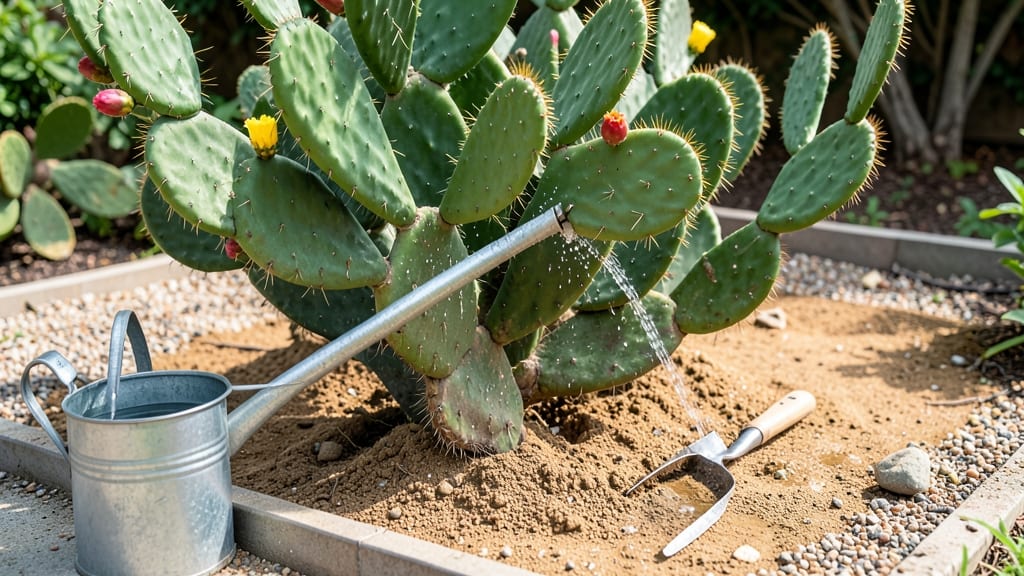
Watering a prickly pear cactus often depends on its desert roots—deep, infrequent soaks are the key to keeping it thriving without drowning it.
Struggling to keep your prickly pear cactus thriving without drowning it—or letting it wither? The secret lies in mastering its desert roots with a watering schedule that adapts to seasons, climate, and soil conditions.
Unlike thirsty houseplants, these 🌵 cacti store water in their pads, so overwatering is the silent killer. A 3-4 week gap between deep waterings in spring and summer keeps roots happy, while winter slows things down to a monthly check.
Below, I’ll break down the exact schedule by season, how to spot overwatering (those sad, wrinkled pads), and why soil type and pot size make all the difference in your watering routine.
Prickly pear cactus watering schedule by season: desert survival guide
Mastering the prickly pear cactus watering schedule means embracing its desert roots. Unlike thirsty houseplants, these resilient beauties store water in their pads and thrive on neglect rather than affection. The key? Deep, infrequent watering that mimics their natural arid environment.
I’ve grown prickly pears in Zone 9b for years, and let me tell you—overwatering is the #1 killer. Let’s break down exactly how to water yours by season, so you never guess again.
Your prickly pear’s water needs shift dramatically with temperatures. In scorching summer months, you’ll water every 2-3 weeks, while in winter dormancy, a single monthly drink might suffice. Even rainfall changes the game—if you get 1 inch of rain, skip your scheduled watering.
The goal? Keep the soil dry between waterings while ensuring roots get enough moisture to thrive without rotting.
🌵 Pro Tip: Stick your finger 2-3 inches into the soil. If it’s dry, water deeply until it drains from the bottom. If damp, wait another week. This simple check saves more cacti than any fancy tool.
Spring is your prickly pear’s wake-up call. As temperatures rise from 60°F to 80°F, increase watering to every 3-4 weeks. Look for new pad growth—this signals it’s ready for more moisture.
If your cactus is potted, reduce frequency by 1 week since containers dry faster. Outdoor plants in well-draining soil can handle slightly longer stretches between waterings.
Summer demands deep watering every 2-3 weeks, but timing matters. Water in the early morning to prevent fungal rot from evening moisture. Watch for wrinkled pads—this is your cactus screaming for water.
Conversely, soft or mushy pads mean you’ve overdone it. In 100°F+ heat, increase water slightly, but never let soil stay soggy.
Fall signals dormancy prep. Gradually reduce watering to every 4-6 weeks as temps drop below 70°F. Your cactus is storing energy for winter, so less is more.
If you live in Zone 5a or colder, move potted prickly pears indoors near a south-facing window and cut water to monthly.
Winter care depends on your climate. In frost-free zones (like Zone 9b+), a monthly sip keeps roots hydrated without encouraging growth. In colder areas, skip watering entirely until spring. Check soil moisture—if it’s bone dry after 2 months, give a light drink to prevent dehydration.
🌵 Signs of Overwatering: Yellowing pads, soft spots, foul smell (root rot), and mushy base. Signs of Underwatering: Wrinkled, shriveled pads, dry soil pulling away from pot edges, and no new growth for months. Adjust your
5 Key factors that change your prickly pear’s water needs
Your prickly pear cactus thrives on desert resilience, but its water needs shift dramatically based on its environment. Unlike most houseplants, these cacti don’t follow a rigid schedule—they adapt to soil type, container size, and even your local humidity levels.
Ignoring these factors can lead to root rot or stunted growth, so let’s break down how each variable rewrites the rules.
First, consider your soil composition. Sandy soil drains water 3x faster than clay, meaning your prickly pear might need watering every 2 weeks in sand versus every 6 weeks in clay.
This isn’t just about moisture retention—it’s about root health. Clay holds onto water like a sponge, while sand lets it slip away, forcing roots to work harder to access hydration.
- 🌱 Soil Type: Sandy = every 2 weeks | Clay = every 6 weeks
- 🪴 Pot Size: 6" pot = every 3 weeks | 12"+ pot = every 8 weeks
- ☀️ Sunlight: Full sun = every 2-3 weeks | Partial shade = every 4-5 weeks
- 💧 Humidity: Dry air = less frequent | Humid climates = reduce by 30%
- 🌱 Age: Young = every 2 weeks | Mature = every 6-8 weeks
Next, pot size plays a surprising role. A 6-inch container dries out in 3 weeks because roots have limited space to explore, while a 12-inch pot can hold moisture for 8 weeks.
I once killed a young prickly pear by watering it weekly in a tiny pot—it was drowning in its own root-bound misery. Upgrading to a larger container solved the problem instantly.
Sunlight exposure directly impacts evaporation rates. A prickly pear basking in full sun loses moisture 50% faster than one in partial shade, so adjust your schedule accordingly. If your cactus is near a south-facing window, it may need water every 2-3 weeks, while a shaded indoor plant might only require water every 5-6 weeks. Always check soil moisture by sticking your finger 2 inches deep—if it’s dry, water; if damp, wait.
Don’t overlook humidity levels, especially if you live in a coastal or tropical climate. High humidity slows evaporation, meaning your prickly pear might only need water 30% less frequently than in a dry desert environment.
I learned this the hard way in my humid Florida garden—my cacti nearly rotted from overzealous watering until I cut back to monthly soaks instead of biweekly.
Finally, age matters. Young prickly pears have shallow root systems and need water every 2 weeks to establish themselves, while mature plants with deep roots can survive 6-8 weeks without a drink. Think of it like raising a child: babies need constant attention, but adults can fend for themselves.
Test this by lifting your pot—if it feels light as a feather, it’s time to water; if it’s heavy, hold off.
Master these 5 variables, and your prickly pear will reward you with vibrant pads and sweet fruit—no guesswork required. Start by testing your soil and adjusting your schedule, then observe how your cactus responds. That’s the desert secret right there. 🌵