
How To
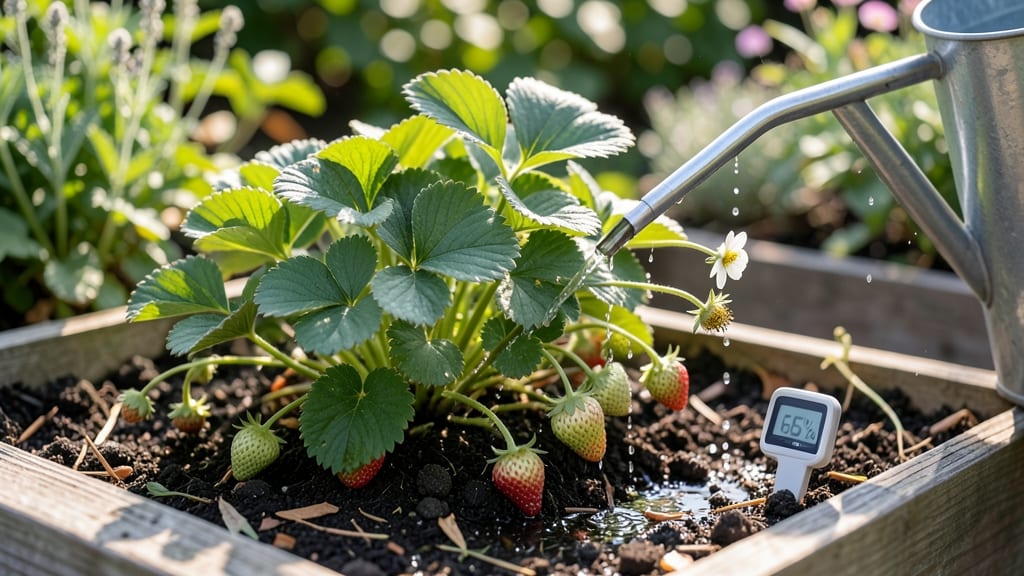
Watering strawberries the right way keeps them juicy and productive—1-2 inches of water per week is the sweet spot, but timing and technique make all the difference.
Picture this: you’ve spent weeks nurturing your 🍓 strawberries, only to watch them turn bland or rot before harvest. The culprit? Watering too much, too little, or at the wrong time.
Too much moisture drowns roots, while too little shrinks berries—and neither gives you the sweet, plump fruit you’re after.
Your strawberries’ watering needs change with the seasons, soil type, and even whether they’re June-bearing or everbearing. A dry soil test at the right depth is the secret to avoiding guesswork, and mulch or drip irrigation can save you time while keeping roots happy.
In this guide, I’ll break down the exact watering schedule for each growth stage, how to spot over- or underwatering, and the best times of day to water so your berries stay disease-free and delicious. Let’s get those plants thriving!
Strawberry watering schedule by growth stage: flowering to harvest
Strawberries need consistent moisture to produce sweet, juicy fruit, but overwatering or underwatering can ruin your harvest. During the flowering to harvest stage, your watering routine should shift to support fruit development.
Too little water causes small, bland berries, while too much leads to rot or disease. The key is deep, infrequent watering that keeps roots moist without drowning the plant.
I’ve grown strawberries for years, and the biggest mistake I see is watering based on a schedule rather than soil conditions. Instead, focus on the dry soil test—a simple method to check moisture at root depth.
This ensures your plants get just the right amount of water, whether you're dealing with sandy soil that drains fast or clay soil that holds moisture longer. Let’s break down the exact watering needs for each stage of growth.
| Growth Stage | Watering Frequency | Water Amount | Key Notes |
|---|---|---|---|
| Flowering (Blooms Appear) | Every 2-3 days | 1 inch per week | Increase water slightly to support fruit set. Avoid wetting flowers. |
| Early Fruit Development (Berries Form) | Every 2 days | 1.5 inches per week | Critical stage—consistent moisture prevents blossom end rot. |
| Mid-Fruiting (Berries Ripening) | Every 1-2 days (daily in heat) | 2 inches per week | Deep watering encourages sweeter berries and larger yields. |
| Late Harvest (Final Ripe Berries) | Every 2-3 days | 1.5 inches per week | Reduce slightly to harden berries for transport and storage. |
| Post-Harvest (Plant Recovery) | Weekly | 1 inch per week | Encourage new growth for next year’s crop. |
During the flowering stage, strawberries need about 1 inch of water per week, but increase this to 1.5 inches as berries form. This is when you’ll see the biggest difference in berry sweetness—consistent moisture helps develop natural sugars.
I’ve found that June-bearing varieties (like 'Jewel') need slightly more water than everbearing types (like 'Albion') because they produce all their fruit at once.
When berries are actively growing, aim for 2 inches of water per week during hot weather. Use a rain gauge or tuna can to measure rainfall and adjust accordingly. If your soil feels dry 1-2 inches below the surface, it’s time to water.
Sandy soils may need daily checks, while clay soils can go 2-3 days between waterings. Always water deeply to encourage root growth—shallow watering leads to weak plants and poor fruit quality.
One of my biggest watering mistakes was using overhead sprinklers, which wets the leaves and invites fungal diseases like gray mold. Instead, use drip irrigation or soaker hoses placed at the base of plants.
Water in the early morning (before 10 AM) to give foliage time to dry. If you notice yellowing leaves or wilting berries, it’s a sign of inconsistent moisture—adjust your schedule immediately.
Mulching is another game-changer for strawberry watering. Apply 2-3 inches of straw or wood chips around plants to retain moisture, suppress weeds, and keep berries clean. Organic mulch also improves soil as it breaks down. In containers, check soil moisture daily—potted strawberries dry out much faster than in-ground plants.
If the top inch of soil feels dry, it’s time to water, but always let excess water drain completely to prevent root rot.
For container-grown strawberries, I’ve found that self-watering pots work wonders in hot climates. They deliver moisture directly to the roots without overwatering. If you’re growing in raised beds, water more frequently because the soil heats up faster.
Always monitor the soil—if it’s cracked or pulling away from the edges, your plants are thirsty. Adjust your watering based on weather forecasts, too. Heavy rain means skipping a day, while a heatwave means watering daily.
Finally, pay attention to your strawberries’ leaves and fruit. Small, hard berries? You’re underwatering. Soft, mushy berries? You’re overdoing it. The perfect balance is plump, firm berries with vibrant color.
With this schedule, you’ll harvest sweet, juicy strawberries that taste like summer every time. And remember: the dry soil test is your best friend—trust it over a rigid schedule!
The 3-Zone soil dry test: when to water strawberries without guessing
Guessing when to water your strawberries can mean the difference between juicy, sweet berries and shriveled disappointment. The 3-Zone Soil Dry Test gives you a precise, science-backed way to check moisture at the exact depth where strawberry roots thrive—without over- or underwatering.
This method works for container-grown plants, in-ground beds, and even arid vs. humid climates.
Strawberry roots spread 6-12 inches deep and 12-18 inches wide, so surface checks with your finger won’t tell the full story. The 3-Zone Test targets root depth, mid-soil, and surface layers to give you a complete picture.
Adjust your watering based on what you find—this is how I’ve kept my June-bearing and everbearing varieties thriving for years.
- 🔹 Zone 1 (Surface): Stick your finger 1 inch deep. If dry, water lightly to hydrate topsoil—critical for new seedlings or hot afternoons.
- 🔹 Zone 2 (Mid-Soil): Dig 3-4 inches deep (root zone). Dryness here means deep watering (1-2 inches total). Use a soil probe or screwdriver for accuracy.
- 🔹 Zone 3 (Root Depth): Check 6-8 inches deep. If dry, your plants need 1-2 gallons per plant (adjust for clay vs. sandy soil). This is where everbearing varieties store moisture.
Your soil type changes everything. In sandy soil, water drains fast—check Zones 2 and 3 daily in summer. In clay soil, water less often but deeply to prevent root rot.
I’ve seen Albion strawberries in sandy soil wilt by noon if I skip the Zone 2 check, while clay beds stay moist for 3-4 days after watering.
Climate matters too. In arid regions, mulch with straw or wood chips to slow evaporation—this adds 1-2 extra days between waterings. In humid climates, focus on morning watering to avoid fungal diseases like gray mold.
My everbearing varieties in Florida need daily watering in July but only every 3 days in October.
For container strawberries, the rules shift. Small pots dry out faster—weigh them! A 5-gallon container may need watering when it’s 10% lighter than when fully moist.
Group containers together to create a microclimate that retains moisture longer. I’ve saved Chandler strawberries from drought stress by moving their pots to shadier spots during heatwaves.
Master this test, and you’ll never over- or underwater again. Start with the Zone 2 check—that’s where most strawberry roots live. Adjust based on your soil type, container size, and weather, and your berries will thank you with sweeter, juicier fruit. 🌱