
How To
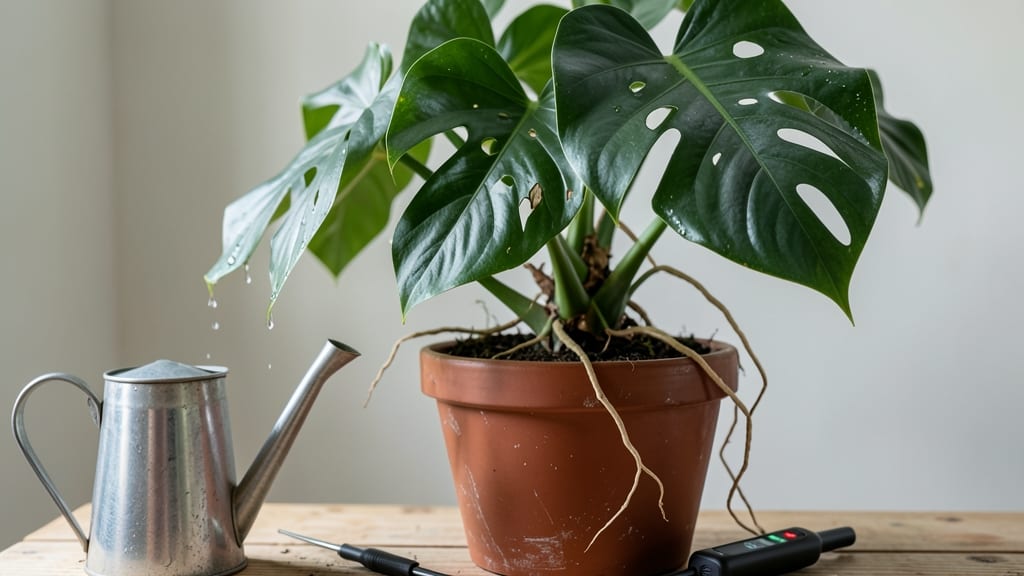
Watering a Monstera too often or too little can turn your lush green friend into a sad, yellowing vine — and the right schedule depends on more than just days of the week.
You’ve probably guessed your Monstera’s mood by now: droopy leaves mean thirst, crispy edges mean overwatering. But what’s the exact rhythm that keeps it thriving year-round? The answer isn’t just “once a week” — it’s a mix of soil checks, pot size, and even your home’s humidity.
In this guide, I break down the science behind Monstera watering: how often to water in spring vs. winter, when to adjust for small pots vs. large containers, and the one simple test to tell if your plant is begging for water or drowning in it.
By the end, you’ll know not just how often to water your Monstera 🌿, but how to spot the subtle signs that your routine needs a tweak — so your plant stays vibrant, not just surviving.
Monstera watering schedule by season: exact weeks and soil checks
Mastering your Monstera deliciosa watering routine means adapting to seasonal changes and environmental factors. Unlike many houseplants, Monsteras thrive on a consistent moisture balance—too much water causes root rot, while too little leads to crispy brown leaves.
The key? Checking soil moisture and adjusting your watering frequency every 4-6 weeks.
I’ve grown Monsteras for 5+ years and learned that humidity levels, pot size, and even room temperature drastically change how often you water. For example, my 6-inch pot Monsteras need water every 5-7 days in summer, while my 12-inch pot only requires water every 10-14 days.
Let’s break it down by season so you can keep your plant thriving year-round.
In spring, your Monstera will show new growth as it wakes from dormancy. This is when you should increase watering frequency to match its active growth phase. Stick your finger 2-3 inches into the soil—if it feels dry, it’s time to water.
For 6-inch pots, aim for 1 cup of water until it drains from the bottom. Larger pots (12+ inches) may need 2-3 cups.
Summer is the most demanding season for Monsteras due to high evaporation rates. I water mine every 5-7 days, but I also mist the leaves twice weekly to mimic tropical humidity.
Pro tip: Place your pot on a pebble tray with water to boost moisture without overwatering. Watch for yellowing leaves—this often signals overwatering, not thirst!
As fall arrives, reduce watering to every 10-14 days since your Monstera’s growth slows. The soil stays moist longer, so wait until the top 50% is dry before watering.
This is also when I switch to bottom watering—place the pot in a saucer of water for 10-15 minutes to encourage deep root hydration without surface sogginess.
Winter care is all about patience. Your Monstera is dormant, so water only when 80% of the soil is dry. I’ve had Monsteras survive 6 weeks without water in winter, but I still check monthly.
If your home has low humidity (below 30%), use a humidifier or group plants together to create a microclimate.
One critical mistake I see? Ignoring pot material. Terracotta pots dry out 30% faster than plastic or ceramic. If your Monstera is in terracotta, water 2-3 days earlier than the schedule above. Also, avoid ice-cold water—always use room-temperature water to prevent shock to the roots.
To test soil moisture like a pro, use the "squeeze test": Grab a handful of soil. If
5 Signs your Monstera needs water (and 3 signs you’re overdoing it)
Your Monstera deliciosa thrives on consistency, but too much or too little water can spell disaster. As a plant parent, I’ve learned to read my Monstera’s signals—like wilting leaves or crispy edges—before they become irreversible.
The key is understanding the subtle differences between thirsty roots and waterlogged soil. Let’s break down the visual and tactile cues so you can keep your plant happy and healthy.
First, check the soil moisture with your finger. Stick it about 1-2 inches deep—if it feels dry, your Monstera is begging for water. But if it’s damp or sticky, you’re likely overwatering. This simple test saves countless plants from root rot.
I also watch for leaf color changes: yellowing or brown edges often mean your Monstera isn’t getting enough hydration, while dark, mushy spots signal too much water.
- 1. Leaf Droop: Soft, limp leaves mean your Monstera is thirsty—water immediately.
- 2. Soil Texture: Dry topsoil (1-2 inches deep) signals it’s time to water.
- 3. Slow Growth: Stunted new leaves or brown spots on older ones? Your plant is stressed—adjust your watering.
- 4. Yellowing Leaves: Lower leaves turning yellow? Likely underwatered—but check for pests too.
- 5. Root Rot Smell: A foul odor from the soil means overwatering—let it dry out.
Now, let’s talk about the three biggest overwatering mistakes I see. First, watering on a schedule instead of checking soil moisture. Monsteras don’t follow calendars—they follow their environment. Second, using pots without drainage holes, which traps water and suffocates roots.
Third, ignoring humidity levels: dry air (like from a heater) makes soil dry out faster, while high humidity slows evaporation. Adjust your watering based on your home’s conditions.
If your Monstera’s leaves are crispy at the edges, it’s a classic sign of underwatering. To fix this, give it a thorough deep watering—soak the soil until water drains from the bottom. For yellowing leaves, trim the affected ones and reduce watering slightly.
And if you spot mushy stems or black spots, your plant is drowning. Repot it in fresh, well-draining soil and let it dry out completely before watering again.
Remember, Monsteras are tropical plants—they love humidity and consistent moisture but hate soggy feet. I’ve found that bottom watering (placing the pot in a tray of water for 10-15 minutes) helps me avoid overwatering while keeping the roots happy.
And always use a pot with drainage holes—trust me, it’s a game-changer. With these cues, you’ll master the art of watering and keep your Monstera thriving for years.
🌿