
Flowers
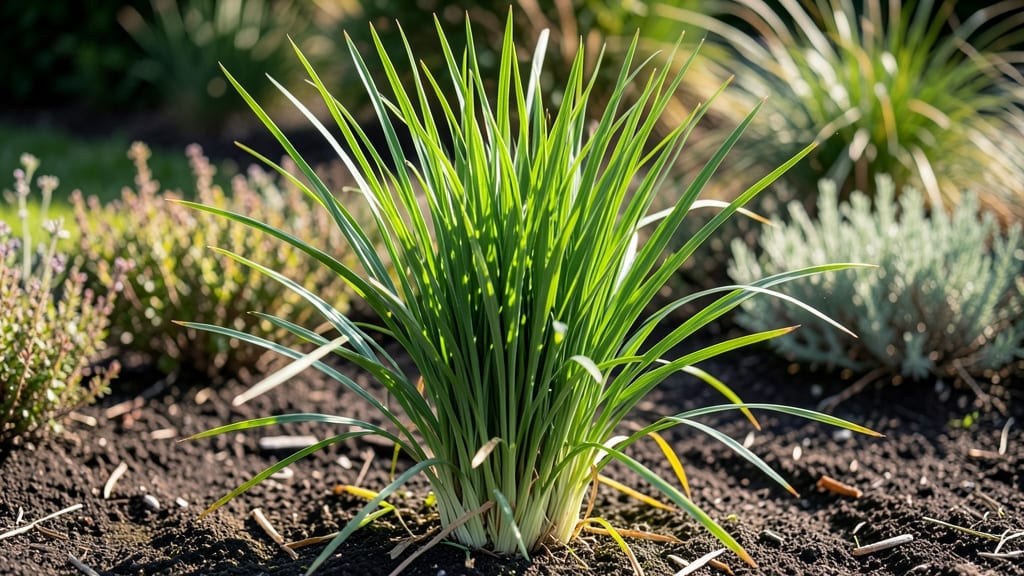
Lemongrass is a perennial in warm climates but dies back in frost, requiring replanting in colder zones. It thrives as an annual in regions with freezing temperatures, though regrowth from roots is possible in mild winters.
Lemongrass grows as a tropical perennial in USDA zones 10-12, where it naturally survives year-round with consistent warmth. 🌱 When temperatures drop below 20°F, the plant's above-ground stems die, but its roots often remain viable in mild winters.
This means you can replant from those roots in spring—though it's not a true perennial in colder zones. The key difference lies in how it handles frost: while it may regrow from roots in marginal climates, it behaves more like an annual in freezing conditions.
For gardeners in colder regions, the best approach is to treat lemongrass as an annual or use container growing to bring it indoors before frost. This preserves the plant's health while maintaining its aromatic qualities for cooking and teas.
Many gardeners also opt for cold-hardier alternatives like citronella or ginger, which offer similar citrusy notes without the same temperature sensitivity.
💡 In This Article
- Lemongrass Hardiness Zones and Cold Tolerance
- Growing Lemongrass in Cold Climates: Tips and Alternatives
Lemongrass hardiness zones and cold tolerance
Lemongrass (Cymbopogon citratus) is classified as a tropical perennial, meaning it thrives in warm, frost-free climates like USDA zones 10-12. 🌿 The plant's growth cycle is directly tied to temperature—when nighttime temps stay above 50°F, it grows vigorously, producing those signature 3-4 foot tall stalks with fragrant, citrusy leaves.
However, its sensitivity to cold is what makes it behave differently in cooler regions. The critical threshold is 20°F: any frost below this temperature will kill the above-ground stems, but the roots often survive if the ground doesn't freeze solid.
Here's what happens botanically: lemongrass stores energy in its fibrous root system, which can remain dormant during mild winters. In zones 9-10, where winter lows might dip to 25-30°F, the roots can regenerate in spring—this is why some gardeners report "volunteer" lemongrass popping up after winter.
The regrowth isn't always identical to the original plant, though, as the new shoots may be thinner or less aromatic due to stress. In true perennial zones (10-12), the plant continues growing year-round, reaching its full 5-7 year lifespan with proper care.
The real challenge comes in zones 8 and below, where frost is more severe. Here, lemongrass behaves like an annual—it won't survive winter outdoors.
The key difference is in the root survival rate: while some roots may persist in zone 8's 10-15°F winters, they often rot if the ground freezes completely.
This is why container growing works so well in colder climates—you can move potted plants indoors before the first frost and bring them back outside when temps stabilize above 55°F in spring.
What most people don't realize is how soil moisture affects cold tolerance. Wet, heavy soils conduct cold more efficiently, increasing root damage. In contrast, well-draining, sandy soils insulate roots better, allowing marginal survival in zone 8-9.
This is why gardeners in these areas often amend soil with perlite or compost to improve drainage. The plant's natural habitat in Southeast Asia's monsoon regions explains its preference for moisture, but this same trait makes it vulnerable to winter soil saturation in temperate climates.
For visual comparison, imagine lemongrass's cold response like a citrus tree: while oranges survive mild winters in Florida, they'd freeze solid in New York. The same principle applies—lemongrass is tropical at its core, adapted to 75-85°F average temperatures.
Even in its native range, it grows best in full sun with 60-100 inches of annual rainfall, conditions that are impossible to replicate in most temperate gardens without greenhouses.
This temperature sensitivity explains why lemongrass is rarely found growing wild outside tropical regions. While it can be cultivated as an annual in colder zones, its true perennial nature only shines in climates where winter lows never dip below 30°F.
The aromatic oils that make lemongrass so valuable in cooking and traditional medicine actually become more concentrated in warm conditions—another reason why gardeners in cooler climates often find store-bought stalks more potent than homegrown ones.