
Planting
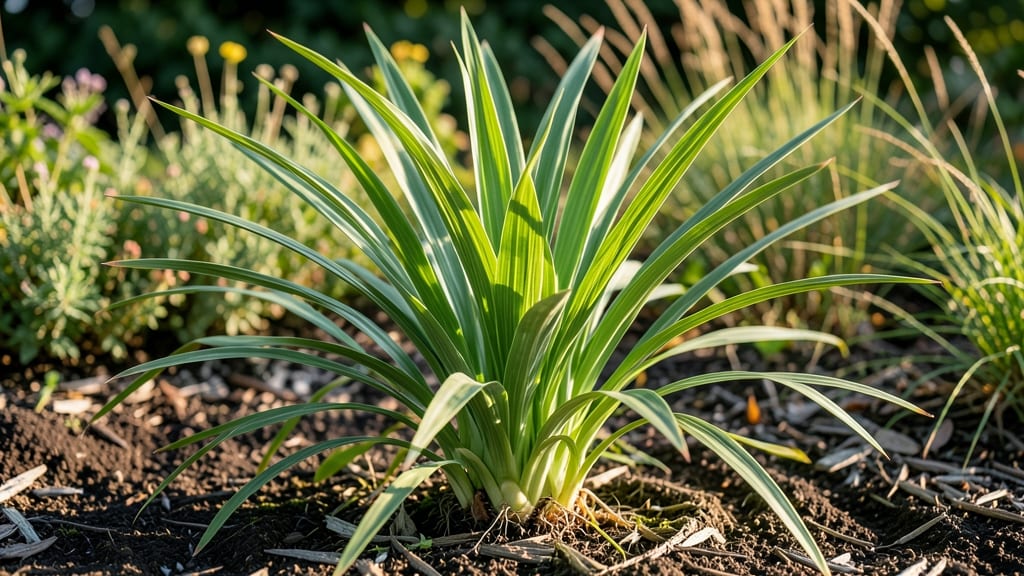
Yes, lemongrass is a perennial plant in warm climates, growing continuously with proper care, but it behaves as an annual in colder regions unless protected from frost.
Lemongrass thrives as a perennial in tropical and subtropical zones because it evolved in warm environments where temperatures rarely drop below 28°F. 🌿 The plant's underground rhizomes store energy, allowing it to regrow each season naturally.
However, when frost hits, the above-ground stalks die back, making it appear annual—unless you bring it indoors or harvest rhizomes before winter. Many gardeners in colder areas treat it as a seasonal herb, replanting each spring from saved rhizomes or cuttings.
What's fascinating is how quickly lemongrass recovers when conditions improve. Even if the stalks freeze, the rhizome system often survives underground, ready to sprout new growth once temperatures rise. This resilience explains why some gardeners successfully overwinter lemongrass in containers moved to garages or greenhouses.
The key is understanding that while it's a perennial in its native habitat, its growth cycle adapts dramatically to climate constraints.
💡 In This Article
- Lemongrass Growth Cycle: Why It Dies in Cold Climates
- How to Extend Lemongrass Life in Cold Regions
Lemongrass growth cycle: why it dies in cold climates
The lemongrass plant (Cymbopogon citratus) is a true perennial in its native tropical and subtropical regions because its biological systems are perfectly adapted to warm, frost-free environments. The plant's survival strategy relies on its robust rhizome system—a network of underground stems that store carbohydrates and nutrients.
These rhizomes act like natural batteries, allowing the plant to regenerate quickly after harvesting or seasonal dieback. In ideal conditions, lemongrass can continue growing indefinitely, producing new shoots from the same root system year after year.
Here's the critical detail: lemongrass stems contain about 75-85% water by weight, making them highly susceptible to freezing. When temperatures drop below 28°F (-2°C), the water in the stems crystallizes, rupturing cell walls and killing the above-ground portions.
The rhizomes, however, often survive because they're insulated by soil and contain less water.
This is why your lemongrass might look completely dead in winter—only to surprise you with new growth when spring arrives. 🌱 The plant's ability to regenerate from rhizomes explains why it's classified as a perennial in warm climates, even though it may appear annual in colder regions.
The botanical reason behind this behavior lies in lemongrass's evolutionary history. Native to Southeast Asia and tropical Africa, this plant never encountered frost in its natural habitat. Its growth cycle is perfectly synchronized with warm, humid conditions where it can continuously produce new shoots.
In temperate zones, the lack of frost tolerance creates a mismatch between the plant's biological programming and the local climate. Without protection, the entire plant system—including rhizomes—can perish if exposed to prolonged freezing temperatures below 20°F (-6°C).
What's particularly interesting is how lemongrass's growth responds to temperature changes. During the growing season, it can reach heights of 3-5 feet in just 3-4 months, with each stalk containing multiple nodes that can produce new shoots. This rapid growth is fueled by the energy stored in the rhizomes.
In colder climates, this growth cycle gets interrupted by frost, which is why many gardeners in these regions treat lemongrass as an annual—planting new cuttings each spring rather than trying to overwinter the plants.
The plant's sensitivity to cold isn't just about temperature—it's also about the speed of temperature changes. Sudden freezes can be more damaging than gradual cooling because they don't give the plant time to prepare its cellular structures.
This is why you'll often see lemongrass surviving in containers moved to protected areas during winter—it's not just about the temperature, but also about giving the plant time to acclimate and the rhizomes proper insulation. 💫 The key takeaway is that while lemongrass is biologically a perennial, its cold sensitivity makes it behave like an annual in most temperate climates without human intervention.
Understanding this growth cycle helps explain why some gardeners report success with overwintering lemongrass while others fail completely. The difference often comes down to how well the rhizomes are protected from both freezing temperatures and moisture loss during winter dormancy.
In its natural tropical environment, lemongrass doesn't experience these seasonal challenges, which is why it continues growing year-round without interruption.