
Flowers
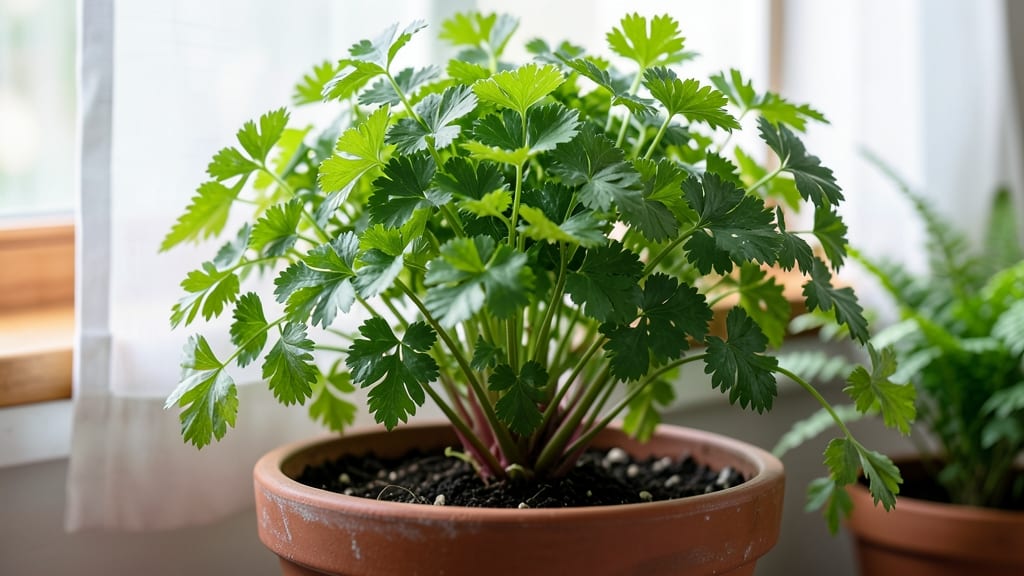
Parsley isn't a true perennial—it's a biennial herb that dies back after two years in cold climates but can regrow from its roots in milder winters. With the right care, it often behaves like a perennial by self-seeding or returning year after year.
This herb's lifecycle might seem confusing because it thrives in many gardens as if it's a perennial. 🌱 The key difference lies in its cold tolerance: while it won't survive harsh winters like true perennials, its hardy root system allows regrowth in USDA zones 3-10 with proper protection.
I've found that parsley often self-seeds prolifically, creating new plants that give the illusion of perennial growth—this is why many gardeners assume it's a true perennial when it's actually just reproducing itself.
What makes parsley unique is its ability to produce seeds in its second year, which then sprout fresh plants. This natural propagation is why you might see parsley popping up in the same spot year after year without replanting.
The trick to keeping it growing continuously is understanding its biennial nature and providing the right conditions—like mulching heavily in winter—to protect those roots.
💡 In This Article
- Why Parsley Acts Like a Perennial in Some Climates
- Tips to Extend Parsley’s Lifespan Year-After-Year
Why parsley acts like a perennial in some climates
Parsley's botanical classification as a biennial herb means it completes its lifecycle in two years: the first year focuses on leaf growth, while the second year produces flowers and seeds before dying.
However, its deep, fibrous root system—capable of reaching 12-18 inches underground—stores enough energy to regenerate foliage when conditions improve.
This root system is what allows parsley to appear perennial in frost-free zones or with winter protection, as it can survive mild freezes (-10°F to 10°F) and regrow in spring.
The confusion arises because parsley's cold hardiness varies by variety. Curly parsley (Petroselinum crispum var. crispum) is slightly less hardy than flat-leaf parsley (Petroselinum crispum var. neapolitanum), which can tolerate USDA zones 3-10 with proper care.
In colder regions, the roots often die back completely, but in milder climates or with protective mulching, they remain viable. The key mechanism here is the root's ability to store carbohydrates during the growing season, which fuels regrowth when temperatures rise again.
Another factor is parsley's self-seeding habit. When mature plants bolt in their second year, they drop thousands of tiny seeds that germinate readily in the following spring. These new seedlings create the illusion of perennial growth, as they emerge in the same location year after year.
This natural propagation is why many gardeners assume parsley is a true perennial—it's not the same plant returning, but rather its offspring establishing themselves in the same spot.
Soil temperature plays a crucial role in this process. Parsley roots need soil temperatures above 40°F to resume active growth in spring. In colder climates, adding a 4-6 inch layer of straw or leaves as mulch can insulate the roots and maintain temperatures just above freezing.
This protection allows the roots to survive winters in USDA zones 4-5, though growth may be slower in the following season.
What most people don't realize is that parsley's growth rate in its second year differs significantly from the first. While first-year plants focus on leaf production, second-year plants prioritize flowering and seed production, often resulting in bitter leaves.
This is why many gardeners prefer to harvest and replant parsley annually rather than let it follow its natural biennial cycle. The trade-off is that allowing it to go to seed ensures a steady supply of new plants without replanting.
Consider these key factors when evaluating parsley's perennial-like behavior:
- Climate zone: Zones 6-10 offer the best conditions for natural regrowth
- Root protection: Mulching extends survival in colder zones by 2-3°F
- Seed propagation: Self-seeding creates "perennial" appearance through new plants
- Harvest timing: Cutting back in fall prevents bolting and extends leaf production
The bottom line is that parsley's ability to return year after year depends on both its biological adaptations and your gardening practices. With the right conditions, it can certainly act like a perennial—even if botanically it's not one. 🌱