
Light Requirements
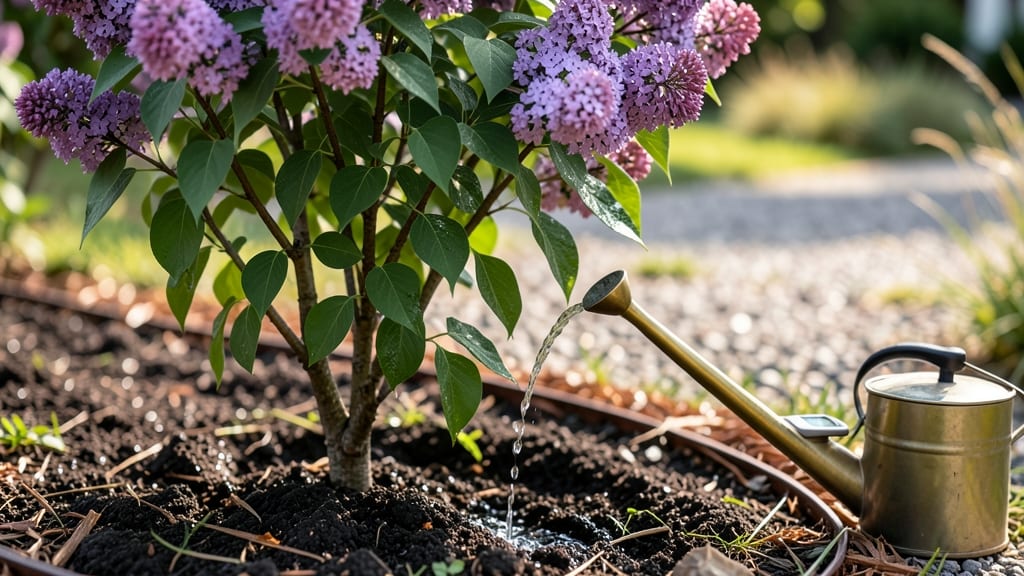
Your lilac’s water requirements are simpler than you think — deep, infrequent soakings keep those fragrant blooms thriving without drowning the roots.
Struggling to keep your lilacs blooming beautifully? Overwatering or underwatering can turn vibrant purple into wilted disappointment — here’s the exact watering schedule lilacs crave to thrive without risking root rot or drought stress.
Lilacs in USDA Zone 6 need about 1 to 1.5 inches of water weekly during their growing season, but the key is timing and technique. Early spring calls for consistent moisture to encourage new growth, while summer heat means deeper, less frequent watering to prevent shallow roots.
Below, I’ll break down seasonal adjustments, how to read your soil for the perfect moisture balance, and pro tips like mulching to lock in hydration — so you can enjoy lush, fragrant lilacs year after year.


Lilac watering schedule by season: how often to water for peak blooms
Your lilac bushes need precise watering to produce those fragrant purple blooms you love. Unlike drought-tolerant succulents, lilacs thrive on consistent moisture but despise soggy roots. The key? Adjusting your watering routine by season while monitoring soil conditions.
Too little water means wilted flowers, while too much invites root rot—neither of which you want when your lilacs are in full bloom.
Lilacs are moderately drought-tolerant once established, but their water needs shift dramatically from spring to winter. In spring and summer, they crave deep, infrequent watering to encourage strong root growth, while fall and winter demand a lighter touch.
Let’s break down the exact schedule and soil moisture tests to keep your lilacs happy without overdoing it.
Pro Tip: Always water in the early morning (before 10 AM) to reduce evaporation and fungal risks. Avoid evening watering—wet foliage overnight invites powdery mildew, a common lilac nemesis.
| Season | Frequency | Soil Moisture Goal | Adjustments for Heat/Drought | Rainfall Rule |
|---|---|---|---|---|
| Spring (March-May) | Weekly (deep soak) | Top 2-3 inches moist | Increase to bi-weekly if temps >85°F | Skip watering if >1 inch rain |
| Summer (June-August) | Bi-weekly (deep soak) | Top 3-4 inches moist | Water weekly during heatwaves (>90°F) | Skip if >0.75 inch rain |
| Fall (September-Nov) | Bi-weekly (shallow water) | Top 1-2 inches moist | Reduce to monthly if dry | Skip if >0.5 inch rain |
| Winter (Dec-Feb) | Monthly (light water) | Top 1 inch slightly moist | Skip if snow covers soil | Never water if frozen ground |
Spring is when your lilacs wake up from dormancy and need consistent hydration to support new growth. Water deeply once a week, ensuring the top 2-3 inches of soil stay moist.
Use your finger to test: if the soil feels dry at 2 inches down, it’s time to water. Mulch around the base (2-3 inches of organic mulch) to retain moisture and regulate soil temperature.
Summer brings heat stress, so adjust your schedule to bi-weekly deep watering. Lilacs are surprisingly drought-tolerant once established, but their blooms suffer without adequate water.
During heatwaves (above 90°F), increase to weekly watering and water at the base of the plant to avoid wetting leaves. Morning watering is critical—it gives foliage time to dry before evening humidity spikes.
Fall signals pre-dormancy, so shift to shallow, bi-weekly watering. Your goal is to keep the top 1-2 inches of soil lightly moist. Overwatering now can delay dormancy and weaken next year’s blooms.
If your region experiences early frosts, reduce watering to monthly to prepare the plant for winter.
Winter care is minimal: monthly light watering if the ground isn’t frozen. Lilacs are dormant and store moisture in their roots, so overwatering can rot roots in cold, wet soil.
Skip watering entirely if snow covers the soil—it provides natural insulation and moisture. Protect young lilacs (under 3 years old) with extra mulch (4-6 inches) to shield roots from freezing temperatures.
Regional adjustments matter! In arid climates (like Arizona or California), lilacs need 50% more water than in humid areas (like the Pacific Northwest). If you’re in a dry climate, consider drip irrigation
Signs of overwatering vs. underwatering lilacs (and how to fix it)
Your lilacs might look healthy on the surface, but yellowing leaves or drooping stems often signal a watering crisis. Overwatering and underwatering both stress these shrubs, but the fixes couldn’t be more different.
Let’s decode the clues your lilac is silently screaming for help—and how to rescue it before it’s too late.
First, check the soil moisture. Stick your finger 2-3 inches deep—if it’s soggy, you’re overwatering. If it’s bone-dry, your lilac is thirsty. The key is consistent moisture without waterlogged roots. Lilacs hate soggy feet but also can’t handle drought stress once established.
Lilac Watering Requirements
- 💧 Soggy soil for >48 hours
- 🌱 Yellow leaves with brown edges
- 🍄 Mold/mushrooms at base
- 🌿 Drooping stems even when soil is wet
- 🌡️ Dry, cracked soil
- 🌿 Wilting leaves (don’t perk up at night)
- 🍂 Brown leaf edges (crispy texture)
- 🌱 Slow growth or no new buds
- ✂️ Prune affected branches to improve airflow
- 🪴 Add gravel/sand to soil for drainage
- 💧 Water only when top 2" are dry
- 💧 Deep watering (1-1.5 gallons per bush)
- 🌱 Mulch heavily (3" organic mulch)
- ☀️ Morning watering to reduce evaporation
For overwatered lilacs, the first step is stopping water immediately. Let the soil dry out completely before watering again. If your lilac’s roots are sitting in a swamp, consider raising the planting bed or adding perforated drainage pipes.
Overwatering creates the perfect conditions for root rot, which can kill your shrub in weeks.
If your lilac is underwatered, give it a deep soak—not just a sprinkle. Water until it flows out of the drainage holes (if potted) or seeps 6 inches into the ground. Mulch with 3 inches of organic material like wood chips to lock in moisture.
This mimics their natural habitat where roots don’t dry out quickly.
Pro tip: Test your soil with a moisture meter ($10 at garden centers). Aim for 60% moisture at 2-3 inches deep. If your lilac’s leaves feel soft or mushy, it’s overwatered.
If they’re crispy and curled, it’s time to hydrate. Adjust your schedule based on these clues—your lilac will thank you with vibrant blooms next spring.
Remember, lilacs are drought-tolerant once established (after 2-3 years). Young plants need more frequent watering, but mature shrubs can go 2-3 weeks without rain in most climates. The key is deep, infrequent watering—never shallow, daily sprinkles.