
Watering
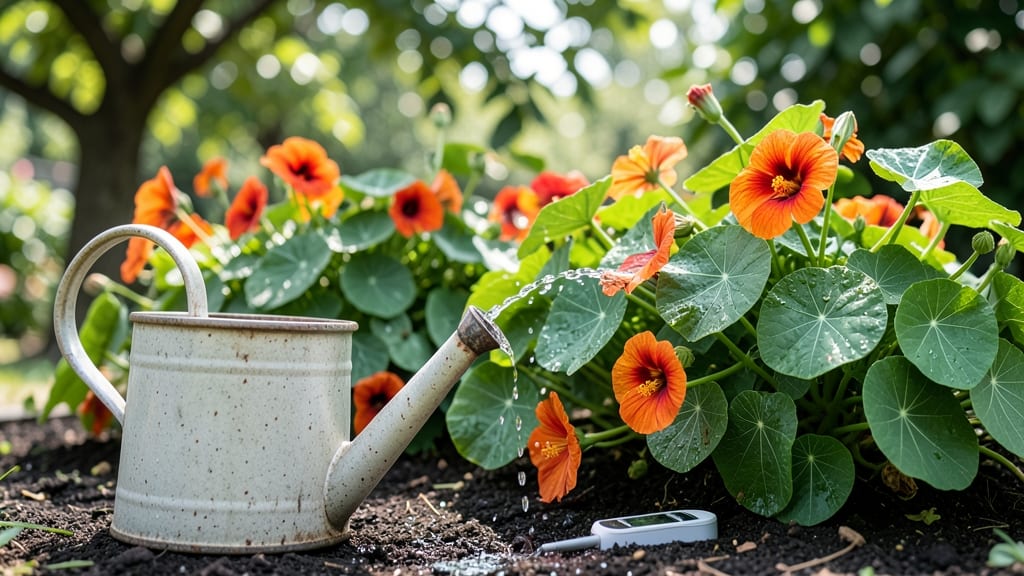
Understanding the nasturtium water requirements is key to keeping these cheerful blooms thriving without overdoing it—deep soaks every 3–5 days work best, rather than light daily sprinkles.
Struggling to keep your 🌸 vibrant without drowning them in water? These drought-tolerant beauties thrive on smart hydration—not excessive moisture—making them perfect for busy gardeners and dry climates.
Too much water leads to root rot, while too little causes wilting, but the key is well-drained soil and morning watering to keep leaves dry. In Zone 6a, summer heat means more frequent watering, while spring and fall require less.
Below, I’ll break down exactly how to water nasturtiums at each growth stage, plus signs of over- or under-watering and how to fix them—so you can enjoy lush, healthy plants all season long.


How much water do nasturtiums really need?
Nasturtiums are famously drought-tolerant, but that doesn't mean they're completely carefree. These vibrant flowers actually prefer moderate moisture with excellent drainage to prevent root rot. The key is balancing hydration—too little causes wilting, while too much leads to mushy stems and yellowing leaves.
I’ve learned through trial and error that consistent but infrequent watering works best once established.
For young seedlings, the rules change slightly. They need daily moisture to establish roots, but as they mature, you can stretch the gap between waterings. Even in my dry climate, nasturtiums thrive with deep watering every 3-5 days during their active growing months.
Let’s break down exactly how to meet their needs without overcomplicating things.
Your nasturtiums’ soil type plays a huge role in their water needs. Sandy soil drains quickly, so you’ll need to water more frequently—every 2-3 days—while clay soil holds moisture longer, allowing you to stretch waterings to every 5-7 days.
I always test soil moisture by sticking my finger 1-2 inches deep; if it feels dry, it’s time to water. For container-grown nasturtiums, check daily in summer since pots dry out faster.
Watch for overwatering signs like yellowing leaves, soft stems, or mold at the soil line. These are red flags that your nasturtiums are drowning. To fix it, let the soil dry out completely for a week while improving drainage with perlite or sand.
Underwatering shows up as crispy leaf edges or wilting even after watering. In this case, give them a deep soak and mulch to lock in moisture.
Seasonal changes demand adjustments. During spring and fall, when temperatures are mild, water every 3-5 days. But in summer heat, increase frequency to every 2-3 days and water in the early morning to reduce evaporation.
I’ve seen nasturtiums in my garden survive weeks without rain once established, but they’ll always reward you with more vibrant blooms when you meet their moderate needs.
Morning watering is my top tip—it gives foliage time to dry before evening, preventing fungal diseases like powdery mildew. Avoid overhead watering if possible; instead, use a drip irrigation system or water at the base.
This method also keeps those beautiful flowers dry and dust-free, making them last longer in arrangements.
One common mistake I see is assuming "drought-tolerant" means "no water." While nasturtiums are resilient, they still need regular hydration to produce their signature bright orange, yellow, and red blooms.
Skimp on water, and you’ll end up with leggy plants and fewer flowers. The sweet spot? Deep, infrequent watering that encourages strong root growth and robust stems.
For container gardeners, nasturtiums are a great choice because they adapt well to smaller spaces. Just ensure your pots have drainage holes and use a lightweight potting mix with added perlite.
Water containers more frequently than in-ground plants—every 2-3 days—since they dry out faster. Grouping containers together also helps retain moisture through evaporation.
If you’re growing nasturtiums in partial shade, they’ll need slightly more frequent watering than sun-loving varieties. The less sunlight they get, the slower they dry out.
In my shaded garden bed, I water nasturtiums every 4-5 days instead of every 3. Always pair shade with well-draining soil to prevent waterlogged roots.
Remember, nasturtiums are edible flowers too, and their flavor improves with proper care. Overwatered leaves become bland, while perfectly hydrated ones pack a peppery punch perfect for salads. By mastering their water needs, you’ll enjoy both stunning blooms and delicious harvests all season long. 🌸
Drought-proofing nasturtiums: 5 proven techniques
Nasturtiums are one of the most drought-tolerant edible flowers you can grow, but even they need smart strategies to thrive in dry conditions. The key is reducing water loss while keeping roots happy—no soggy soil required!
With the right approach, you can cut watering by up to 50% without sacrificing those vibrant blooms. Let’s dive into my top techniques that have kept my nasturtiums lush even in 100°F heatwaves.
First, understand that nasturtiums hate wet feet but love deep, infrequent watering. The goal is moisture retention without suffocating roots. Start by amending your soil with organic matter like compost—this improves drainage while holding water better than clay-heavy soil.
Pair that with mulch, and you’ve created a moisture-locking system that works with nature, not against it.
Use 2-3 inches of straw or wood chips around plants (keep mulch 2 inches away from stems). This blocks evaporation and keeps soil temps cooler. Replenish every 4-6 weeks for best results.
Pair nasturtiums with thyme, marigolds, or borage. These plants shade soil, reduce weeds, and create microclimates that retain moisture longer. Avoid planting near cabbage family plants—they compete for water.
Use self-watering pots with drainage holes and fill the saucer with pebbles. Add coco coir to potting mix (50/50 ratio) to hold 30% more moisture than regular soil. Water containers every 2-3 days in summer.
Mix in perlite or vermiculite (20% of soil volume) to improve aeration. For heavy clay, add sand and compost in equal parts. This combo prevents compaction while boosting water retention.
Always water early morning (6-9 AM) to let foliage dry before evening. Avoid overhead watering—use drip irrigation or a watering wand at soil level. This cuts evaporation by 40% compared to sprinklers.
Don’t overlook the power of pruning for drought resilience. Regularly trim yellowing leaves or leggy growth—this redirects energy to root development, making plants more drought-resistant. I prune mine every 2 weeks during peak summer, and it’s made a noticeable difference in their ability to handle dry spells.
For container-grown nasturtiums, consider adding a hydrogel crystal mix to your potting soil. These tiny beads absorb up to 400 times their weight in water and release it slowly. Just sprinkle 1 tsp per gallon of soil—it’s a game-changer for forgetful waterers or travel-heavy schedules.
Remember, nasturtiums are succulent-like in their water needs once established. Once they’ve been growing for 6-8 weeks, they’ll often survive on rainfall alone in many climates. The secret is preparing them properly from the start with these low-maintenance techniques.