
Watering
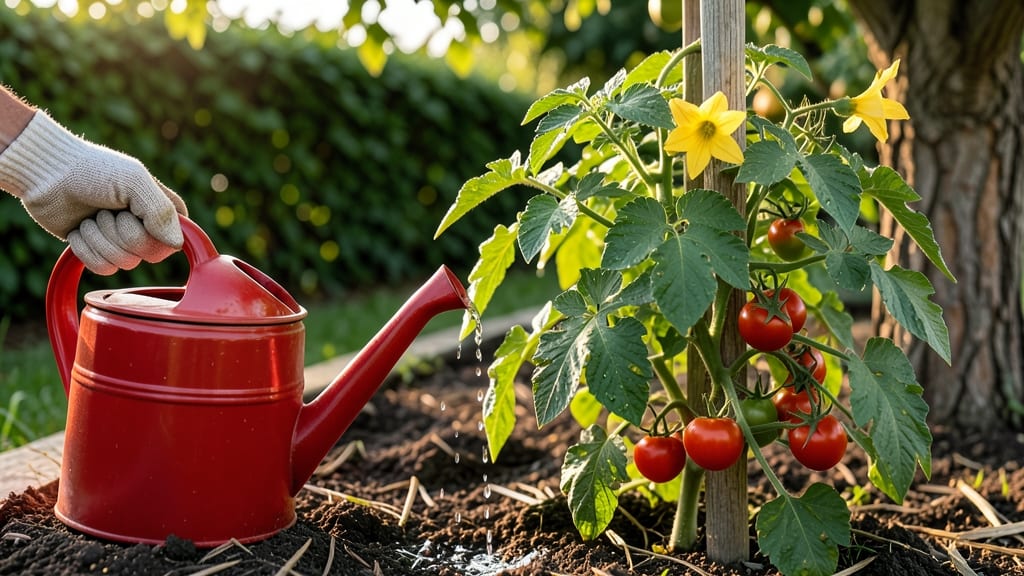
Watering tomato plants every day isn’t the right move for most gardens — it’s all about the growth stage, soil, and weather.
Overwatering or underwatering tomato plants can turn your garden from thriving to tragic in weeks — yet most gardeners guess their watering schedule instead of following science-backed timing.
Young seedlings need gentle moisture, while fruiting plants demand deep, consistent watering to prevent cracking and blossom end rot. Without the right routine, you risk stunted growth, poor fruit quality, or even disease.
Below, I break down the exact watering schedule by stage, how to spot over- or under-watering, and the best methods to keep your 🍅 plants happy without wasting a drop.


Daily watering needs for tomato plants by growth stage (science-backed schedule)
Watering tomato plants isn't a one-size-fits-all task—it changes dramatically as your plants grow. Seedlings need gentle moisture, while flowering plants demand consistency, and fruiting tomatoes require precision to avoid cracks or rot. Without stage-specific care, even the hardiest varieties like Celebrity or Sungold will struggle.
I've grown over 50 tomato varieties and learned the hard way that blossom end rot often starts with inconsistent watering.
The key is maintaining 1-1.5 inches of soil moisture weekly, but how you deliver that water shifts with each growth phase. For example, young seedlings need frequent light watering, while mature plants prefer deep, infrequent soakings.
Even container tomatoes have different needs than in-ground plants—pots dry out faster, requiring daily checks in hot weather. Let's break down the exact schedule for each stage to keep your plants thriving.
| Growth Stage | Watering Frequency | Soil Moisture Target | Key Risks if Mismanaged | Pro Tip |
|---|---|---|---|---|
| Seedlings (0-4 weeks) | Every 1-2 days (light misting) | Top 1-2 inches moist | Damping off (fungal rot) | Use seedling trays with drainage |
| Vegetative Growth (4-6 weeks) | Every 2-3 days (deep water) | Top 3-4 inches moist | Stunted growth, weak stems | Water at soil level, not leaves |
| Flowering (6-8 weeks) | Every 1-2 days (consistent) | Top 4-6 inches moist | Blossom end rot, dropped flowers | Mulch with straw to retain moisture |
| Fruiting (8+ weeks) | Every 2-3 days (deep soak) | Top 6+ inches moist | Cracked fruit, uneven ripening | Water early morning to prevent disease |
| Container Tomatoes | Daily in hot weather | Top 2-3 inches moist | Root stress, wilting | Use self-watering pots if possible |
During the seedling stage, I water my tomato seedlings every 1-2 days using a spray bottle to keep the soil lightly moist. Overwatering at this stage leads to damping off, a fungal disease that kills young plants within days.
I've lost entire trays this way—lessons learned the hard way. The goal is to keep the top 1-2 inches of soil consistently moist without creating soggy conditions. A simple soil moisture meter helps me track this precisely.
When plants reach the vegetative growth stage (typically 4-6 weeks), I shift to deep watering every 2-3 days. This encourages roots to grow deeper into the soil, making plants more drought-resistant later.
I water at the base of the plant, avoiding the leaves to prevent fungal diseases like early blight. A 5-gallon bucket of water per plant is my go-to measurement for this stage—enough to saturate the top 3-4 inches of soil.
The flowering stage is where most gardeners make mistakes. Tomatoes need consistent moisture during this phase to prevent blossom end rot, but too much water can cause flower drop. I water every 1-2 days, always in the early morning, and use mulch to retain
7 Signs you're watering tomato plants wrong (and how to fix it)
Tomato plants are thirsty but delicate—water too much or too little, and you’ll see clear visual clues on their leaves and stems. I’ve seen wilting seedlings from drought and rotting roots from overwatering, and both are heartbreaking. The key is learning to read your plants like a pro.
First, check the soil moisture before watering. Stick your finger 1-2 inches deep—if it’s dry, your tomatoes need water. If it’s soggy, hold off immediately. This simple test saves dozens of plants every season. But what if you’re already seeing damage?
⚠️ Watering Tomatoes Daily Isn’t Always Right
Tomatoes don’t need daily watering unless it’s extreme heat (above 90°F). Daily watering can drown roots and wash away nutrients. Instead, aim for deep, infrequent watering—1-1.5 inches per week—and adjust for rain, humidity, and soil type. Sandy soil? Water more often. Clay soil? Space it out.
💡 Pro Tip: Mulch with straw or grass clippings to retain moisture and reduce evaporation.
Here are the 7 red flags your tomato plants are thirsty or drowning—and how to fix them fast. Start with the leaves, then check the stems and soil for hidden clues.
1. Yellowing Lower Leaves (Underwatering or Overwatering) Yellow leaves usually mean root stress. If only the bottom leaves yellow, your plant is thirsty. But if new leaves also yellow and feel mushy, you’re overwatering. Fix it by watering deeply once (underwatering) or letting the soil dry out (overwatering).
2. Wilting Leaves (Even After Watering) If leaves droop midday but perk up at night, your tomatoes are underwatered. This is their stress signal. Water slowly at the base until the soil is moist 6 inches deep. Avoid light misting—it tricks plants into shallow root growth.
3. Leaf Curl or Crispy Edges Curled leaves often mean heat stress, but crispy edges? That’s underwatering. Check the soil 2 inches down—if it’s bone-dry, water deeply once. For heat stress, provide afternoon shade with a row cover or shade cloth.
4. Blossom End Rot (Black Bottoms on Fruit) This ugly black scab on tomatoes is a calcium deficiency caused by inconsistent watering. Fix it by watering consistently and adding crushed eggshells or calcium-rich fertilizer. Mulch heavily to keep roots moist.
5. Fungal Spots (Brown/Black Patches) Wet leaves + poor airflow = fungal diseases like early blight. If you see spots with yellow halos, stop overhead watering immediately. Water at the base only and remove infected leaves. Prune for better airflow.
Need a quick fix? Grab a moisture meter or stick your finger into the soil. If it’s dry 2 inches down, water deeply once. If it’s soggy, wait 2-3 days before watering again. Your tomatoes will thank you with bigger, healthier fruit!