
Orchid Care
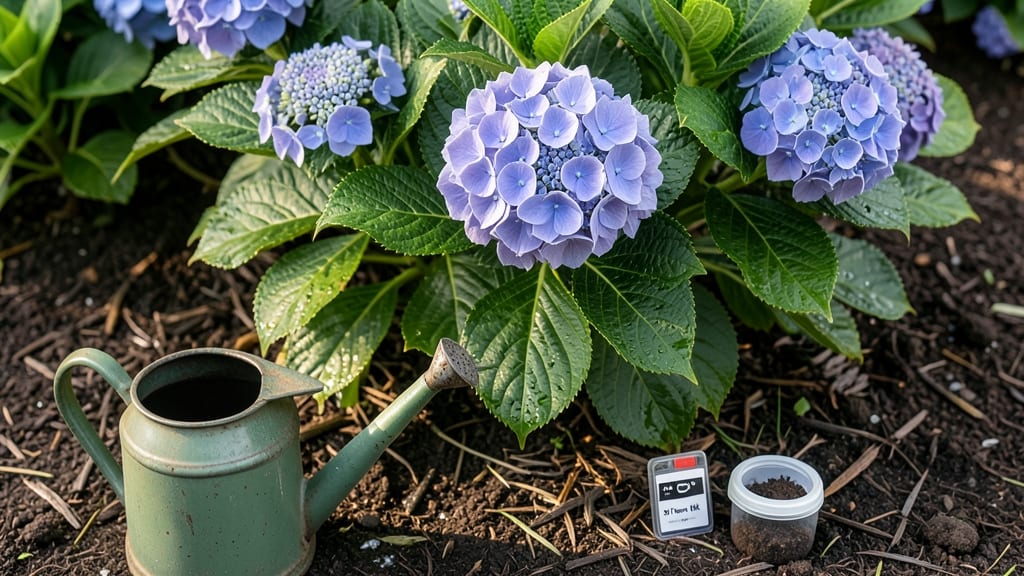
Watering hydrangeas isn’t just about keeping the soil damp—it’s the secret weapon for those showstopping blue or pink blooms you’ve been dreaming of.
Struggling to get your hydrangeas 🌸 to bloom in the exact shade you love? The secret isn’t just in the water you give them—it’s in how you water them and the hidden role of soil pH you might be overlooking.
Too little water and your hydrangeas wilt, dropping buds before they open. Too much, and you risk root rot or pale, lackluster blooms. The key lies in a consistent, deep watering routine that adapts to the season—and yes, even the type of hydrangea you’re growing.
In this guide, I’ll break down the exact watering schedule for your zone, how to test your soil’s pH without a fancy kit, and the simple tweaks that turn sad green blooms into vibrant blue or pink showstoppers.


How often and how much to water hydrangeas for optimal blooms
Hydrangeas are thirsty plants that reward consistent moisture with vibrant blooms and lush foliage. But watering them isn't just about frequency—it's about depth, timing, and understanding their seasonal needs. Too little water causes wilting and bud drop, while too much leads to root rot and pale, weak flowers.
Let me break down the exact watering routine that'll keep your hydrangeas thriving.
The key to hydrangea care is deep watering—not just a quick sprinkle at the surface. When you water, aim to soak the soil 12-18 inches deep, encouraging roots to grow downward where they can access moisture.
This method also prevents shallow root systems that struggle during heatwaves. I've found that using a soaker hose or drip irrigation makes this easier, as it delivers water slowly and evenly without disturbing the soil.
Now, let's compare the watering needs for different hydrangea types and seasons. The table below breaks down the essentials so you can adjust your routine based on your specific plants and climate conditions.
For paniculata hydrangeas (like 'Limelight'), you can push watering slightly more in summer—they're more drought-tolerant but still need consistent moisture for those iconic cone-shaped blooms. Meanwhile, macrophylla varieties (like 'Endless Summer') are more sensitive to dry soil and may drop buds if thirsty.
I always check soil moisture by sticking my finger 2 inches deep—if it's dry, it's time to water.
Mulching is a game-changer for hydrangeas. Apply 3-4 inches of organic mulch (like shredded bark) around the base to lock in moisture and regulate soil temperature. Just keep mulch 3 inches away from the stem to prevent rot.
I've seen mulched hydrangeas retain moisture 30% longer during summer heatwaves, which translates to bigger, brighter blooms.
Summer droughts are the biggest challenge for hydrangeas. When temperatures hit 90°F+, I increase watering to every 2-3 days and use drip irrigation to avoid wetting leaves (which can cause fungal issues).
A quick trick I learned: water deeply in the early morning so leaves dry by afternoon. This prevents mildew while keeping roots hydrated.
Winter care is often overlooked, but hydrangeas need minimal water during dormancy. Overwatering in cold months can suffocate roots. I reduce watering to once a month unless we have an unusually dry winter.
Always water in the mid-morning to prevent freezing overnight. For potted hydrangeas, move them to a sheltered spot and water every 2
Soil pH and water chemistry: the hidden key to blue or pink hydrangeas
Your hydrangeas might be begging for a color change, but the solution isn’t just in the soil—it’s in the water chemistry you’re using.
The pH of both your soil and water directly impacts bloom color, with blue hydrangeas thriving in acidic conditions (pH 5.0-5.5) and pink hydrangeas preferring neutral to slightly alkaline soil (pH 6.0-6.5). Even if your soil is perfect, using chlorine-treated tap water or hard water can disrupt this balance.
To unlock vibrant blooms, start by testing your soil pH and water source. A simple DIY pH test kit (available at garden centers) reveals your current levels. For water, collect a sample in a clean container—rainwater is naturally pH-neutral (6.5-7.0), while tap water often leans alkaline (pH 7.0+).
Even a small shift in water pH can influence soil acidity over time.
| Water Type | pH Range | Best For | Adjustment Tip |
|---|---|---|---|
| Rainwater | 6.5–7.0 | Neutral blooms | Collect in barrels for consistent pH |
| Distilled Water | 7.0 | Blue hydrangeas | Use for acid-loving plants; mix with soil |
| Tap Water (Chlorine) | 7.0–8.0+ | Pink blooms | Let sit 24 hours before use |
| Vinegar Solution | 2.0–3.0 | Blue blooms | 1 tbsp vinegar per gallon of water |
| Lime Solution | 8.0+ | Pink blooms | 1 tbsp lime per gallon of water |
For long-term color control, amend your soil organically. To encourage blue blooms, mix in sulfur or peat moss (lowers pH) or use a vinegar-water mix (1 tbsp vinegar per gallon) every 2 weeks during growing season.
For pink blooms, add wood ash or crushed eggshells (raises pH) or water with a lime solution (1 tbsp lime per gallon). Test soil pH again in 4–6 weeks to monitor changes.
Pro tip: Use distilled or rainwater for watering to avoid altering soil pH unexpectedly. If you’re unsure, stick to morning watering—it reduces evaporation and gives roots time to absorb moisture before the heat of the day. Consistency is key; sudden pH swings stress plants and dull bloom colors.
Remember, hydrangea color changes take time. It can take 6–8 weeks for adjustments to reflect in new blooms. Track your soil pH monthly and adjust water chemistry gradually.
With patience, your hydrangeas will reward you with the exact shade you’ve always dreamed of—whether it’s vibrant blue or soft pink.
🌸