
Watering
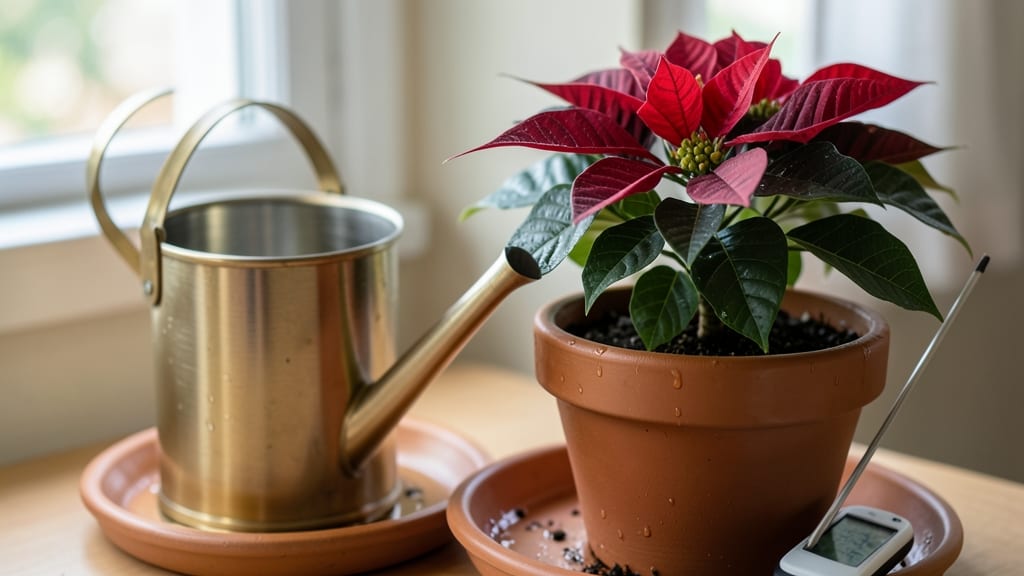
Watering a poinsettia 🎄 is all about finding that sweet spot between soggy soil and parched roots—because either mistake turns those vibrant leaves into a sad, droopy mess in days.
If you’ve ever watched your poinsettia’s bracts lose their color or its stems turn mushy, you’re not alone. The key isn’t just how much you water but when and how—and most of us get at least one of those wrong.
Too much water drowns the roots, while too little leaves the leaves crispy at the edges.
Here’s the good news: with a simple schedule and a few soil checks, you can keep your poinsettia thriving year-round. I’ll walk you through the exact watering routine by season, how to tell if your plant is thirsty (or drowning), and the one mistake that ruins even the best-intentioned care.
By the end, you’ll know how often to water, what the soil should feel like, and why your poinsettia’s leaves stay bold and bright—without the guesswork.


The ideal poinsettia watering schedule by season (with exact frequency)
As someone who’s nursed more than my share of droopy poinsettias back to health, I’ve learned the hard way that seasonal watering makes all the difference. These plants thrive on consistency, but their needs shift dramatically from the dry heat of summer to the cozy indoor air of winter.
The key? Adjusting frequency while keeping soil moisture in that goldilocks zone—not too wet, not too dry.
Most gardeners I know (myself included) make one of two mistakes: either drowning their poinsettias in winter or letting them dry out completely in summer. Both lead to the same sad result—wilting leaves and lost vibrancy.
That’s why I’ve broken down the exact watering schedule you need for each season, plus how to test soil moisture like a pro to keep those red bracts looking their best all year.
Let’s start with winter, when most of us bring poinsettias indoors. The dry indoor air from heaters and the plant’s natural dormancy period mean you’ll need to water less frequently than you think.
I’ve found that checking soil moisture with your finger—1 inch deep—is the most reliable method. If it feels dry, that’s your cue to water thoroughly until it drains from the bottom.
In spring, when you’re prepping your poinsettia for its next growth cycle, the watering frequency increases but so does the need for caution. The soil should dry out slightly more between waterings—about 1-2 inches deep.
This is also when I start moving my plants closer to bright indirect light, which naturally increases their thirst. A pro tip: Use a self-watering pot if you’re prone to forgetting watering days.
Summer is when poinsettias get tricky. The higher temperatures and increased light mean you’ll need to water more often, but that doesn’t mean drenching them daily. Aim for every 5-7 days, checking the top ½ inch of soil.
I’ve learned the hard way that cold water can shock the roots, so always use room-temperature water. During heatwaves, I even mist the leaves lightly in the morning to boost humidity.
As fall rolls around, your poinsettia will start preparing for its holiday display. This is the time to resume regular watering—about every 7-10 days—and reintroduce a balanced fertilizer every 4-6 weeks.
The goal is to encourage vibrant bract development, which requires consistent moisture without overdoing it. I like to fertilize in the morning so the roots have time to absorb nutrients before nightfall.
One of the biggest mistakes I see (and made myself) is ignoring the drainage holes in the pot. Always let excess water drain completely—never leave your poinsettia sitting in a saucer of water.
If you notice the leaves starting to yellow or droop, it’s often a sign of overwatering. The fix? Let the top inch of soil dry out completely before watering again, and consider repotting if drainage is poor.
For those of us with busy schedules, I recommend setting a reminder or grouping your poinsettia with other plants that have similar watering needs. A simple moisture meter can also save your sanity—just insert it into the soil to get an instant reading.
Remember, poinsettias are forgiving if you adjust quickly, but they won’t bounce back from prolonged neglect or soggy roots.
Finally, don’t forget that humidity matters. In winter, when indoor air is driest, I place my poinsettia on a pebble tray with water to add moisture to the air. This small tweak can make a world of difference in keeping those leaves lush and vibrant all season long.
With this schedule, your poinsettia will stay healthy, happy, and ready to steal the show at your holiday gatherings.
5 Signs your poinsettia is overwatered (and how to fix it fast)
Even with the best intentions, it's easy to drown your poinsettia by giving it too much love through watering. When roots sit in soggy soil for too long, they suffocate and can't absorb nutrients or oxygen.
This leads to a cascade of visible symptoms that often mimic underwatering—leaving many gardeners confused about how to rescue their plant. The good news? Most overwatered poinsettias can bounce back with quick adjustments to your care routine.
I've seen this happen more times than I can count—especially during the holidays when we're all eager to keep our festive plants looking their best. The key is learning to read your plant's signals and adjusting before the damage becomes permanent.
Let's break down the 5 most common signs of overwatering and the exact steps to revive your poinsettia.
Once you spot these signs, act fast. Start by checking the soil moisture with your finger—if the top 1-2 inches feel damp, hold off on watering.
For mushy stems or foul odors, you'll need to repot the plant into fresh, dry potting mix and trim any blackened or soft roots with sterilized scissors.
After repotting, place your poinsettia in a spot with bright indirect light (like an east-facing window) and avoid watering for at least 3-4 days to let the roots recover.
Going forward, adjust your watering routine. Instead of sticking to a schedule, water only when the top inch of soil feels dry to the touch. Use a pot with drainage holes and ensure excess water drains away completely.
During winter, when most homes have dry air from heating, you might only need to water every 10-14 days—less is more for poinsettias during their dormant phase. A moisture meter can be a game-changer if you're unsure.
Remember, poinsettias are tropical plants that prefer consistent moisture, not soggy conditions. The goal is to keep the soil evenly moist, not swimming in water.
With these adjustments, your poinsettia should perk up within a week or two, and you'll avoid the heartbreak of losing another holiday favorite to overzealous watering.