
Watering
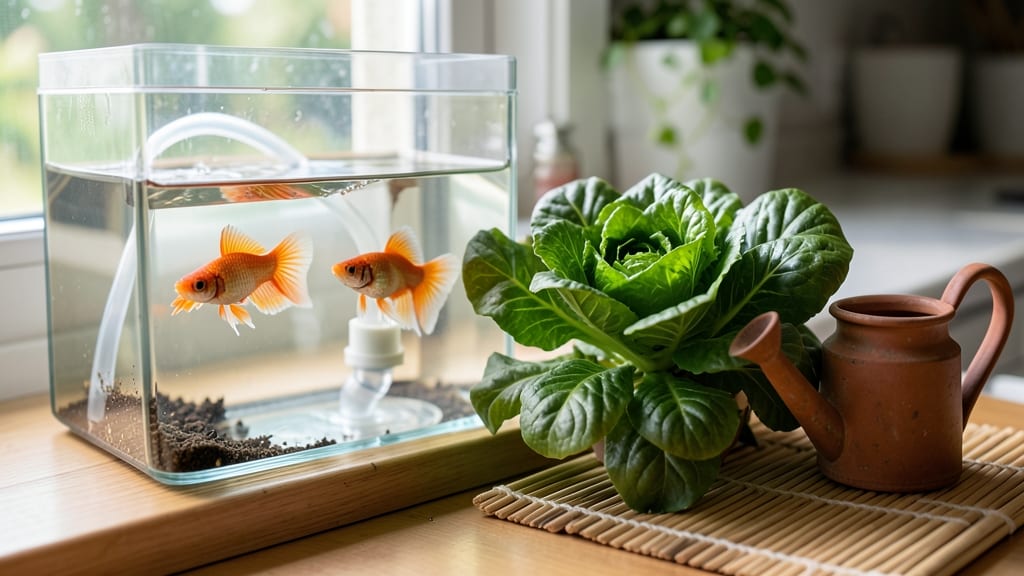
Using fish tank water to water plants delivers organic nutrients like nitrogen, phosphorus, and potassium, but carries risks like ammonia buildup and salt accumulation that can damage delicate plants. Always dilute the water and observe plant reactions carefully.
Fish tank water contains natural fertilizers from uneaten food and fish waste, giving your plants a nutrient boost without synthetic chemicals. 🌱 However, the ammonia levels can be too high for most plants—especially if your tank isn't cycled properly.
I recommend starting with a 1:5 dilution ratio (one part fish water to five parts tap water) and testing the pH before applying it to your plants. This approach mimics natural aquatic ecosystems while minimizing stress on your foliage.
Some plants, like ferns and water-loving varieties, actually thrive with this nutrient-rich water, but others—particularly succulents and cacti—can suffer from salt buildup over time. Always monitor your plants for signs of distress, such as yellowing leaves or stunted growth, and adjust your watering routine accordingly.
💡 In This Article
- Nutrient Breakdown: What Fish Tank Water Adds to Soil
- Safe Practices for Using Fish Tank Water on Houseplants
Nutrient breakdown: what fish tank water adds to soil
Fish tank water is essentially a liquid goldmine for plants, packed with nutrients that result from the nitrogen cycle. When fish waste and uneaten food decompose, they release ammonia (NH₃), which beneficial bacteria convert into nitrites (NO₂⁻) and then into nitrates (NO₃⁻)—the form plants readily absorb.
These nitrates provide a direct nitrogen boost, which is crucial for leafy green growth. Phosphates (PO₄³⁻) from fish food and decaying plant matter further support root development and flowering, while trace minerals like potassium (K) and calcium (Ca) enhance overall plant vigor.
What makes this water unique is its natural balance of micronutrients like magnesium (Mg) and iron (Fe), which are often lacking in tap water.
For example, a well-cycled tank might contain 10-30 ppm of nitrates and 1-5 ppm of phosphates—levels that can give plants a gentle, organic fertilizer effect without the chemical harshness of synthetic fertilizers.
However, the catch lies in ammonia: uncycled tanks can have 0.5-2.0 ppm of ammonia, which is toxic to most plants at concentrations above 0.2 ppm. 🌿
Comparing fish tank water to tap water reveals striking differences. Tap water typically contains 0-5 ppm nitrates and negligible phosphates, while fish water often has 5-20x more of these essential nutrients. The downside?
Tap water is usually chlorine-treated to kill bacteria, while fish water contains living microorganisms that can either benefit or harm soil microbes depending on balance. This microbial diversity is why some gardeners swear by fish water—it mimics natural aquatic ecosystems where plants thrive in nutrient-rich, microbial communities.
Here's where science meets practicality: the nutrient profile of fish tank water can vary wildly based on tank size, stocking levels, and maintenance habits. A heavily stocked 5-gallon tank with frequent feedings might produce water with 50+ ppm nitrates, while a lightly stocked 55-gallon tank could yield 10-20 ppm.
This variability is why testing becomes essential—especially for sensitive plants like orchids or calatheas that can't tolerate even slight nutrient imbalances. 💧
Consider this real-world example: My friend's 20-gallon freshwater tank produces water that's perfect for her ferns, which show lush new fronds within weeks of using diluted tank water. Meanwhile, her neighbor's 10-gallon tank with goldfish—high in waste—nearly killed her peace lilies before she learned to dilute it properly.
The key difference? One tank was cycled and maintained, while the other had inconsistent ammonia levels. This illustrates why understanding your specific tank's parameters is crucial before watering plants.
The nutrient benefits extend beyond the big three (NPK). Fish tank water often contains beneficial trace elements like zinc (Zn) and manganese (Mn) that tap water lacks, supporting enzyme activity in plants. However, these same elements can become toxic if concentrated—demonstrating why dilution is non-negotiable.
For instance, while 0.1-0.5 ppm of zinc aids growth, levels above 2 ppm can cause leaf scorching in sensitive species. 🌱
What most gardeners overlook is the salt buildup from fish food and minerals in the water. Over time, this can create a crusty residue on soil surfaces, disrupting water absorption. This is why I recommend flushing the soil with plain water every 4-6 weeks when using fish tank water regularly.
The solution? Start conservative with 1:5 dilution, test your water, and observe your plants' responses—this approach turns fish tank water from a potential hazard into a valuable garden resource.