
Watering
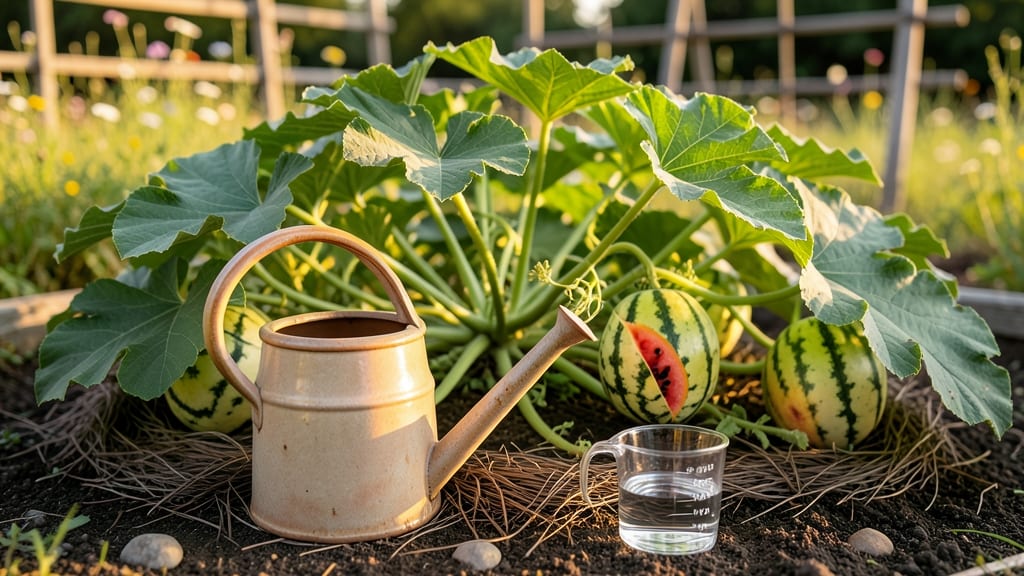
Your watermelon plants need precise watermelon water requirements to grow sweet, heavy fruit—too little stunts growth, and too much drowns the roots.
Struggling to balance it? You’re not alone. Even experienced gardeners overthink watering schedules, leading to cracked rinds or bitter flesh. The secret lies in matching gallons per week to each growth stage, from seedlings to ripe melons.
Below, I break down the exact watering formula for your melon 🌱—how much to give, when to adjust for heat or rain, and the telltale signs of thirst or soggy soil.
With these science-backed tips, you’ll avoid the two biggest mistakes (overwatering in summer, underwatering during flowering) and harvest plump, juicy melons every time.


Watermelon water requirements by growth stage: gallons per week breakdown
Watermelons are 90% water, so getting their watering schedule right is non-negotiable for juicy, sweet fruit. Unlike many plants, watermelons need consistent moisture—but too much water stresses roots.
The key? Adjusting gallons per week based on growth stages, soil type, and climate. Here’s the exact breakdown you need to avoid wilting vines or rotten roots.
From seedling to harvest, watermelon water needs shift dramatically. A 1-inch-deep seedling won’t need the same gallons as a fruit-bearing vine with a 10-pound melon hanging off it. Below, we’ll cover weekly water targets for each stage, plus how to adjust for containers and drought conditions.
| Growth Stage | In-Ground (Gallons/Week) | Container (Gallons/Week) | Soil Moisture Target | Key Notes |
|---|---|---|---|---|
| Seedling (0-2 weeks) | 0.5–1 gallon | 0.25–0.5 gallon | Keep soil damp (not soggy) | Light watering; avoid wetting leaves |
| Vegetative (3-6 weeks) | 2–3 gallons | 1–1.5 gallons | 1–2 inches deep moisture | Deep water 2–3x/week; mulch to retain moisture |
| Flowering (7-10 weeks) | 4–6 gallons | 2–3 gallons | 2–3 inches deep moisture | Critical stage; reduce water if flowers drop |
| Fruiting (11-14 weeks) | 6–8 gallons | 3–4 gallons | 3–4 inches deep moisture | Increase water as fruit grows; monitor for cracking |
| Harvest (15+ weeks) | 4–6 gallons | 2–3 gallons | Maintain 2–3 inches moisture | Reduce water 1 week before harvest for sweeter fruit |
During the seedling stage, watermelons need gentle watering—just enough to keep the top inch of soil moist. Overwatering here leads to damping-off disease, which kills young plants. Use a spray bottle or drip irrigation to deliver water directly to the soil, avoiding leaf wetness.
Once plants reach the vegetative stage (3–6 weeks), water needs jump to 2–3 gallons per week for in-ground plants. This is when vines start spreading rapidly, and roots need deep hydration. Mulch heavily with straw or grass clippings to lock in moisture and prevent weeds from competing for water.
In containers, reduce amounts by 50% since pots dry out faster.
The flowering stage (7–10 weeks) is the most water-sensitive phase. Watermelons need 4–6 gallons weekly to support fruit set. Cut back slightly if flowers drop—this often signals stress from overwatering.
Aim for even moisture; let the top 2 inches dry slightly between waterings to encourage deep root growth.
When fruits start forming (11–14 weeks), increase water to 6–8 gallons per week for in-ground plants. This is when watermelons grow fastest, and roots need consistent hydration. Monitor for cracking, a sign of uneven watering. If you see splits, reduce
How to adjust watering for climate, soil, and container gardening
Your watermelon plants need flexible watering—what works in sandy soil fails in clay soil, and container gardening demands daily checks. Climate plays a huge role too: hot/dry regions need deeper watering, while humid areas risk fungal diseases.
Let’s break down how to tailor your approach for perfect watermelon growth.
First, soil type dictates frequency. Sandy soil drains fast, so water every 1-2 days but in deep soaks. Clay soil, however, holds moisture too long—water every 3-4 days and check for root rot signs. Raised beds dry out quicker, so mulch heavily and water morning and evening during peak heat.
Adjustments by Growing Condition
- Water deeply every morning (1-2 gallons per plant)
- Use drip irrigation to avoid evaporation
- Mulch with straw or wood chips to retain moisture
- Water early morning only to prevent fungal growth
- Avoid overhead watering—use soaker hoses
- Ensure good airflow around vines
- Water frequently but shallowly (every 1-2 days)
- Add organic matter to improve moisture retention
- Check soil moisture daily—top inch should dry
- Water deeply every 3-4 days
- Avoid waterlogging—test with finger
- Amend with sand or compost for drainage
- Water daily in summer (containers dry fast)
- Use self-watering pots for consistency
- Ensure drainage holes to prevent rot
- Water twice daily in extreme heat
- Mulch thickly (3-4 inches) to conserve water
- Monitor edge plants—they dry faster
Watch for overwatering symptoms: yellowing leaves, mushy stems, or white mold on vines. Underwatering shows as wilted leaves that don’t recover, crispy edges, or fruit cracking.
Stick your finger 2 inches deep—if dry, water immediately. For container gardening, lift pots: if they feel light, they’re thirsty.
In hot/dry climates, mulch with straw or black plastic to lock in moisture. In humid regions, space vines 6 feet apart for airflow. For raised beds, water at the base of plants to avoid runoff.
And always water early morning—this gives roots time to absorb before evening heat evaporates it.
Pro tip: Drip irrigation is a game-changer. It delivers water slowly at the roots, cutting waste by 30-50% compared to hose watering. Pair it with a timer for hands-off care. For container watermelons, place pots in shaded areas during peak heat to slow evaporation.
Adjust your watering routine weekly by checking leaf turgor (press a leaf—if it springs back, you’re good). Clay soil? Water less but deeper. Sandy soil?
More often but lightly. And if your watermelon vines start wilting by noon, it’s time to increase frequency—especially in 50°F+ heat. 🌱