
Watering
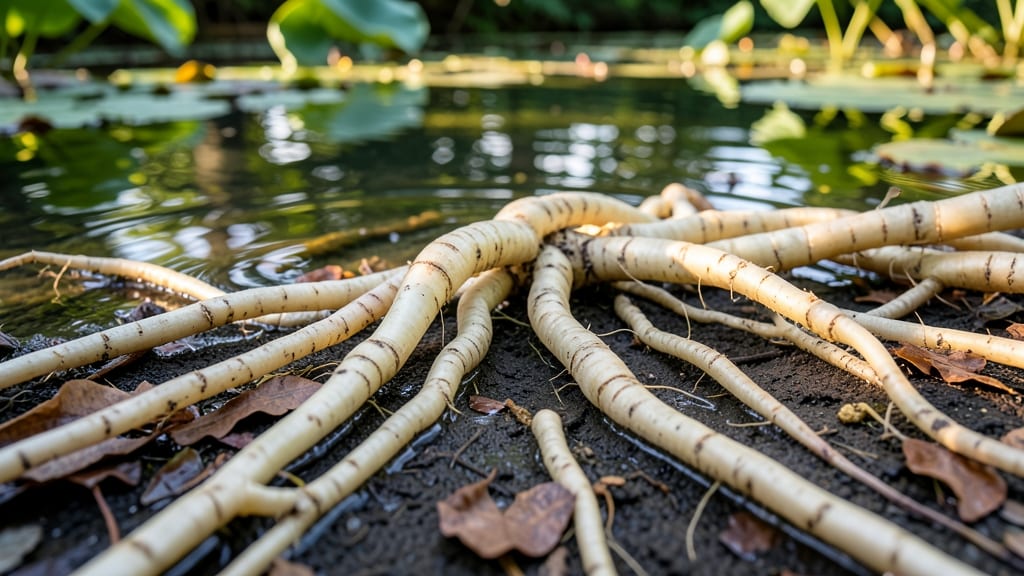
Water lily roots look like thick, knobby rhizomes with a segmented, gnarled shape that spread horizontally underwater. These pale, spongy tubers often branch out and develop small nodules along their stems, creating a distinctive underground network.
These underwater structures serve as both storage organs and anchors for the plant.
The segmented appearance helps them absorb oxygen efficiently in submerged conditions, while their fibrous texture makes them surprisingly resilient. 💫 Unlike lotus roots, which are more cylindrical and edible, water lily rhizomes are primarily functional rather than consumable, though they play a crucial role in the plant's survival by storing nutrients during dormancy.
When inspecting a pond, you'll notice these roots spreading outward from the plant's center, often forming dense mats. Their pale color helps them blend into the watery environment, while the knobby segments create a unique texture that distinguishes them from other aquatic plant roots.
💡 In This Article
- Identifying Water Lily Rhizomes vs Other Aquatic Roots
- How Water Lily Roots Support Plant Growth and Survival
Identifying water lily rhizomes vs other aquatic roots
Water lily rhizomes stand out from other aquatic roots through their distinctive knobby, segmented structure. Unlike lotus roots, which are smooth, cylindrical, and often used in cooking, water lily rhizomes appear more irregular with bulbous swellings spaced along their length.
These segments can range from 1-3 inches in diameter, creating a gnarled appearance that resembles a twisted rope or a series of swollen beads.
The color of water lily rhizomes is another key identifier—typically pale beige to light brown, often with a slightly translucent quality when submerged. This contrasts sharply with water hyacinth roots, which are thin, fibrous, and dark brown to black.
Pondweed roots, meanwhile, are delicate and thread-like, lacking the thick, fleshy texture of water lilies. The rhizomes' horizontal growth pattern also sets them apart, spreading outward in all directions rather than growing vertically like some other aquatic plants.
Texture plays a crucial role in identification. Water lily rhizomes feel spongy yet firm to the touch, almost like a cross between a potato and a rubbery vine. This fibrous quality helps them absorb oxygen efficiently in waterlogged environments.
In contrast, lotus roots have a crisp, almost crunchy texture when raw, while pondweed roots feel brittle and papery. The presence of small nodules along the stems further distinguishes water lily rhizomes, serving as potential growth points for new shoots.
Consider these visual and tactile differences when identifying aquatic plants:
- Water Lily: Knobby, segmented, pale beige, spongy texture, horizontal spread
- Lotus: Smooth, cylindrical, crisp texture, vertical growth (when harvested)
- Water Hyacinth: Thin, fibrous, dark brown/black, tangled appearance
- Pondweed: Delicate threads, no significant thickness, light green/brown
The segmented structure of water lily rhizomes isn't just for show—it's an evolutionary adaptation. These air channels within the segments allow oxygen to reach the plant's roots even when completely submerged, a critical survival mechanism in stagnant or low-oxygen pond environments.
This internal aeration system explains why water lilies thrive where other plants might struggle.
For gardeners or pond enthusiasts, recognizing these differences is invaluable. Water lily rhizomes often form dense mats that can crowd out other plants, while their cousins like pondweed might require different management approaches.
The horizontal growth habit of water lilies also means they'll spread aggressively if left unchecked, creating that classic lily pad effect we all recognize.