
Pests and Diseases
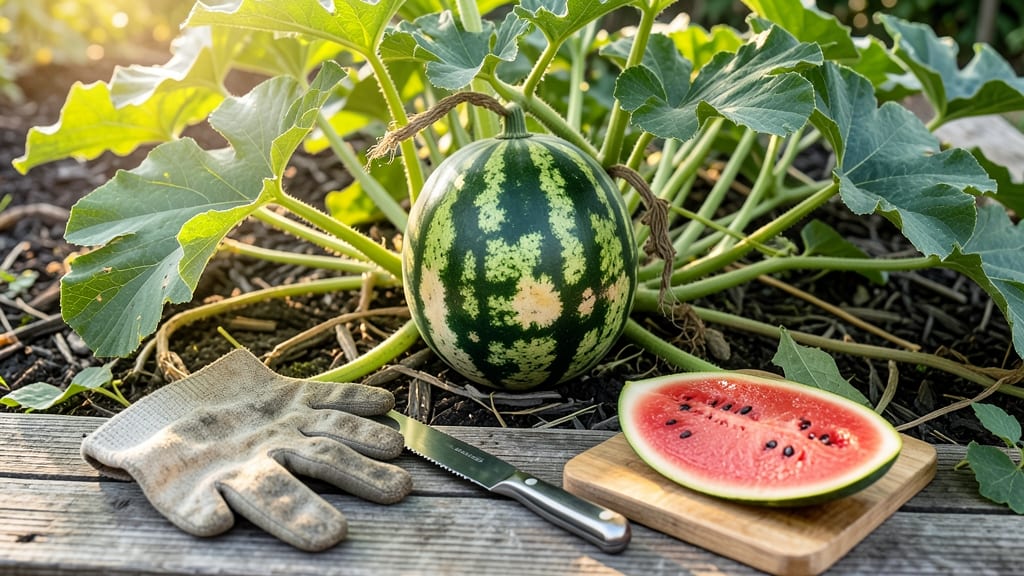
A watermelon ripe to pick is the moment you wait for all summer — and missing it means a fruit that’s either rock-hard or mealy inside.
Picking too early wastes your effort, but waiting too long turns that juicy prize into a sad, overripe mess. The good news? With just three simple field tests, you can tell with near-perfect accuracy when your 🍉 is ready to harvest.
Most gardeners focus on color or size, but the real clues are hiding in plain sight: the tendril near the fruit, the rind’s texture, and even the sound when you tap it. I’ll walk you through each method — and how to combine them for foolproof results.
By the end, you’ll know exactly when to slice into that perfect, sweet, and hydrating watermelon — no guesswork required.

3 Field tests to determine watermelon ripeness before harvesting
Nothing beats the satisfaction of biting into a perfectly ripe watermelon—juicy, sweet, and bursting with flavor. But determining when is a watermelon ripe to pick can be tricky if you rely only on guesswork.
Overripe fruits turn mushy, while underripe ones taste bland and watery. The good news? Three simple, science-backed field tests will help you nail the harvest window every time.
These methods—checking the underside, thumping the fruit, and examining the stem—are used by commercial growers and home gardeners alike. The best part? You don’t need fancy tools, just your hands and ears. Let’s break down each test, including what to look for and what to avoid.
⚠️ CRITICAL: Combine all three tests for the most accurate results. A single test can be misleading, especially in extreme weather or for heirloom varieties.
- 1 Check the Underside: Look for a creamy yellow spot where the watermelon rested on the ground. This indicates full ripeness.
- 2 Thump Test: Tap the watermelon with your knuckles. A ripe one will sound deep and hollow, like a drum. Unripe ones sound solid.
- 3 Stem Test: The stem near the fruit should turn brown and dry. Gently tug it—if it separates easily, the watermelon is ready.
Let’s start with the underside test, which is often the easiest visual cue. When watermelons mature, they develop a natural bleaching spot where they touch the soil. This spot should be creamy yellow or white, not green or patchy.
If the spot is still green, the fruit needs more time. Avoid watermelons with uneven or dark spots, as these may be overripe or damaged.
For the thump test, use your knuckles to gently tap the watermelon’s side. A ripe watermelon will produce a deep, hollow sound, almost like a drum. If it sounds solid or high-pitched, it’s not ready yet.
This test works best on medium-sized fruits (about 8-12 inches in diameter). Smaller watermelons may sound hollow even when underripe, so combine this with other tests.
Many gardeners overlook the stem test, but it’s one of the most reliable indicators. The stem near the fruit should turn brown and dry, almost like a straw. If it’s still green and spongy, the watermelon isn’t ready.
Give it a gentle tug—if the stem pulls away easily, the fruit is at peak ripeness. If it resists, wait a few more days.
Avoid these common mistakes that lead to incorrect harvests:
- Relying on size alone—some varieties stay small but are ripe.
- Ignoring weather conditions—hot, dry weather speeds up ripening.
- Using the thump test on very large fruits—they may sound hollow even if underripe.
For heirloom or specialty varieties, like Crimson Sweet or Sugar Baby, the creamy spot may be less obvious. In these cases, prioritize the stem test and thump test. If you’re still unsure, harvest a few fruits and let them ripen indoors for 1-2 days—they’ll sweeten up even after picking.
Timing matters too. Harvest watermelons in the morning when temperatures are cooler. This reduces stress on the plant and helps preserve flavor. If you’re harvesting in hot afternoons, wait until evening to cut the fruit to avoid overripening.
Once you’ve mastered these three tests, you’ll never waste another watermelon again. The key is patience—let the fruit ripen fully on the vine for the best flavor. And if you’re growing multiple varieties, keep a small notebook to track which tests work best for each type.
Now grab your gloves, head to the garden, and put these tests to work. Your next slice of watermelon will be the sweetest yet! 🍉
How to Check watermelon ripeness by color, texture, and weight
Determining the perfect time to harvest your watermelon can feel like guessing—until you know the visual cues and tactile tests that reveal ripeness. The rind color, surface texture, and even the weight-to-size ratio all play critical roles in predicting sweetness and readiness.
Skipping these checks often leads to fruit that’s either underripe (watery and bland) or overripe (grainy and seedy).
Start by examining the underside of the watermelon, where the stem meets the fruit. A ripe watermelon will show a yellow or brown curl near the stem—this is called the ‘curl test’ and indicates the vine has stopped feeding nutrients.
If the stem area remains green and spongy, the fruit needs more time on the vine. This simple visual cue alone can save you from harvesting too early.
| Trait | Unripe Watermelon | Ripe Watermelon |
|---|---|---|
| Rind Color | Bright, shiny, green or striped | Dull, deep color (varies by variety) |
| Surface Texture | Smooth, firm skin | Slightly rough or waxy feel |
| Stem End | Green and spongy | Dries to yellow/brown, curls |
| Sound When Thumped | Solid, high-pitched thud | Hollow, deep thud |
| Weight-to-Size Ratio | Feels light for size | Feels heavy for size |
Next, perform the ‘thump test’ by gently tapping the watermelon with your knuckles. A ripe fruit will produce a deep, hollow sound, almost like a drum, while an unripe one sounds solid and high-pitched.
Pair this with the weight test: lift the watermelon—if it feels heavy for its size, it’s likely ripe because the seeds and juice have fully developed. A light fruit usually means it’s still filling out.
Don’t overlook the tendril near the stem. When it turns brown and crispy, this is a final confirmation that the vine has cut off nutrients, signaling the watermelon is ready.
If the tendril is still green and flexible, wait a few more days. This curl test is one of the most reliable indicators, especially in hot climates where watermelons ripen quickly.
For black-seeded varieties, focus on the rind pattern—ripe fruit will show bold, creamy stripes against a deep green background. In contrast, seedless varieties may have a more uniform color, so rely more on the texture and sound tests.
Pro tip: If you’re unsure, harvest a few melons at once and taste-test them after a day or two of curing in a shady, dry spot.
Remember, every watermelon variety ripens slightly differently, so combine these tests for accuracy. Ignoring even one cue—like the stem curl or hollow sound—could mean missing the sweetest window. With practice, you’ll train your eye and hand to spot the perfect melon every time. 🍉