
Propagation
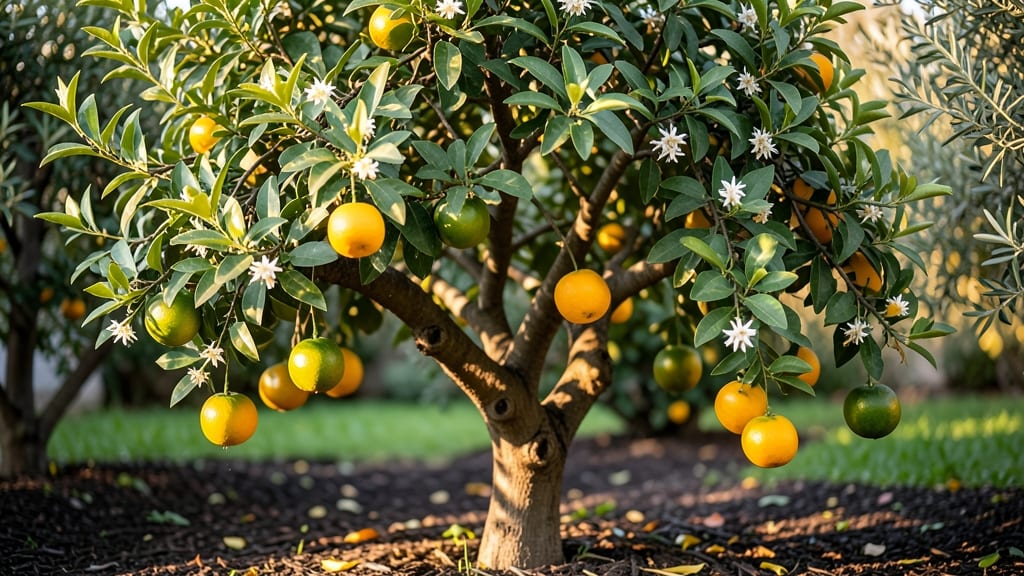
Orange watermelon comes from the Kalahari Desert region of southern Africa, where wild citrus-flavored melons first evolved thousands of years ago before being domesticated. These varieties later spread worldwide through ancient trade networks.
This ancient fruit's journey began with wild melons in the harsh desert conditions of southern Africa, where they developed hard rinds and sweet, orange flesh to survive. 🌍 Archaeologists have traced watermelon seeds dating back over 5,000 years in Egyptian tombs, showing how early civilizations valued this hydrating fruit.
The citrusy flavor you associate with orange watermelon actually comes from its natural compounds that evolved to attract animals in the arid climate.
What's fascinating is how this desert-adapted plant later thrived in diverse climates worldwide. Early traders along the Silk Road and later European explorers carried watermelon seeds to new regions, where farmers selectively bred varieties suited to local conditions.
Today, countries like China, Turkey, and the U.S. grow millions of tons annually, with orange-fleshed varieties becoming particularly popular for their balanced sweetness and nutritional benefits.
💡 In This Article
- The Ancient Origins of Watermelon in Africa
- How Watermelon Cultivation Spread Worldwide
The ancient origins of watermelon in Africa
Watermelon's story begins in the Kalahari Desert where Citrullus lanatus first appeared as a wild vine with small, bitter fruits.
Genetic studies reveal these early melons developed a hard, waxy rind to retain moisture in extreme heat, while their orange flesh contained high levels of citrulline—an amino acid that gives the distinctive citrusy flavor.
Fossil records show these wild melons were already being consumed by early humans 10,000+ years ago, with evidence from rock paintings in southern Africa depicting melon harvesting rituals.
The transition to domestication occurred around 4,000 years ago when farmers in the region began selecting sweeter, larger-fruited varieties. Archaeologists discovered 3,000-year-old watermelon seeds in Egyptian tombs, proving these melons reached North Africa through early trade networks.
What's remarkable is how the fruit's natural adaptations—like its 92% water content—made it uniquely suited for desert survival while also providing essential hydration for ancient civilizations. 🔥
Modern genetic research confirms these African melons are the direct ancestors of today's orange-fleshed varieties. The orange pigment comes from beta-carotene (also found in carrots), which evolved to attract seed-dispersing animals in the wild.
Unlike modern hybrids, early watermelons had thick rinds up to 1 inch thick and seeds that could sprout even after being swallowed by animals—a clever survival strategy in arid conditions.
What most people don't realize is that these ancient melons weren't just food—they were medicine. Historical texts describe watermelon rind being used to treat urinary tract infections due to its natural diuretic properties.
The flesh's high lycopene content (similar to tomatoes) also provided antioxidant benefits that modern science is only now rediscovering in orange-fleshed varieties.
The Kalahari's harsh environment actually shaped watermelon's global success. The plant's ability to thrive in 110°F+ temperatures with minimal water made it ideal for spread through trade routes.
When these melons reached river valleys and fertile plains, farmers could cultivate them with more regular watering, leading to the sweeter, larger varieties we enjoy today. ✨