
Plants
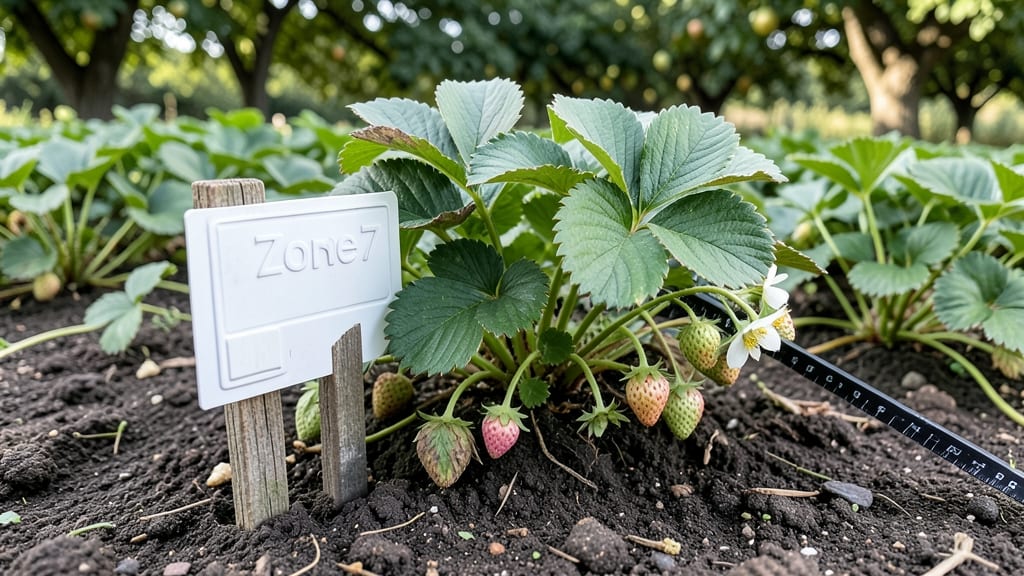
Strawberries are perennial in Zone 7 but typically suffer winter dieback, so gardeners replant every 2-3 years for strong harvests. Cold-hardy varieties and thick mulching help them survive harsh winters.
While strawberries can live multiple years in Zone 7, their crowns often freeze back during winter's 10-15°F dips, leaving only roots alive. 🌱 This repeated stress weakens plants over time, which is why most gardeners treat them as short-lived perennials.
The good news? Varieties like 'Chandler' and 'Jewel' are bred to handle these conditions better than others, and a thick layer of straw or leaves acts like a winter blanket to protect tender roots.
What's interesting is how freeze-thaw cycles play a role—each time the ground thaws and refreezes, it damages the crowns further. That's why planting in well-drained soil and choosing the right variety makes such a big difference in how long your strawberries keep producing.
💡 In This Article
- How Zone 7 Winters Affect Strawberry Plant Longevity
- Best Cold-Resistant Strawberry Varieties for Zone 7 Gardens
How Zone 7 winters affect strawberry plant longevity
Strawberries are technically perennial because their roots can survive multiple growing seasons, but Zone 7's winter conditions create a unique challenge. The key issue lies in the plant's crown hardiness threshold—most strawberry varieties struggle when temperatures drop below 10-15°F for extended periods.
During these cold snaps, the crown (where leaves meet roots) freezes solid, while the roots often remain alive underground. This creates a survival paradox: the plant isn't dead, but it's severely weakened for the next season. 🌱
The real damage comes from freeze-thaw cycles, which are common in Zone 7 winters. Each time the ground thaws and refreezes, it causes microscopic cracks in the crown tissue and root zone.
Over multiple winters, these cycles create cumulative damage that eventually kills the plant's ability to produce new growth. Unlike true perennials (such as asparagus or rhubarb), strawberries don't have the same regenerative capacity in their crowns when subjected to these repeated stresses.
The average lifespan of an unmanaged strawberry plant in Zone 7 drops to 2-3 years because of this progressive weakening.
What makes this even more complex is how Zone 7's winter patterns differ from ideal perennial climates. In colder zones (like Zone 4-5), strawberries experience a single prolonged freeze that kills back the foliage but preserves the crown.
In Zone 7, however, we get shorter but more variable cold periods mixed with occasional warm spells. This inconsistency prevents the plant from entering true dormancy and instead keeps it in a state of stress-induced hibernation, which saps its energy reserves. The result?
Plants that look fine in spring but produce smaller berries each year until they finally collapse.
There's also the issue of crown rot, which becomes more prevalent in Zone 7's wet springs. When frozen crowns thaw too quickly, they become susceptible to fungal infections that further compromise the plant's health.
This is why you'll often see gardeners in Zone 7 replant strawberries annually—the old plants simply can't recover from both the winter damage and springtime pathogens.
The good news is that with proper mulching techniques (like using 12-18 inches of straw or leaves), you can create a 5-10°F warmer microclimate around the roots, significantly reducing freeze damage.
For comparison, strawberries in Zone 8-9 rarely experience temperatures below 20°F, allowing them to maintain perennial status more easily. In these warmer zones, the plants enter proper dormancy and recover fully each spring.
Zone 7 sits in that transition zone where the cold is severe enough to cause damage but not consistent enough to kill the plants outright—making strawberries behave more like short-lived perennials rather than true long-term garden staples.
This explains why even cold-hardy varieties eventually need replacing after 2-4 years of production.
What most gardeners don't realize is that the timing of planting matters just as much as the variety. Planting in late summer or early fall (rather than spring) gives the roots more time to establish before winter, creating a stronger foundation for surviving freeze-thaw cycles.
This simple adjustment can extend a plant's productive life by 1-2 years in Zone 7 conditions. 💫