
Advice
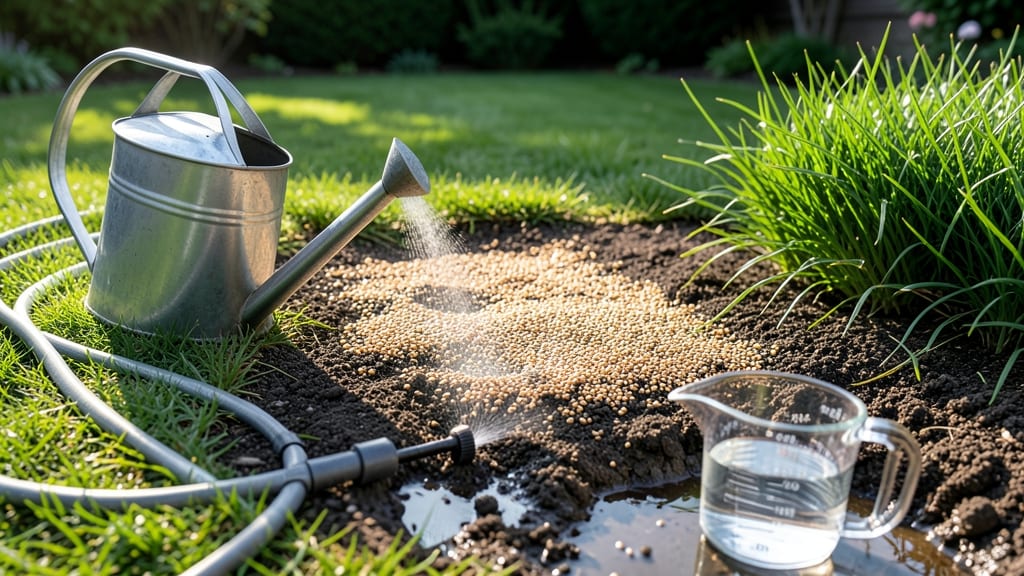
Yes, new grass seed can be overwatered, and it absolutely ruins your lawn before it even starts, as excess moisture smothers seeds, triggers rot, and prevents roots from establishing properly. Aim for consistently damp—not soggy—soil until you see those first green sprouts.
Overwatering creates the perfect storm for seed failure by blocking oxygen and encouraging mold growth. 🌱 The tiny roots need air to breathe, and when soil stays waterlogged, seeds either rot or fail to germinate at all.
I've seen entire lawns lost this way—especially in clay-heavy soils where water pools instead of draining. The key is checking moisture daily: if water pools on the surface or the soil feels squishy, you're overdoing it.
Most gardeners mistakenly think more water equals faster growth, but the opposite is true. Grass seeds need consistent moisture—not drowning—to establish roots. A good rule is to water lightly twice daily (morning and evening) until germination, then adjust based on your soil type.
Sandy soil dries faster than clay, so you'll need to monitor both closely. The moment you see mold or yellowing leaves, you've crossed the line from helpful hydration to harmful excess.
💡 In This Article
- How Overwatering Damages New Grass Seed
- Proper Watering Schedule for New Grass Seed
How overwatering damages new grass seed
When you drown new grass seed in excess water, you're essentially suffocating it at the cellular level. Seeds need oxygen to activate enzymes that break down stored nutrients for germination—a process called imbibition.
But when soil stays saturated, air pockets disappear, and the seed's metabolic processes stall. 🌱 Think of it like trying to breathe through a straw submerged in water: the oxygen simply can't reach where it's needed.
This suffocation happens within 24-48 hours of overwatering, often before seeds even have a chance to sprout.
The damage doesn't stop there—excess moisture creates the perfect breeding ground for fungal pathogens like Pythium and Rhizoctonia. These microbes thrive in waterlogged conditions and attack the delicate seed coats and emerging roots.
You'll often see a white, cottony mold growth on the soil surface, which is your first warning sign. The fungi don't just weaken seeds; they actively consume them, leaving behind empty seed casings or blackened, mushy seedlings.
In extreme cases, entire seed batches can be lost to rot before any grass appears.
Another critical factor is how water affects soil temperature. Wet soil conducts heat differently than dry soil, often creating temperature fluctuations that stress seeds. Ideal germination temperatures for most grass types range between 60-75°F, but when soil stays soggy, it can cool dramatically—especially at night—which further inhibits growth.
This temperature shock combined with oxygen deprivation creates a double threat to your seeds' viability. Even if some seeds do manage to sprout under these conditions, the resulting grass will be weak and prone to disease.
Here's what actually happens at the root level: when seeds are overwatered, their embryonic roots—called radicles—swell too quickly and become waterlogged. This causes cellular damage through a process called hypoxia, where oxygen deprivation leads to the buildup of toxic byproducts.
The roots essentially "drown" at the microscopic level, preventing them from anchoring properly in the soil. What should be a firm, white root system instead turns brown and mushy—a clear sign of irreversible damage.
Consider this comparison: healthy seed germination requires soil moisture at about 40-60% capacity, similar to a well-wrung sponge. Overwatering pushes this to 80% or higher, creating anaerobic conditions where beneficial soil microbes can't function.
The difference between success and failure often comes down to this 20% moisture window—a margin most gardeners don't realize exists until it's too late.
That's why checking soil moisture with your finger (it should feel like a damp sponge, not a dripping rag) is the single most reliable way to prevent overwatering.