
Watering
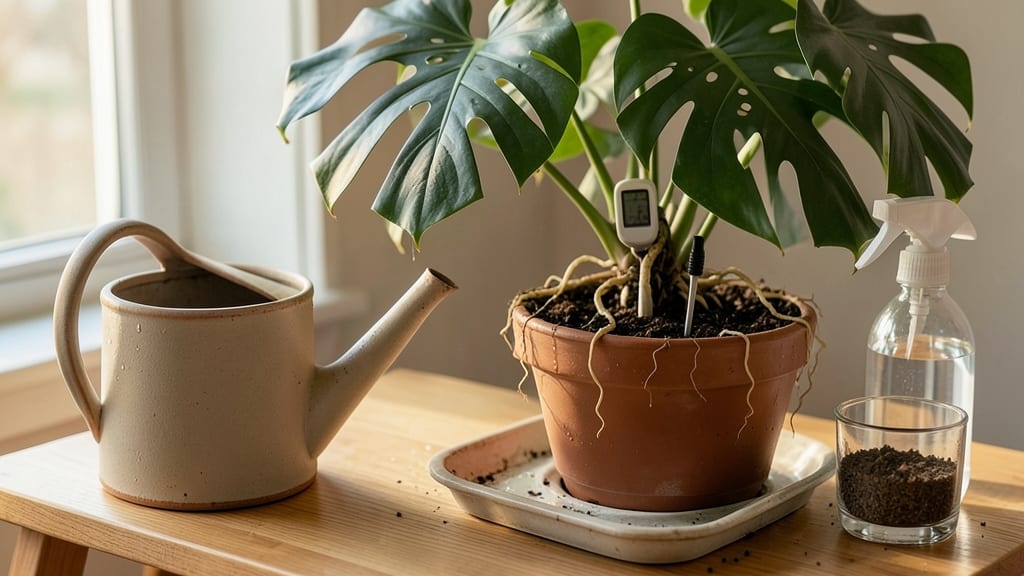
Watering your Monstera plant the right amount keeps its stunning split leaves 🌿 lush and prevents those dreaded brown, crispy edges.
Here’s the truth: most people either drown their Monsteras or let them dry out completely—both kill that tropical vibe fast. The key is checking soil moisture before you water, not sticking to a rigid schedule.
In this guide, I’ll break down exactly how often to water based on your plant’s size, the season, and even your home’s humidity levels. You’ll learn the finger test trick, how to spot overwatering vs. underwatering, and why your 3-foot Monstera needs more water than a baby plant.
By the end, you’ll have a foolproof routine to keep your Monstera thriving year-round—no guesswork, just happy, healthy growth.

Monstera watering schedule: how much by leaf size and growth stage
Getting your Monstera’s watering routine right is the key to those iconic split leaves staying lush and vibrant. Unlike many houseplants, Monsteras demand a balanced approach—too little water and the leaves crisp, too much and you risk root rot.
The secret? Adjusting your watering based on your plant’s size and growth stage, not just a one-size-fits-all schedule.
As a plant parent with years of trial-and-error under my belt, I’ve learned that a baby Monstera (under 12 inches) won’t need as much water as a mature giant (36+ inches). The soil, pot size, and even the humidity in your home play critical roles.
Let’s break down the exact watering schedule you should follow for each stage, plus how to test soil moisture like a pro.
For baby Monsteras, I recommend watering every 7-10 days with about 300-500ml of water. These little guys have smaller root systems, so they dry out faster. Stick your finger about 1 inch deep into the soil—if it feels dry, it’s time to water.
If it’s still moist, wait another day or two. Overwatering at this stage is the fastest way to kill your plant before it even gets a chance to grow.
When your Monstera reaches mature size (12-36 inches), you’ll need to stretch out your watering schedule to every 10-14 days. At this point, the plant has developed a more extensive root system and can store more water.
Use 700-1000ml of water per watering session, and check soil moisture by inserting your finger 2 inches deep. This stage is where many plant owners make the mistake of assuming "bigger plant = more water," but the opposite is often true.
Once your Monstera becomes a giant variety (36+ inches), you’ll water even less frequently—about every 14-21 days. These plants can hold onto moisture for longer periods, especially if they’re in a larger pot with good drainage.
Pour 1000-1500ml of water each time, and test soil moisture by checking 3 inches deep. Giant Monsteras are more forgiving, but they still need consistent care to avoid yellowing leaves or drooping stems.
Here’s a pro tip I swear by: Always water in the morning. This gives the roots plenty of time to absorb moisture before the evening, reducing the risk of fungal diseases like root rot.
I also recommend using room-temperature water—cold water can shock the roots and stress your plant. If you’re unsure whether to water, err on the side of underwatering. Monsteras are resilient and will bounce back faster from thirst than from soggy roots.
One of the biggest mistakes I see is ignoring the visual cues your Monstera gives. If the leaves start to curl inward or develop brown, crispy edges, it’s a sign of underwatering. On the flip side, yellowing leaves or mushy stems mean you’re overwatering.
Pay attention to these signs—they’re your plant’s way of communicating! Adjust your schedule based on what you observe, not just a rigid calendar.
Remember, the pot size and material also play a role. Terracotta pots dry out faster than plastic, so if you’ve repotted your Monstera,
Seasonal adjustments: when to water Monsteras in spring, summer, fall, and winter
Your Monstera deliciosa thrives on consistency, but its watering needs shift dramatically with the seasons. In spring, warmer temperatures and longer daylight spur growth, while summer’s heat demands more frequent hydration.
Meanwhile, fall and winter slow its metabolism, requiring a gentler touch. Understanding these seasonal cues is key to avoiding root rot or leaf scorch—both telltale signs of watering gone wrong.
Humidity plays a surprising role too. Indoor air often dries out in winter, mimicking arid conditions, while summer’s high humidity can trick you into thinking your plant needs less water than it actually does.
I’ve learned the hard way that ignoring these seasonal shifts leads to yellowing leaves or crispy edges—neither of which your Monstera deserves. Let’s break down the ideal watering rhythm for each season, plus how to spot when you’re overdoing (or underdoing) it.
⚠️ Critical Watering Warning
Never let your Monstera sit in soggy soil for more than 48 hours. Tropical plants like Monsteras hate waterlogged roots, which suffocate them and invite fungal diseases. In summer, check soil moisture every 3-4 days—even if it feels like you watered yesterday. In winter, reduce to once every 3-4 weeks unless your home has forced heat drying the air.
In spring, your Monstera wakes up from its winter nap, signaling it’s time to increase watering frequency. Aim to water once a week, but always check the top 2 inches of soil first. If it’s dry, go ahead and water; if it’s still damp, wait another day.
Spring is also the perfect time to repot if your plant has outgrown its container, using a pot just 1-2 inches wider than its current one.
Summer brings the biggest challenge: balancing heat and humidity. If your home stays below 70°F (21°C), water every 5-7 days. But if temperatures climb above 80°F (27°C), you may need to water twice a week.
The key is to water deeply until it drains from the bottom, then empty the saucer to prevent root rot. Watch for drooping leaves—a classic sign of thirst—especially if your Monstera’s fenestrations start shrinking.
As fall arrives, your Monstera’s growth slows, and so should your watering. Shift to a bi-weekly schedule, but keep an eye on your home’s humidity levels. If your heater is running or you’ve got dry air, you might need to water every 10-14 days.
Prune any yellow or damaged leaves now to redirect energy to healthier growth. This is also the time to reduce fertilizer, as your plant prepares for its winter rest.
Winter is all about patience. Your Monstera’s metabolism slows to a crawl, so cut back to watering once every 3-4 weeks. The biggest mistake I see? Overwatering because the air feels dry. Instead, use a hygrometer to monitor humidity—aim for 40-50%.
If your home is bone-dry, consider a pebble tray or humidifier near your plant. Look for wrinkled leaves or brown tips, which scream “I’m thirsty!” or “You’re drowning me!”
Pro tip: Keep a watering journal to track your Monstera’s needs. Note the season, your home’s humidity, and how your plant responds. Over time, you’ll spot patterns—like how your 18-inch Monstera needs water every 5 days in July but only every 21 days in January.
That’s the secret to keeping your Monstera’s roots happy and healthy year-round. 🌿