
Advice
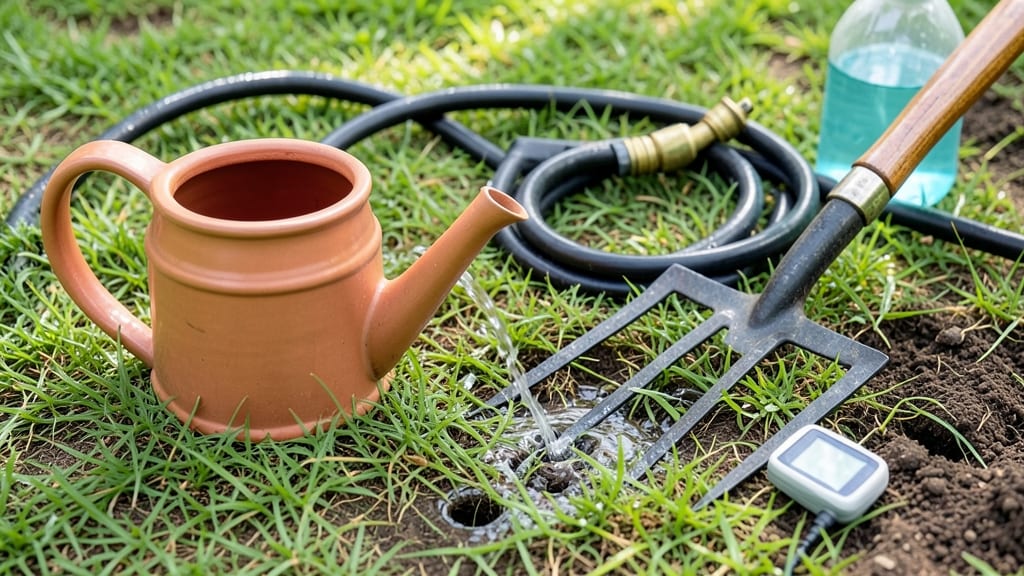
Overwatered grass often recovers when caught early, but severe cases may take weeks or even months to bounce back, depending on how badly the roots are damaged and current weather patterns. The first step is always cutting back on water immediately and improving drainage.
Grass roots need oxygen to thrive, and too much water suffocates them by displacing air from the soil.
When roots can't breathe, they start to rot, and fungal infections like brown patch or dollar spot can set in. 🌱 The recovery timeline varies wildly—mild cases might show improvement in just a few days, while chronically waterlogged lawns could take months, especially in cooler weather when microbial activity slows down.
Even after the grass greens up, the roots may still be weak, so it's critical to monitor soil moisture with a simple finger test before watering again.
What's interesting is how different grass types handle stress. Cool-season grasses like Kentucky bluegrass or fescue tend to recover faster than warm-season grasses like Bermuda or Zoysia, which are more drought-tolerant but also more susceptible to root rot when overwatered.
The key is patience and consistency—don't expect overnight miracles, but with proper care, most lawns can make a full comeback.
💡 In This Article
- How Overwatering Damages Grass Roots and Recovery Timeline
- Step-by-Step Guide to Reviving Overwatered Lawns
How overwatering damages grass roots and recovery timeline
When grass receives too much water, the soil becomes saturated, pushing oxygen out of the tiny pores between soil particles. Grass roots need this oxygen to perform cellular respiration—the process that converts sugars into energy.
Without it, roots suffocate and start to die back within 24-48 hours of constant saturation. 🌱 The worst damage occurs when water pools for more than 48 hours, allowing anaerobic bacteria to thrive and produce toxic byproducts like ethanol and hydrogen sulfide, which further stress the roots.
Fungal infections are another major concern. Excess moisture creates the perfect environment for pathogens like Rhizoctonia solani (causing brown patch) or Sclerotinia homoeocarpa (dollar spot), which can spread rapidly in damp conditions.
These fungi attack the root zone and crown, turning healthy green blades yellow or brown within 3-7 days. Warm-season grasses like Bermuda are particularly vulnerable because their roots are already adapted to drier conditions, making them more susceptible to rot when overwatered.
The recovery timeline depends on how long the grass was waterlogged and the type of grass. Mild cases—where watering was excessive but not continuous—may show signs of improvement in 3-5 days once you stop watering and improve drainage.
However, chronic overwatering (weeks of saturation) can take 4-8 weeks or longer, especially in cooler weather when microbial activity slows down.
Cool-season grasses like Kentucky bluegrass tend to recover faster because their roots are more resilient in moist conditions, while warm-season grasses may take months to fully regenerate their root systems.
One critical factor often overlooked is nutrient leaching. Overwatering washes away essential nutrients like nitrogen, phosphorus, and potassium, which are vital for root regrowth.
This is why you might see new growth appearing but then stalling—it lacks the nutrients to sustain itself. 💧 Testing your soil's pH and nutrient levels after recovery is a smart move, as imbalances can hinder grass from bouncing back properly.
Weather plays a surprising role too. In hot, dry climates, overwatered grass might recover quickly once the excess moisture evaporates, but in humid regions, stagnant water can prolong fungal issues.
The key is to act fast: reduce watering immediately, and if possible, use a soil probe to check moisture levels at 3-4 inch depths before deciding whether to water again. Patience is crucial—roots can take weeks to rebuild, even if the blades look better.
Consider this real-world example: A lawn in Zone 5 (cool climate) that was overwatered for two weeks in late spring might show full recovery in 6-8 weeks with proper care, while the same lawn in Zone 9 (warm climate) could take 3-4 months due to slower microbial activity and higher fungal pressure.
The lesson? Climate and grass type matter just as much as how quickly you act.