
Plants
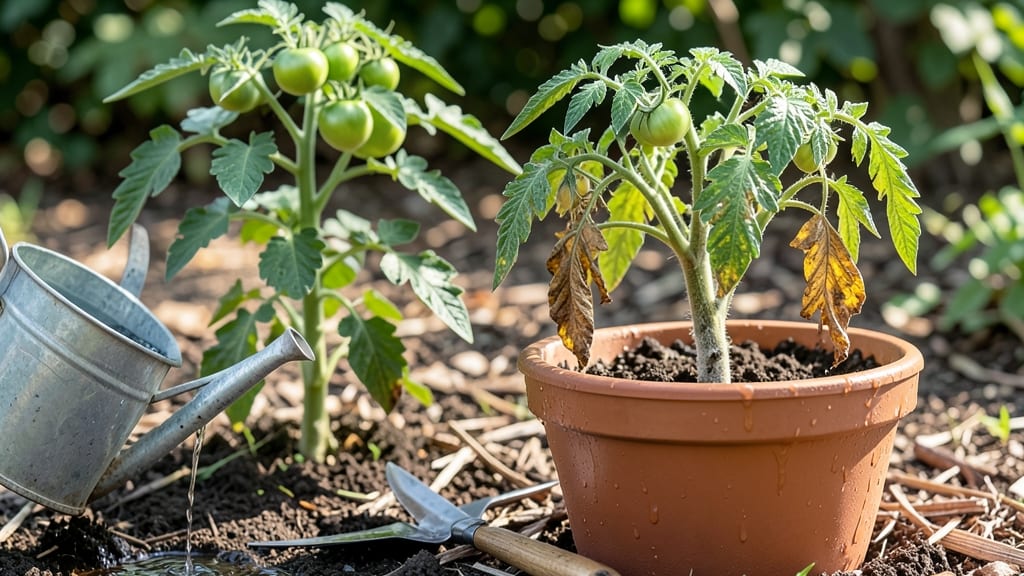
Overwatered plants can often recover if you act quickly by improving drainage, trimming damaged roots, and adjusting your watering schedule to prevent soggy soil. In extreme cases, repotting or professional assistance may be needed to restore root health.
Most plants show surprising resilience when you catch overwatering early—think of it like a plant version of CPR.
The key is addressing the root of the problem (literally!) by giving roots access to oxygen again. 🌱 I've seen ferns and calatheas bounce back within weeks when I repotted them into fresh, well-draining mixes.
The real test comes with your watering habits afterward—many gardeners make the mistake of going from "too much" to "not enough" without finding that sweet spot.
For houseplants, I recommend testing soil moisture with your finger before watering—if the top 1-2 inches feel damp, wait another day. Outdoor plants need even more caution, especially in containers where water pools at the bottom.
The goal is to mimic natural rainfall patterns: heavy downpours followed by dry periods rather than constant dampness.
What about those sad, yellow leaves? Those are your plant's SOS signals. While they won't regrow, new growth will emerge healthier once you've corrected the moisture issue. Just don't expect miracles with severely rotted roots—those require more drastic measures like root pruning or even replacing the plant entirely. 💫
💡 In This Article
- How Overwatering Damages Roots and Leaves
- Step-by-Step Plant Revival Techniques for Overwatered Soil
How overwatering damages roots and leaves
Excess water creates an oxygen-starved environment where roots suffocate. Healthy roots need air pockets in soil to breathe—when pores fill with water, they can't absorb oxygen, leading to anaerobic conditions. Within 24-48 hours of constant moisture, roots begin to rot, turning brown and mushy.
This is especially critical for container plants where water pools at the bottom, creating a swampy zone that blocks oxygen completely. 🌱 The damage starts at the tips where root hairs die first, then spreads inward like a silent infection.
Leaves react visibly to this stress through wilting or yellowing—these are your plant's emergency signals. Yellowing (chlorosis) occurs when roots can't uptake nutrients like nitrogen and iron, while wilting happens as the plant struggles to transport water upward.
What's shocking is how quickly this happens: some tropical plants show wilting within 6-12 hours of overwatering, while others take days. The key difference is root structure—shallow-rooted plants like herbs suffer faster than deep-rooted perennials.
Nutrient leaching becomes the second major problem. Waterlogged soil washes away essential minerals through the drainage holes, leaving roots starved. This is why overwatered plants often develop weak stems and pale leaves—even if you stop watering, the damage takes 2-4 weeks to show in new growth.
The worst part? Many gardeners don't realize they're overwatering until it's too late because the soil feels damp at the surface while roots below remain waterlogged. 💫
Short-term damage (within 1 week) is usually reversible with proper care, but long-term saturation (beyond 2 weeks) can kill roots permanently. The critical threshold varies by plant type—succulents show damage after just 3 days of excess moisture, while ferns can tolerate slightly damp conditions longer.
This is why understanding your plant's native habitat (wet vs. dry) is crucial for recovery planning.
Here's what happens under the microscope: healthy roots have a spongy texture with white tips, while rotted roots turn black and slimy. The transition zone between healthy and damaged roots is where recovery begins—this is why pruning is so effective.
When you cut away the mushy sections, you're essentially giving the plant a fresh start with only viable root tissue remaining. 🔥
The most surprising fact? Some plants actually thrive in temporarily waterlogged conditions—like water lilies—but most garden varieties (tomatoes, peppers, houseplants) weren't bred for this. The damage compounds when combined with poor drainage or compacted soil, which is why repotting into fresh, airy mixes becomes essential for revival.
Even after recovery, these plants often show stunted growth for 4-6 weeks as they rebuild their root systems.