
Advice
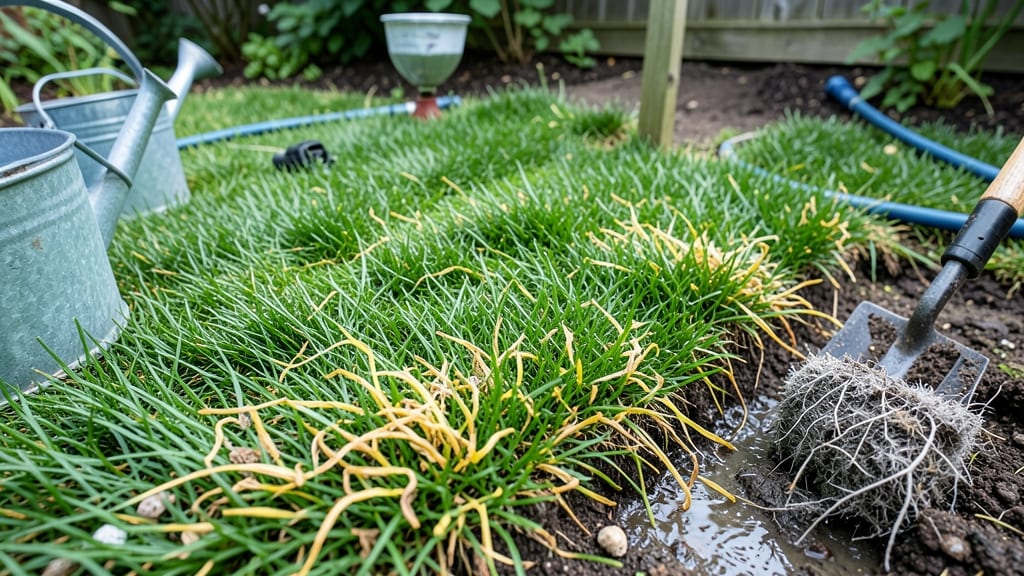
Overwatered sod often recovers when drainage improves and watering schedules are adjusted, though severe damage may need aeration or soil amendments to prevent fungal infections or root rot. Quick action prevents permanent lawn damage.
Your sod's recovery depends on how long it's been waterlogged and how quickly you address the issue. 🌱 When roots sit in soggy soil too long, they suffocate from lack of oxygen, leading to yellowing patches or spongy grass that feels mushy underfoot.
The good news? Grass is resilient—cutting back on watering and improving soil aeration can revive it within weeks. I’ve seen lawns bounce back surprisingly fast after just one good rainstorm and a few days of proper drainage.
For stubborn cases, consider core aeration to break up compacted soil and help water penetrate deeper. Adding organic matter like compost or coarse sand can also restore balance. The key is patience—recovery isn’t instant, but with the right adjustments, your lawn can return to its vibrant self.
💡 In This Article
- How Overwatering Damages Sod Roots and Soil
- Step-by-Step Recovery Plan for Overwatered Lawns
How overwatering damages sod roots and soil
When sod receives too much water, the soil becomes saturated, creating what scientists call anaerobic conditions. This means oxygen—essential for root respiration—gets displaced by water, suffocating the roots. Grass roots need oxygen to break down sugars and produce energy, so without it, they weaken and eventually die back.
You’ll notice this as yellowing patches or grass that feels spongy when stepped on, almost like a wet sponge. 🌱
The damage doesn’t stop at suffocation. Excess moisture also triggers fungal growth, particularly Pythium, a common lawn pathogen that thrives in waterlogged soil. This fungus attacks root systems, causing brown, circular patches that spread quickly if left unchecked.
The soil’s pH can shift too, becoming more acidic and locking out essential nutrients like nitrogen and phosphorus that grass needs to thrive.
Another critical issue is nutrient leaching. When soil stays soggy, water carries away vital minerals before roots can absorb them. This is why overwatered lawns often show signs of malnutrition—pale green blades or stunted growth—even if you’re fertilizing regularly.
The roots simply can’t access what they need when their environment is waterlogged.
Visually, you might spot thatch buildup—that spongy layer between soil and grass—that thickens when overwatered. Thatch traps moisture, creating the perfect breeding ground for pests and disease. The grass may also develop a grayish tint as roots struggle to photosynthesize efficiently.
In severe cases, the sod can even lift or peel away from the soil, revealing bare spots underneath.
Here’s what’s happening at the microscopic level: soil microbes that normally break down organic matter slow down in waterlogged conditions. This creates a buildup of thatch and dead plant material, further smothering roots. The soil structure also compacts, reducing pore space for air and water movement. 💫
To make matters worse, overwatering can attract pests like grubs and chinch bugs, which thrive in damp soil and feed on weakened grass roots. These pests compound the damage, making recovery even harder.
The good news? Grass roots are surprisingly resilient—if you catch the problem early, you can often reverse these effects with the right adjustments.