
Plants
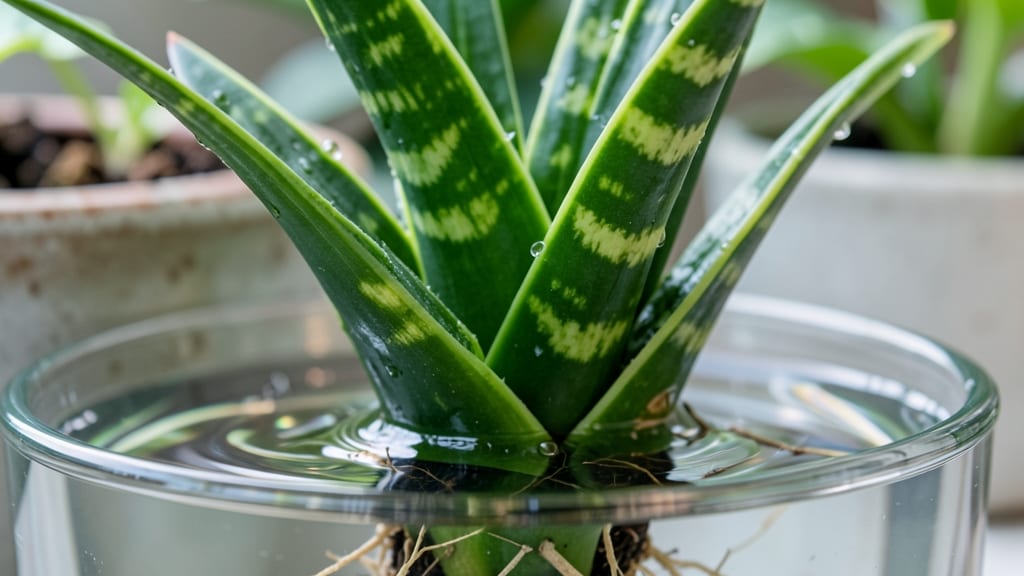
Snake plants can grow in water but require careful adaptation, as they thrive primarily as succulents in soil. Submerging them risks root rot, while hydroponic setups demand aeration and nutrient balance for long-term survival.
While snake plants are famously drought-tolerant in soil, their roots can adapt to water with the right approach. 🌱 The key lies in mimicking their natural habitat—partial submersion or nutrient-rich hydroponic systems prevent suffocation by ensuring oxygen reaches the roots.
Without proper aeration, stagnant water becomes a breeding ground for bacteria, leading to rot within weeks. I’ve seen beginners struggle when they simply place a cutting in a glass of water, only to watch it turn mushy after a few days.
The solution? Use a well-aerated setup with a small air pump or change the water every 5-7 days to keep conditions stable.
For best results, start with a healthy mother plant and propagate in water first—this helps the roots adjust before transitioning to a more permanent hydroponic system. Once established, monitor leaf color and growth rate; yellowing edges or slow growth signal nutrient deficiencies or poor oxygen flow.
Many gardeners swear by adding a tiny bit of hydroponic nutrient solution to the water, but even then, these plants prefer less than their soil-grown cousins.
💡 In This Article
- How Snake Plants Adapt to Water Cultivation
- Best Hydroponic Methods for Snake Plants
How snake plants adapt to water cultivation
Snake plants (Sansevieria trifasciata) primarily thrive as terrestrial succulents, but their roots can adapt to water through a fascinating physiological shift. When submerged, their roots develop specialized aerenchyma cells—air channels that improve oxygen uptake in waterlogged conditions.
This adaptation is similar to how aquatic plants like water lilies survive, but snake plants aren't naturally aquatic, so their response is limited. Without these adaptations, roots suffocate in stagnant water, leading to anaerobic conditions that produce toxic byproducts like ethanol and acetaldehyde.
The key difference between partial submersion and full hydroponics lies in oxygen exposure. In water-only setups, roots need constant aeration—think of how fish need oxygen in water. A small air stone with a pump can mimic natural airflow, but even then, roots should only be submerged 1-2 inches at most.
Full hydroponics (like deep water culture) is riskier because the entire root system is immersed, requiring precise nutrient balance and frequent water changes. Without this, roots rot within 7-10 days, turning brown and mushy—a common mistake among beginners.
Nutrient uptake also changes dramatically in water. Snake plants rely on mycorrhizal fungi in soil for phosphorus and micronutrients, but in water, they must absorb everything through their roots. This is why even healthy-looking plants in water often develop yellowing leaves after 3-4 months: they’re starving for essential minerals.
Adding a diluted hydroponic nutrient solution (like 1/4 strength) can help, but these plants prefer less fertilizer than their aquatic counterparts. Over-fertilizing in water can burn roots faster than in soil.
Another critical factor is the plant’s natural growth rhythm. Snake plants grow slowly in soil, but in water, their metabolic rate can spike—leading to rapid but weak growth if conditions aren’t ideal. This is why many gardeners report water-grown snake plants developing long, leggy leaves with weak stems.
The solution? Use a well-lit area (bright indirect light) and limit submersion to 20-30% of the root system at any time. This mimics their soil-dwelling roots’ ability to access both water and air.
Here’s what happens if you ignore these adaptations: roots become waterlogged and turn black within 5-7 days, while leaves may develop brown tips from nutrient imbalances.
The contrast between healthy water-grown roots (firm, white, and fibrous) and rotting ones (soft, slimy, and dark) is striking. 💫 This visual cue is your best early warning system.
For those curious about the science, think of it like this: snake plants in water are essentially holding their breath. Their roots must work harder to absorb oxygen, while their leaves continue photosynthesis as usual.
This dual demand explains why water-grown snake plants often need more light—up to 12-14 hours daily—to compensate for the energy lost in root adaptation.