
Companion Plants
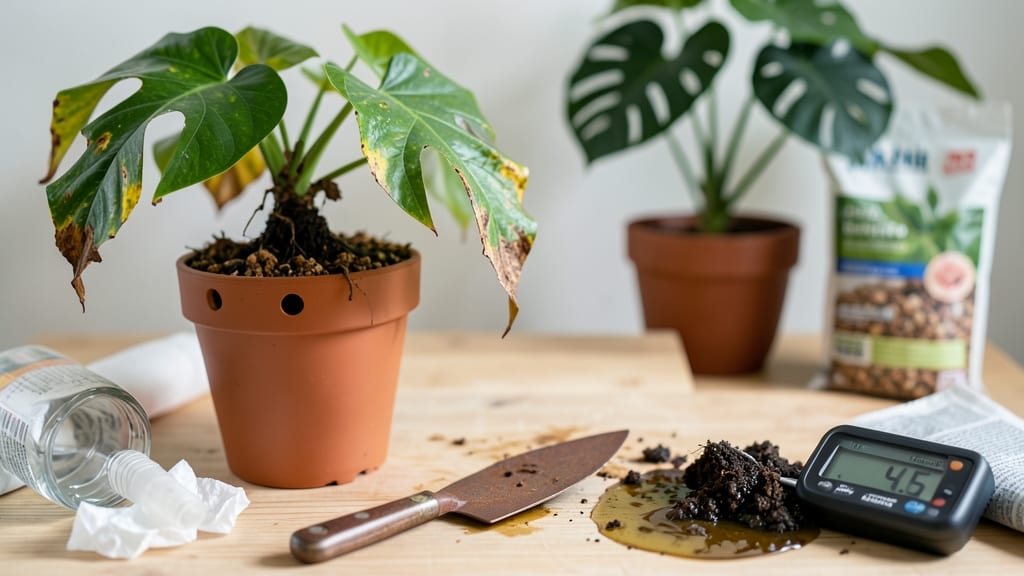
Yes, you can save a plant that has been overwatered by immediately stopping watering, repotting it in fresh, well-draining soil, and trimming any mushy roots. Place it in bright, indirect light and avoid watering until the soil dries completely.
Saving a plant that has been overwatered starts with understanding why waterlogged soil creates such damage. 🌱 Roots need oxygen to breathe, and when soil stays saturated, they suffocate—leading to rot and preventing nutrient absorption.
The good news? Most plants can bounce back if you act fast and create the right conditions. I’ve seen ferns, succulents, and even struggling houseplants recover completely when given proper care and patience.
First, assess the root damage by gently removing the plant from its pot. Trim any black, mushy roots with clean scissors, leaving only firm white or light-colored roots intact. This might seem drastic, but it’s essential for preventing further decay.
Next, choose a pot with drainage holes and fresh potting mix designed for your plant’s needs—some need extra perlite or sand for aeration.
After repotting, resist the urge to water immediately. Instead, place your plant in bright, indirect light (like an east-facing window) and let the soil dry out completely before watering again. This teaches the roots to adapt to healthier moisture levels.
With consistent care, you’ll often see new growth within 2-4 weeks—proof that even the most neglected plants can make a comeback! ✨
💡 In This Article
- How Overwatering Damages Plant Roots
- Step-by-Step Overwatered Plant Recovery Guide
How overwatering damages plant roots
When soil stays too wet for extended periods, roots suffocate because water displaces the oxygen they need to respire. Think of it like drowning—roots can’t absorb vital nutrients or release waste products when oxygen levels drop below 5% of the soil’s air space.
This oxygen deprivation triggers anaerobic conditions, where harmful bacteria and fungi thrive, breaking down root tissues and releasing toxic byproducts like ethanol and acetic acid.
At the cellular level, root cells begin to swell and rupture when submerged in water, a process called hypoxia.
This disrupts the plant’s ability to transport water and nutrients from the soil through its vascular system, causing wilting even when the soil is saturated. 🌱 The damage isn’t just physical—it’s chemical too. Overwatered soil leaches essential nutrients like nitrogen and potassium, leaving roots starved even as they’re drowning.
Fungal infections like Pythium or Phytophthora flourish in waterlogged conditions, creating root rot that spreads rapidly. These pathogens produce enzymes that dissolve root cell walls, turning healthy roots into a mushy, black mess within days.
The worst part? Many plants show above-ground symptoms (yellowing leaves, stunted growth) only after 30-50% of their root system has already been compromised.
Even if the plant survives, chronic overwatering weakens its immune system, making it vulnerable to pests and diseases. The root zone becomes a breeding ground for soil-borne pathogens that can persist for years, affecting future plantings in the same container or garden bed.
This is why professional gardeners often say, "When in doubt, hold out"—meaning it’s better to underwater slightly than risk suffocating roots.
Consider this comparison: A healthy root system maintains a balance of 20-30% air space in the soil. When water fills more than 60% of that space, roots can’t function properly, and the plant enters a state of stress.
The key to recovery lies in restoring that air-to-water ratio while giving damaged roots time to regenerate.